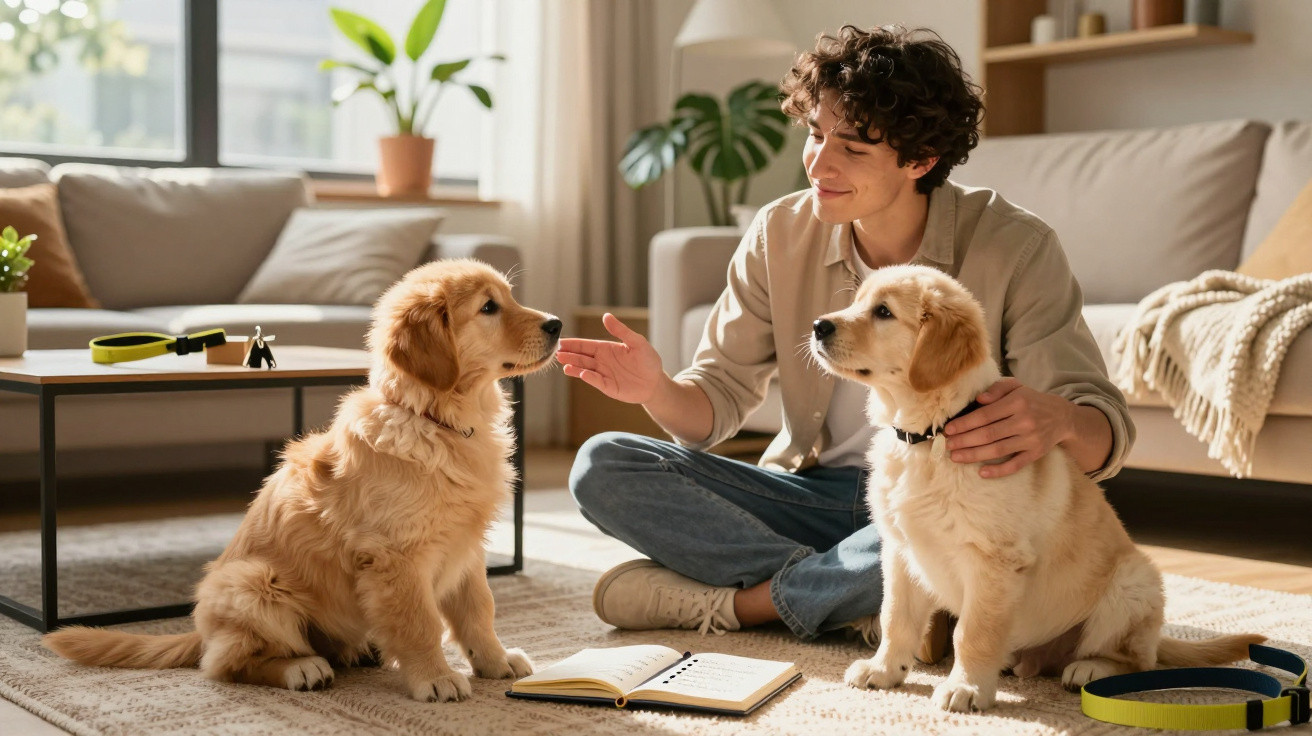
Many prospective owners spend weeks wavering between a golden retriever and a labrador, comparing photographs, browsing forums and seeking friends’ advice, yet still have little idea how either dog behaves at home once the door is shut.
The real difference behind two almost identical smiles
At first glance, they seem closely related: kind eyes, gentle faces and constantly wagging tails. Both are widely known as laid-back family dogs. However, sharing your home with a golden retriever can feel noticeably different from living with a labrador, particularly in a busy modern household.
Both breeds rank highly for trainability and their desire to please people. Developed to work alongside humans, they retain a powerful instinct to cooperate. The differences become clearer when considering emotional sensitivity, independence and their response to stress at home.
Personality check: golden retriever sensitivity, labrador steadiness
A golden retriever generally brings a gentle, almost poetic presence to the home. Owners often call goldens emotional sponges. They quickly notice tension, sadness and changes to routine. This makes them intensely affectionate, but may also increase the likelihood of anxiety when they are left alone or the household is chaotic.
A labrador more commonly resembles the easy-going friend who adjusts to whatever the day brings. They have the same wish to stay nearby and the same excitement when you pick up the lead, but are usually better able to switch off and rest when nothing is happening. This emotional resilience helps explain why labradors are so prevalent in assistance and guide-dog programmes around the world.
The golden tends to amplify your emotions, while the labrador tends to absorb them and carry on.
Energy, play and cuddles: different character, same intensity
On paper, both are active breeds. They need substantial walks, mental stimulation and human company to remain settled. Their difference lies in how they handle that energy over the course of the day.
- Golden retriever: energetic bursts, a strong need for engagement, and often follows you from room to room.
- Labrador: playful and motivated, but normally better at sleeping between activities.
- Both: highly motivated by food and praise, with a strong interest in water and outdoor play.
With a golden, many families find that the dog repeatedly checks on them, seeks reassurance and seldom strays far from their side. Labradors still want to be close, but are more likely to settle in their bed while you work instead of searching the house for you.
Home life: why many modern families favour the labrador
Most people now balance work, commuting, social commitments and, in some cases, children. They need a dog that can fit this rhythm without creating daily difficulties. In this setting, a labrador’s emotional balance offers a distinct benefit.
Short winter days, late meetings, unplanned journeys and children’s activities that change at the last minute all test a dog’s adaptability. It is in these situations that trainers and behaviourists frequently notice the distinction between these two sociable breeds.
Training, obedience and tolerance of time alone
Both breeds learn quickly through reward-based training. They respond best to clear boundaries, brief sessions and frequent reinforcement. However, recent behavioural data from clinics indicates that golden retrievers experience separation-related difficulties more often than labradors.
Many goldens find it difficult when their owners leave for several hours. They may bark, whine, pace or chew. This does not mean they cannot be taught to stay alone, but they often need more structured training and thorough preparation.
Labradors, developed for decades as working and assistance dogs, more frequently follow this pattern: an enthusiastic greeting, rapid acceptance of your leaving routine, followed by a lengthy nap. They can certainly develop anxiety too, but the average labrador usually manages standard working days more comfortably.
For households with varied schedules, the labrador’s calm approach to change often becomes the silent factor that makes daily life easier.
Matching exercise needs to your actual timetable
Both breeds enjoy lengthy walks, retrieving, swimming and scent-based games. Neither is suited to a life spent on the sofa. Still, the precise type of stimulation they seek differs slightly.
| Aspect | Golden retriever | Labrador |
|---|---|---|
| Emotional sensitivity | High, reacts strongly to tension and absence | Moderate, often more even-tempered |
| Alone-time tolerance | Lower on average, needs careful training | Generally better, especially with routine |
| Indoor calm | Can stay restless if under-stimulated | Often more able to relax between walks |
| Grooming needs | High, long coat, heavy shedding periods | Moderate, short dense coat, steady shedding |
If you run, hike or spend weekends in open countryside, either breed will happily join you. If weekdays are more likely to involve short walks in town, a labrador generally adapts more easily to that routine, provided mental games and training sessions make up the difference.
Living conditions: flat, house, children and social life
In terms of size, the breeds are similar: both are medium-to-large, athletic and strong. The key difference is less about floor space than about the time you can give them and the predictability of your daily routine.
Flat living and the realities of town life
A golden retriever can thrive in a flat when somebody is home most of the time, provides several outings and maintains a very regular schedule. Building noise, frequent arrivals and departures, and inconsistent hours can unsettle a particularly sensitive golden.
Given an equal amount of exercise, a labrador is more likely to cope with urban noise and changing timetables without such marked emotional reactions. Their shorter coat also makes everyday drying and cleaning simpler after muddy winter walks in parks or along pavements.
Family dynamics and children
Both breeds are often rated highly for their patience with children and willingness to play. Naturally, there are limits, and supervision is essential with every dog. The subtle contrast emerges when a home becomes noisy and unpredictable.
Some goldens do not manage continual commotion, visitors and loud noise particularly well, causing them to seek reassurance more often. Labradors generally cope with this activity with slightly greater resilience, taking part before retreating to their bed once they have had enough.
Families who want a reliable playmate that also knows how to switch off often gravitate towards the labrador’s balanced temperament.
Health, grooming and long-term commitment
The two breeds share several inherited health risks, including hip and elbow dysplasia, eye conditions and a tendency to put on weight. Responsible breeders now health-screen their dogs, but prospective owners must still allow for long-term veterinary costs.
Oddly, coat care can become a practical deciding factor. The golden’s long, feathered fur collects burrs, mud and dust. Without regular brushing, it tangles and mats. Grooming consistently, trimming the feathering and managing seasonal shedding soon become part of a weekly routine.
A labrador’s coat sheds consistently throughout the year but is generally easier to maintain. A good brush several times each week is often enough. For busy households, this difference in time can be more significant than expected.
How to choose without regretting it six months later
Rather than asking, “Which breed is better?”, behaviour specialists recommend another question: “Which dog fits the life I actually live, not the life I imagine?”. That minor change in perspective often changes the answer.
If you work from home, enjoy close emotional connections and see grooming as part of your routine, a golden retriever may be the ideal velvety shadow at your side. If your schedule changes frequently, your children’s activities overlap or you occasionally return home later than intended, a labrador’s adaptability is more likely to reduce tension.
In many average households, the labrador ends up feeling easier to live with, simply because it tolerates modern chaos more gracefully.
Practical steps before making your choice
Seeing both breeds in real-life settings is far more useful than looking through adorable photographs online. Attend training classes, talk to behaviourists who work with family dogs, and ask rescue centres which issues they encounter most frequently in each breed.
Then assess your own routine honestly. For one full week, record:
- The number of minutes you genuinely spend walking outdoors each day.
- The number of hours your home is empty.
- How often unexpected events alter your plans.
- How much time you truly wish to devote to grooming and training.
Set that reality against the requirements of each breed. This simple “life simulation” will usually make it clearer which profile suits you best, beyond emotion and nostalgia.
Additional factors future owners often overlook
Both breeds love food, so weight gain can develop unnoticed. A labrador that eats like an athlete but moves like a sofa critic will soon gain extra kilograms, increasing the risk of joint problems. Golden retrievers also struggle with portion control, so weighing meals and using part of their daily ration as training rewards becomes an everyday practice.
Consider mental stimulation too: scent games in the sitting room, straightforward obedience exercises, hide-and-seek with toys or treats. These activities tire the mind and reduce frustration, especially during dark winter days when long walks are not possible. Goldens often enjoy cooperative games that keep them near you. Labradors frequently excel at task-focused challenges, such as retrieving different objects or working out food puzzles.
Finally, think about how your dog’s needs fit with your own aims. Owners hoping to take up running can establish a safe jogging routine with their labrador. Those who need emotional support in stressful periods may appreciate the golden’s marked sensitivity. In either case, when lifestyle and personality match, the relationship becomes deeper and everyday compromises feel natural rather than draining.

















Comments
No comments yet. Be the first to comment!
Leave a Comment