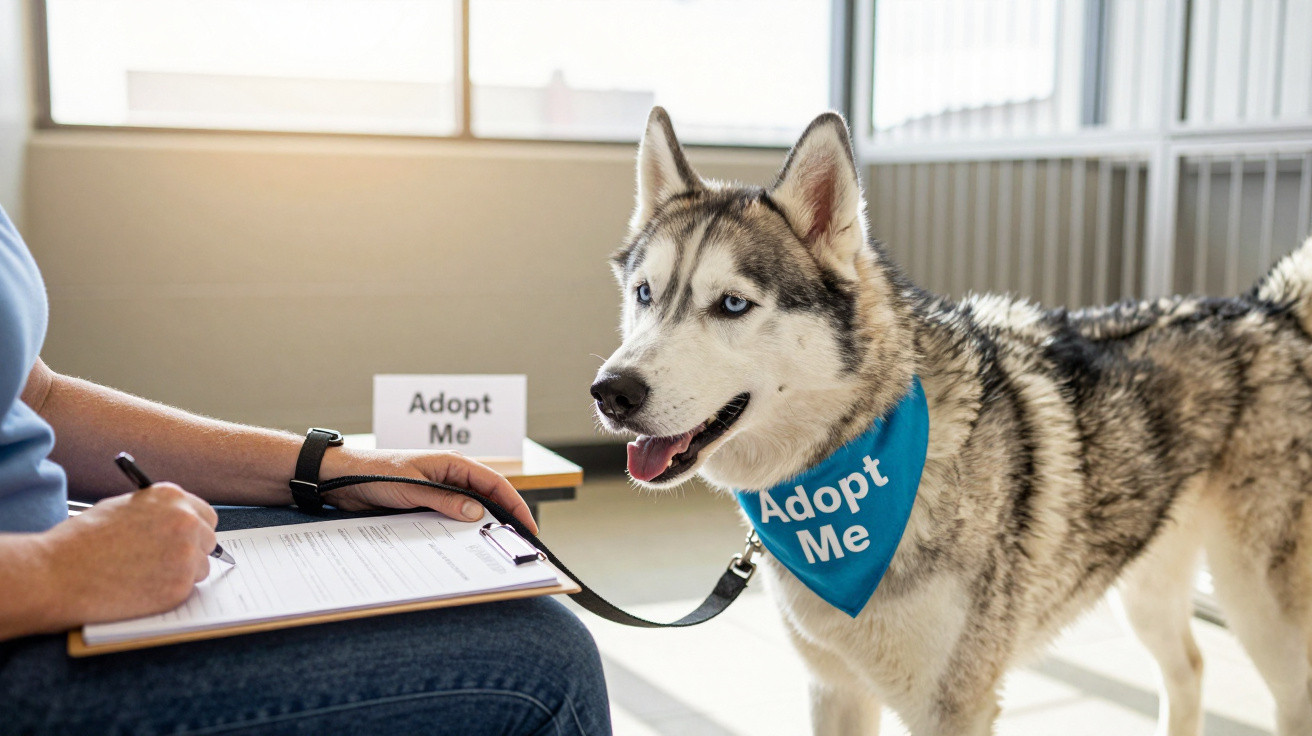
In a bustling shelter in Virginia, a blue-eyed dog sits behind metal bars, watching families pass his kennel.
The team knows his name, his habits and his history by heart. Having already survived life on the streets, he now faces a more silent struggle: catching someone’s attention for long enough to be offered a genuine home.
Bear’s difficult beginning and uncertain second chance
At the heart of this story is Bear, a six-year-old Husky cross with remarkable, sky-blue eyes. He was first taken in by the Lynchburg Humane Society in Virginia in August 2024, following a hard period living as a stray.
Before the shelter intervened, Bear had existed without a safety net: no dependable meals, veterinary treatment or certainty that he would be safe. At Lynchburg, he gained clean bedding, regular food and people who looked after him.
What was still missing, however, was what dogs need most: a secure, settled family prepared to keep him for the rest of his life.
For Bear, the shelter solved hunger and cold nights, but not the painful uncertainty of having no permanent home.
A few months after arriving, his prospects appeared to improve. A family selected Bear and completed the adoption paperwork. Staff marked the occasion, knowing that finding homes for adult Husky crosses is seldom straightforward. Bear walked out with a collar, a new identification tag and a future that at last seemed bright.
Returned because of “housing problems”
The hopeful outcome was short-lived. Roughly five months later, Bear returned to the shelter.
His adopters said they were experiencing “housing problems” and were unable to keep him. The phrase can describe many situations regularly encountered by US shelters: landlords who prohibit pets, rent increases that force households into smaller accommodation, or abrupt evictions in which animals are the first to lose their homes.
Staff took Bear back, as they must, and placed him in a kennel once more. For a dog that forms close attachments to people, such a change can be profoundly bewildering.
Giving up a pet is not necessarily a sign that love was absent. More often, it shows how precarious housing has become for many people, particularly in areas where rents rise more quickly than wages and pet-friendly properties are scarce.
Housing insecurity doesn’t only uproot families; it quietly fills shelter kennels with animals who once thought they were safe.
A loving, clingy dog who cannot bear solitude
Following Bear’s return, the Lynchburg Humane Society stepped up its search for a suitable new home. The shelter used social media, where moving accounts of animals facing long stays can sometimes attract attention across the country.
Bear attracted notice because of his character. He is what behaviourists commonly describe as a “velcro dog” – a pet that seeks near-constant contact with its people.
“A unique dog” who only wants to stay close
In September 2025, the shelter shared a Facebook post calling Bear “a unique dog”. It struck a chord, receiving more than 20,000 views. The team gave an account of who he was that went well beyond his appearance.
They said that Bear:
- Loves almost everybody he encounters
- Is good with children
- Finds being left alone difficult and can become very vocal
- Seeks physical closeness and reassurance from his people
One video shows Bear howling inside his kennel, pacing and crying after visitors walk away. This is anxiety rather than aggression: he simply struggles to manage being by himself.
Although some people want a more independent pet, others actively seek an exceptionally affectionate dog. The shelter aimed to reach those people by giving a frank, detailed account of Bear’s requirements.
“Not everyone loves a clingy dog, but for those who do, Bear will understand you – and you’ll understand Bear,” staff wrote.
Strong online interest, but few visits in person
In one respect, the campaign succeeded. Bear’s posts attracted substantial online engagement. People circulated his photographs, remarked on his eyes and voiced sympathy for his circumstances.
But online interest did not become adoption applications. Staff said that Bear was performing well on social media, yet only a small number of families came to the shelter to ask to meet him.
The divide between online feeling and practical action is well known to many rescue groups. A viral post may increase awareness, but converting that attention into lasting adoptions still depends on people willing to adapt their lives for an animal with particular needs.
For Bear, those requirements are:
| Need | Why it matters |
|---|---|
| Low time alone | He becomes anxious and vocal when left for long periods. |
| Active lifestyle | As a Husky mix, he benefits from regular exercise and mental stimulation. |
| Secure housing | Owners must check pet policies and plan for long-term stability. |
| Patient, calm guardians | He may need time to settle after multiple disruptions. |
Why some dogs find it hard to leave shelters permanently
Bear’s experience reflects a broader trend in shelters in both the US and UK: some dogs remain far longer than others. Their age, size, breed mix and behaviour can all affect their chances.
Husky-type dogs may be particularly demanding. They are lively, intelligent and often noisy. If they do not receive enough exercise and mental engagement, they can howl, dig or try to escape. Many adopters are attracted by their appearance without fully appreciating the lifestyle adjustments these dogs need.
Bear’s need for closeness creates an additional challenge. Separation anxiety is common among rescue dogs. It may result in neighbours complaining about barking, damage to property, and added strain on families already balancing work and childcare.
For shelters, finding the right match for a dog such as Bear means locating people who:
- Work from home or can regularly arrange dog day care or dog walkers
- Have understanding neighbours or live somewhere noise is less likely to be a problem
- Are prepared to devote time to training and gradually desensitising a dog to time alone
Preparing for a “velcro dog”: what adopters need to consider
Anyone thinking of adopting a dog like Bear will benefit from planning in advance. Several practical measures can safeguard both the dog and the adoption.
Planning for housing and landlords
Before completing adoption paperwork, prospective owners can:
- Review their tenancy agreement for pet provisions and any size or breed restrictions
- Ask landlords in writing about required deposits or insurance
- Think about whether an unexpected move, job loss or rent rise could affect their ability to keep a pet
In certain cities, tenants’ groups and legal clinics provide guidance on pet-friendly renting and challenging blanket “no pets” rules.
Helping a dog that struggles with being alone
For clingy dogs, modest changes to routines can significantly ease stress. Behaviour specialists frequently recommend:
- Beginning with very brief absences, then increasing them gradually
- Offering puzzle toys or chews only when the dog is left alone
- Not making departures or arrivals emotionally dramatic
- Seeking help from a professional trainer if barking or panic worsens
Separation anxiety is not “bad behaviour”; it is a fear response that can be eased with patience and structure.
Why Bear’s story matters beyond one dog
Stories such as Bear’s lie where two crises meet: increasing housing insecurity and a rising number of unwanted or returned pets. Whenever a landlord refuses animals or a household has to move at short notice, dogs such as Bear live with the consequences.
For readers considering adoption, Bear’s journey is both a gentle caution and an encouraging challenge. Adoption can transform a dog’s life, but only when people choose an animal whose needs truly suit their home, timetable and budget for the long term.
Across US and UK shelters, staff encounter dogs like Bear every day: devoted, sensitive animals that have done nothing wrong, but find themselves back in kennels because life outside changed too quickly. Planning ahead, raising difficult questions before adoption and taking housing risks seriously can help reduce the number of times kennel doors close on a dog that believed it had finally found home.

















Comments
No comments yet. Be the first to comment!
Leave a Comment