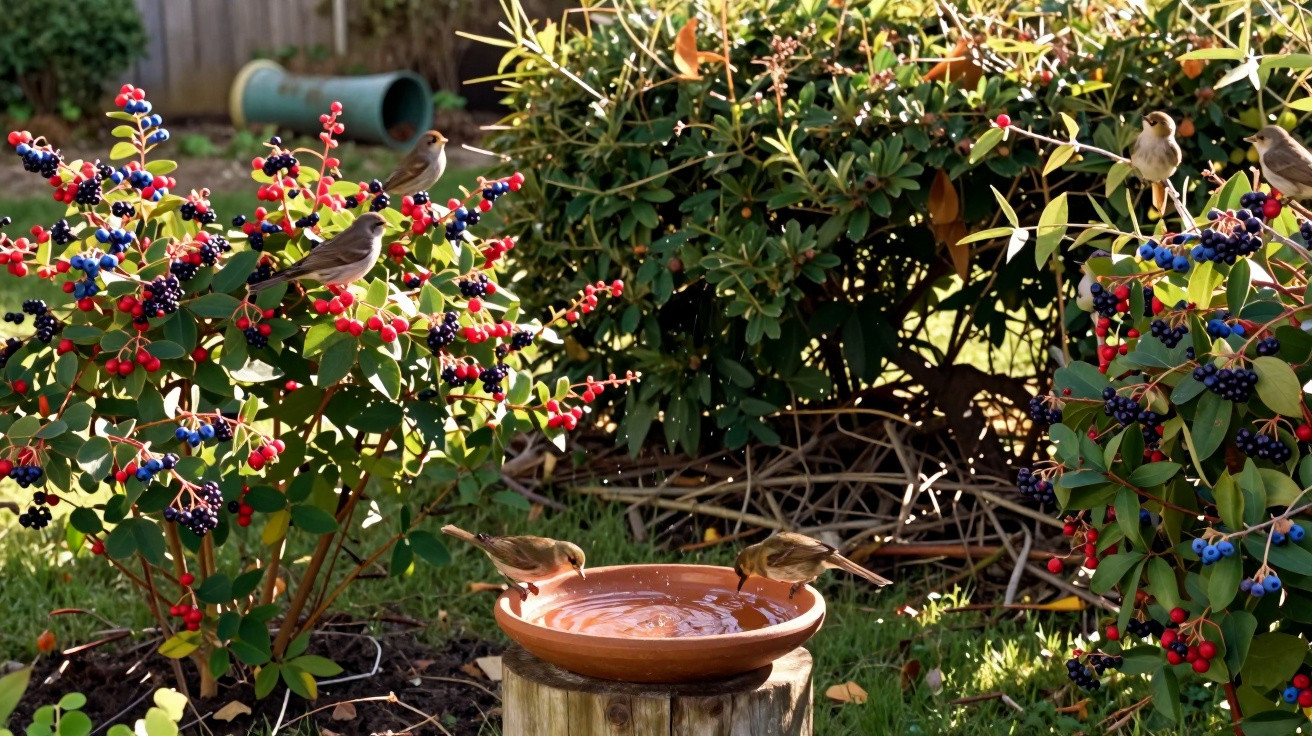
Many people put up bird feeders without realising that they are creating only a stopgap rather than a true bird paradise.
Anyone wanting more fluttering wings, birdsong and flashes of colour among the greenery in their own garden will almost automatically reach for a feeder from the garden centre. It is convenient, certainly, but for birds it is little more than a quick snack. What truly draws them in are natural features: berries, dense hedges and shallow water sources. A garden that attracts feathered visitors for the long term works like a small ecosystem, not a filling station.
Ditch the plastic buffet: why natural food cannot be beaten
Birds need living gardens, not metal poles
Commercial food in feeders can provide temporary help, especially on exceptionally cold days. In everyday conditions, however, most species favour the real thing: fruit, seeds, herbs and insects. All of these grow and live within a thoughtfully designed garden.
“Anyone who turns their garden into a living buffet of berries, seeds and insects will transform occasional visitors into regular guests.”
Birds prefer to feed directly from shrubs and perennials. These offer not just food, but also cover, perches and nesting material. An artificial feeder supplies calories alone – not a habitat.
Three berry shrubs that enhance almost any garden
Rather than installing ten different feeders, a considered planting scheme is often enough. A simple rule of thumb is this: planting three different berry-bearing shrubs lays the foundations for a natural bird restaurant.
- Wild cherry or ornamental cherry: popular with blackbirds, starlings and thrushes, while also providing a real springtime focal point.
- Hedge roses, such as dog rose: rosehips provide valuable energy in late autumn and winter, while the branches offer shelter.
- Snowberry, elder or privet: berry-producing shrubs that give many species both food and hiding places.
Blue tits, great tits, robins, dunnocks and many other species benefit from this combination of shrubs. The longer the fruiting periods are spread across the year, the better: early-flowering plants support insects, summer shrubs offer berries, and late-fruiting varieties provide food through winter.
Safety first: why a dense hedge area is essential
Without cover, there is no trust
Food on its own is not enough. Birds will only visit places where they also feel safe. Domestic cats, martens and birds of prey lie in wait in many gardens. Anyone serious about protecting birds should therefore deliberately include an area of slightly “untidy” nature.
A densely growing hedge area acts like a green fortress. Birds can retreat into it within seconds when danger approaches. The more branched and thorny it is, the better.
- Thorny species such as blackthorn or hawthorn deter predators.
- Several shrubs planted close together create an impenetrable network.
- Different heights – ground-cover plants, shrubs and small trees – form layers for different bird species.
“For birds, an untidy, dense hedge border is like a combination of bunker, nursery and living room.”
A winter refuge instead of a bare ornamental space
Winter is when it becomes clear whether a garden is genuinely bird-friendly. Many people cut hedges back severely in autumn and clear away every fallen leaf. For birds, this means losing protection, roosting places and leftover food.
Leaving one area deliberately dense and slightly wild creates an ideal winter refuge. Among branches, leaf piles and twigs, birds find shelter from wind, wet weather and predators. A few dead branches can safely be left in place too: insects overwinter in them, providing a source of protein in turn.
No water, no life: why a shallow bowl works wonders
Drinking and bathing are survival needs, not luxuries
Birds need water not only to drink but also to keep their plumage clean and fully functional. Clean feathers insulate more effectively and allow safe flight.
In many gardens, a shallow bowl of water is all that is required. The key point is a gently sloping edge so that even small species can enter and leave safely.
| Feature | Recommendation |
|---|---|
| Water depth | 2–5 cm, maximum 8 cm |
| Material | Ceramic, stone or a sturdy terracotta bowl |
| Location | Open, with a clear view of the surroundings but close to shrubs |
| Cleaning | Rinse every 1–2 days and replace the water |
Easy care rather than a high-tech fountain
Expensive bird baths with pumps or decorative features are unnecessary. Consistent upkeep is what matters. Leaving stagnant water in place for days risks germs, algae and parasites.
It makes sense to empty the bowl briefly each day and refill it with fresh water, then clean it once a week using a brush without harsh cleaning products. On very hot days, it can be topped up twice – and the bird bath will quickly become the garden’s hotspot.
How to create a small bird paradise in your own garden
The three elements that nearly always work
Anyone designing a garden for birds over the long term will do well with a straightforward combination:
- At least three different berry shrubs to provide food throughout the year.
- A dense hedge area that is not constantly trimmed for shelter and nesting.
- A safe, shallow water source for drinking and bathing.
“Where food, shelter and water come together, birds do not merely settle – they stay.”
Avoiding chemical pesticides also encourages insects, creating another food source. A garden that buzzes, crawls and flowers is automatically one in which birdsong can be heard too.
More life, less work: how a garden supports itself
A naturally designed garden may initially seem labour-intensive, but the opposite is often true. Permanently planted shrubs, established hedges and hardy perennials need less maintenance than closely mown lawns and precise stone edging.
Over the years, a self-stabilising system develops: some leaves remain where they fall, decompose and improve the soil. Insects move in, birds eat pests, and deeply rooted plants reduce watering needs. People need only step in to guide the process.
Practical examples and tips for getting started
How small gardens can have a big impact
A great deal can be achieved even in just a few square metres. A narrow border with one or two shrubs, low perennials beneath them and a small water source is more than enough to begin with. Balconies can also help, using berry-bearing fruit in containers, climbing plants and a miniature bird bath fixed to the railing.
The important thing is not to try to make everything perfect at once. It is better to add one element each year: first a shrub, then a section of hedge, then the water source.
Common mistakes – and how to avoid them
Many well-intentioned measures lose their effect because of small errors:
- Feeders placed directly beside dense bushes make life easy for cats.
- Bird baths on the ground close to cats should instead be raised and positioned with a clear view around them.
- Cutting hedges in spring destroys nests and breeding sites at precisely the wrong time.
- Exotic ornamental plants without fruit may be attractive, but are largely useless to birds.
Planting native species instead, respecting refuge areas and keeping water clean creates stable conditions. Over time, not only will more birds come into the garden, but more interesting species too – from wrens to nuthatches.
In this way, a sterile show lawn gradually becomes a living garden where sparrows bathe, tits clamber through the branches and robins dart between shrubs. Feeders can then serve as an extra source of support during harsh winter days, but they will be far less necessary in everyday life because the garden itself has become a true bird paradise.

















Comments
No comments yet. Be the first to comment!
Leave a Comment