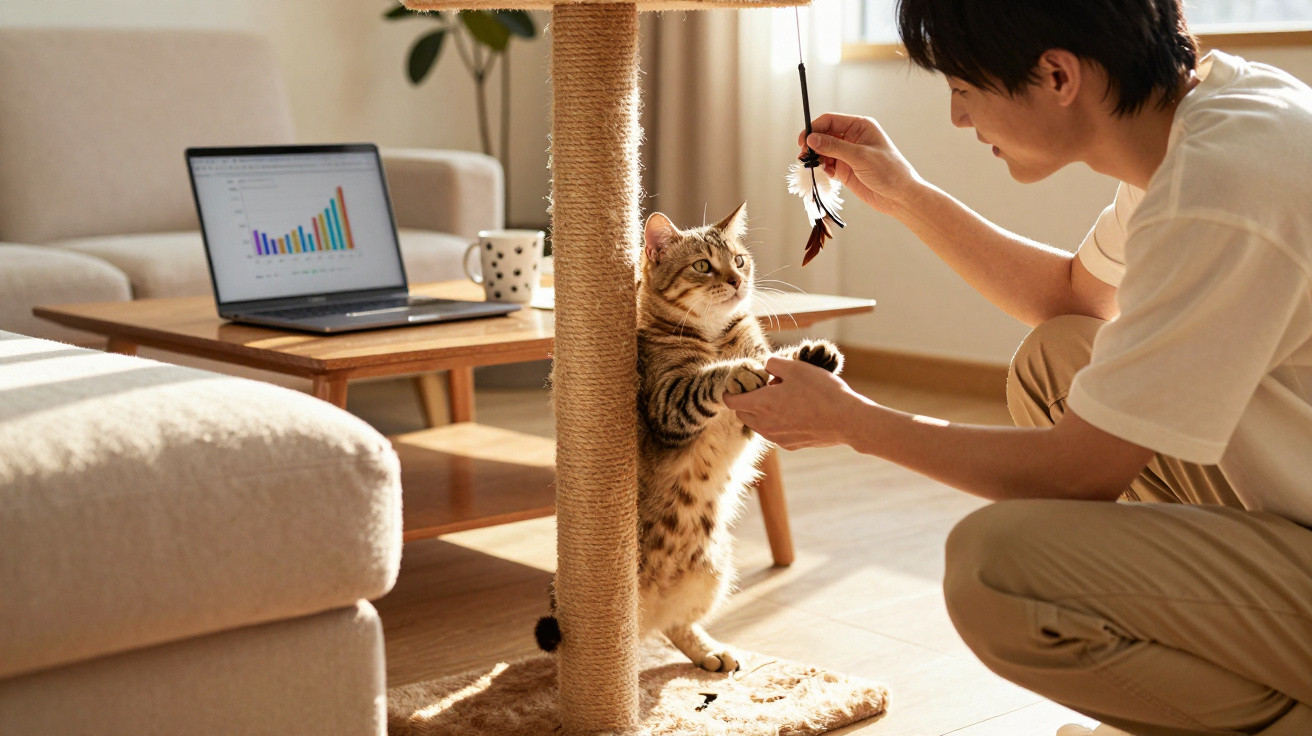
Scratching is an entirely natural cat behaviour, but new research sheds light on why some of our much-loved, clawed fluffballs cause more damage than others. It is not simply a case of them being mischievous troublemakers.
"We show that certain factors – such as the presence of children at home, personality traits of cats, and their activity levels – significantly impact the extent of scratching behavior," says veterinary researcher Yasemin Salgirli Demi̇rbas from Ankara University in Türkiye.
Cats need appropriate objects and surfaces to scratch. Doing so maintains sharp claws and stops them becoming overgrown, which can lead to health issues. Marks left by scratching also serve as territorial signals, helping cats communicate with other felines.
Why cats scratch furniture more often
Yet this natural instinct can create difficulties at home. According to Salgirli Demi̇rbas and colleagues in Portugal, Canada and France, an owner becoming increasingly annoyed when a cat damages an expensive leather sofa may prompt the cat to scratch even more, in response to greater social tension.
To investigate excessive scratching in domestic cats, the team questioned more than 1,200 owners, each of whom had one cat. They identified stress as the principal cause. Although self-reported information can be affected by bias, the researchers found a strong association.
"We see a clear link between certain environmental and behavioral factors and increased scratching behavior in cats," says Salgirli Demirbas.
"Specifically, the presence of children in the home as well as high levels of play and nocturnal activity significantly contribute to increased scratching. Cats described as aggressive or disruptive also exhibited higher levels of scratching."
These findings indicate ways in which we can help cats change their behaviour.
Reducing stress-related cat scratching
"Providing safe hiding places, elevated observation spots, and ample play opportunities can help alleviate stress and engage the cat in more constructive activities," advises Salgirli Demirba.
When a cat scratches somewhere it should not, positive reinforcement is important, while approaches that might increase its stress should be avoided. One positive option is to place an alternative scratching surface close to the area the cat has selected for scratching.
Cats commonly scratch in places that carry social importance, perhaps to communicate their emotional state. For that reason, the position of a scratching post matters to them.
Play, personality and scratching behaviour
Playing with a feline companion in a manner that suits the individual cat is equally essential. Cats that played for longer periods were more likely to scratch frequently, possibly because excessive stimulation caused stress, the researchers suggest.
"Promoting regular and brief interactive play sessions, coupled with offering suitable toys, can alleviate stress and consequently reduce undesirable scratching behavior," the team recommends in their paper.
Cats are certainly selective animals, with firm preferences about many things, including the way they are stroked. Identifying the particular source of stress behind a cat's scratching may help carers determine how to reduce the unwanted behaviour.
"Understanding the underlying emotional motivations of scratching behavior, such as frustration, which seem to be linked to personality traits and environmental factors, allows caregivers to address these issues directly," says Salgirli Demirbas.
While other methods are explored, calming cat pheromones may help to ease the situation.
"Our findings can help caregivers manage and redirect scratching to appropriate materials, which could help foster a more harmonious living environment for both cats and their caregivers," Salgirli Demi̇rbas concludes.
Cats have shared our lives for more than 10,000 years, guarding crops, amusing us and offering affection. Seeking to understand them more fully is the least we can offer in return.
The research was published in Frontiers in Veterinary Science.

















Comments
No comments yet. Be the first to comment!
Leave a Comment