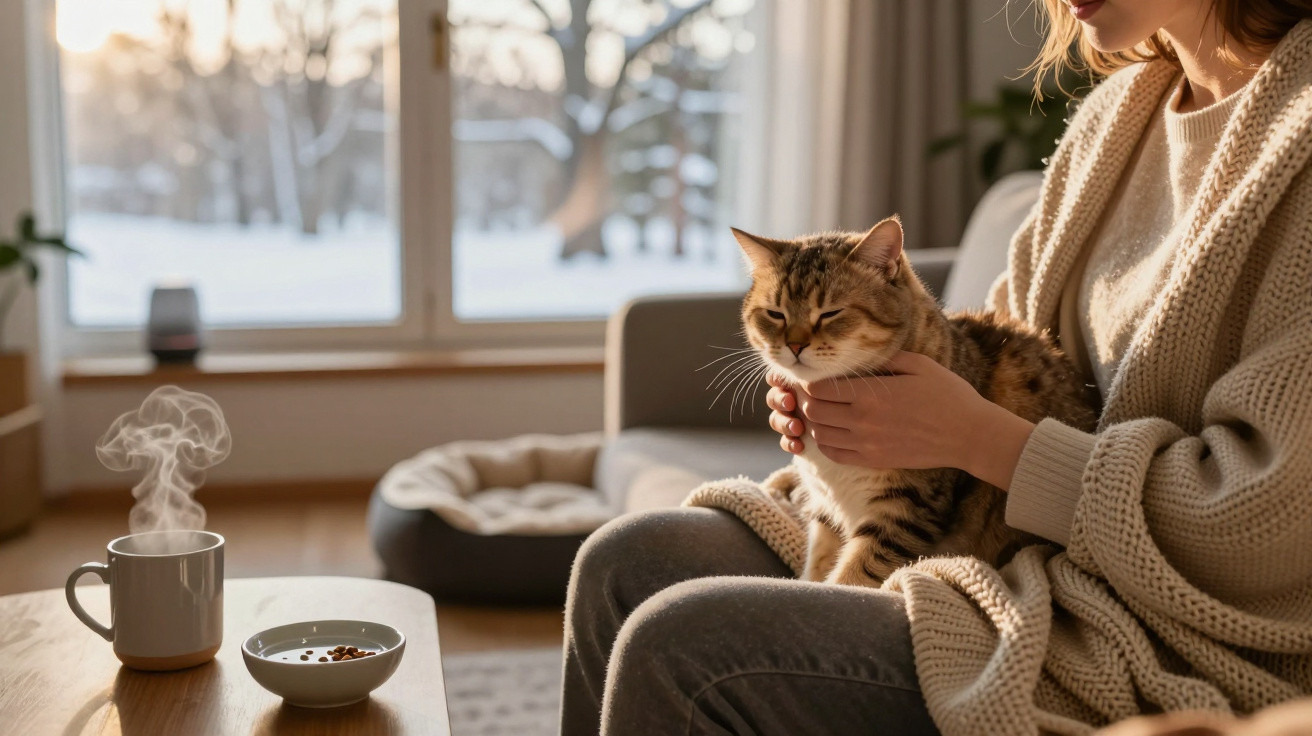
When temperatures drop, it is easy to assume that cats are naturally shielded by their fur and their talent for finding the cosiest spots in the home. Although felines are experts at seeking warmth, they can still feel cold and be affected by low temperatures.
Kittens, elderly cats, very thin animals, short-haired mixed-breed cats and those living with chronic illnesses are generally more vulnerable. For this reason, watching for behavioural changes and providing a cosier setting can make all the difference on cold days.
How can you tell if a cat is cold?
Cats seldom show discomfort in an obvious way. In most cases, the signs are subtle and may easily go unnoticed.
One of the most common behaviours is looking for warmer places around the house. Your cat may spend longer curled up in throws, under blankets, near electronic devices or in sunny areas.
Sleeping in a more tightly curled position than usual is another frequent sign. By drawing in its paws and wrapping its body around itself, a cat limits heat loss and retains its body temperature more effectively.
Some felines may also show:
- Mild shivering
- Colder ears, paws and tail tip
- Less interest in playing
- A constant search for laps or physical contact
- Reduced physical activity
- Changes in their usual sleeping places
If your cat is shivering heavily or seems unusually lethargic, it is important to seek veterinary advice, as hypothermia may pose a health risk.
Cats do not all feel cold in the same way
Cold tolerance differs considerably between felines. Long-haired cats usually cope better with lower temperatures than short-haired or hairless cats.
Age is also a factor. Kittens cannot regulate their body temperature as efficiently as adult cats. Older cats, meanwhile, may find it harder to stay warm because of a slower metabolism and joint problems.
Animals with kidney disease, heart conditions or other chronic health issues also need particular attention during winter.
How to make your home more comfortable for cats
You do not need to turn your home into a sauna to keep your cat comfortable. A few small adjustments are usually enough.
A useful approach is to provide soft beds in places sheltered from draughts. Where possible, select warmer parts of the home, away from doors and windows that are regularly left open.
Blankets and throws can also provide an extra layer of thermal insulation. Many cats enjoy settling down on soft surfaces throughout the winter.
It is also important to let your cat access sunny spots. Sunlight provides natural warmth and is often greatly enjoyed by felines.
Are cat clothes a good idea?
Unlike dogs, most cats do not enjoy wearing clothes. Many feel uncomfortable, struggle to move freely or become stressed.
Clothing may help in specific circumstances, such as for hairless cats, very elderly cats or animals for which a vet has made a recommendation. Even then, it is important to check whether the cat tolerates the garment well.
If your cat becomes irritated, repeatedly tries to remove the clothing or stays still because it is uncomfortable, it is better to consider other ways of keeping it warm.
Food and hydration also need attention
During cold spells, some cats may have a bigger appetite because their bodies use more energy to maintain their body temperature.
However, hydration remains essential. As they tend to feel less thirsty, many felines drink less water in winter.
Running-water fountains, bowls placed around the home and wet food can help maintain adequate fluid intake.
When cold weather calls for extra care
In areas where temperatures become very low, cats that spend time outdoors require even closer attention.
Shelters protected from wind, rain and damp are essential for preventing respiratory problems and thermal discomfort. Ideally, the cat should always have the option to stay in a warm indoor environment.
After all, despite their reputation for independence, cats value comfort too. A warm corner, a soft blanket and a sheltered environment can make cold days far more pleasant for them.

















Comments
No comments yet. Be the first to comment!
Leave a Comment