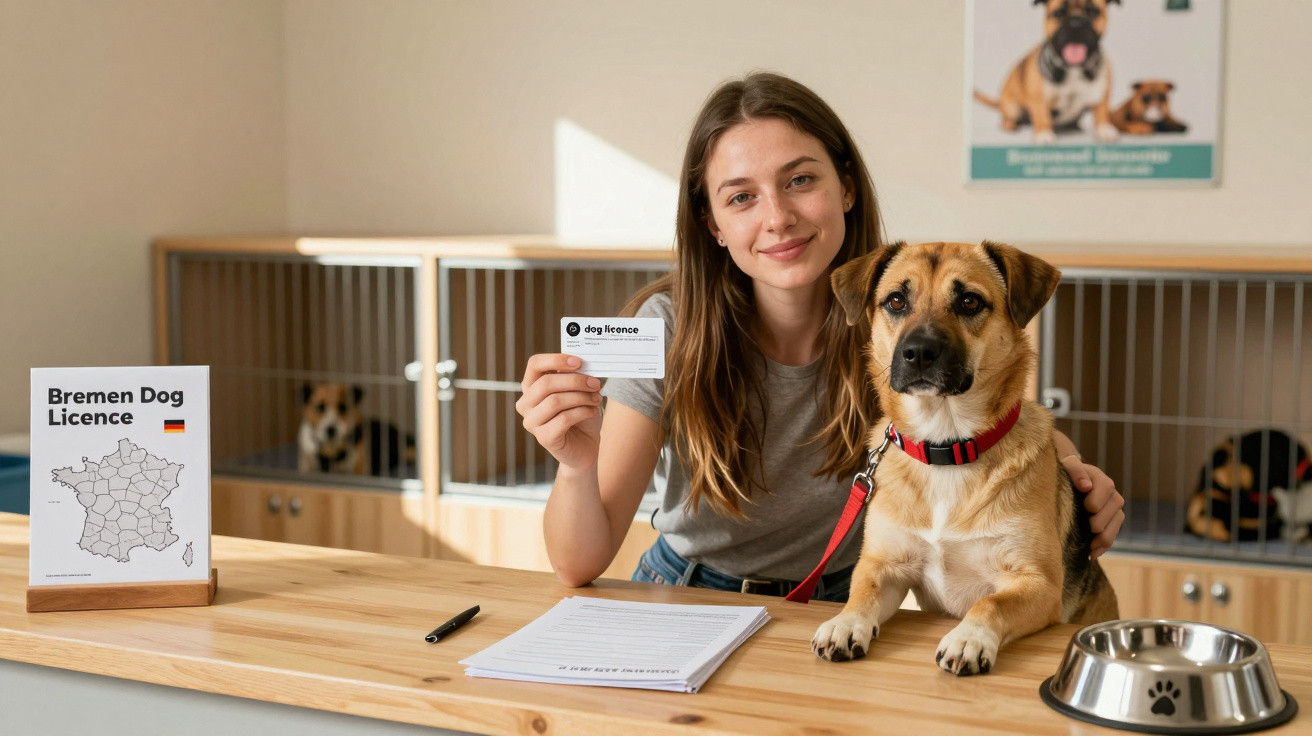
Impulsive pet adoptions are over. In Bremen, owning a dog now means passing demanding theory and practical tests. It is a radical way of making owners more accountable. Should France follow suit to curb its record number of abandonments?
Many people severely underestimate the time, budget and commitment needed to train a dog every day. The result is overcrowded rescue centres and rising abandonment rates. To tackle the issue and encourage more responsible ownership, a growing number of European countries are making adoption conditional on obtaining a genuine licence.
Switzerland was an early pioneer in 2008, introducing a compulsory certificate of competence, a requirement still retained by certain cantons, including Zurich and Valais. In Austria, several provinces also require a theory test before any adoption. More recently, Spain took matters further by including mandatory training for all prospective dog guardians in its animal welfare law.
Germany, however, is where the trend is gaining real momentum. Until now, rules have depended entirely on individual federal regions: Lower Saxony made it compulsory for everyone in 2013; North Rhine-Westphalia requires it for dogs weighing more than 20 kilograms; and Berlin uses it as the key to being allowed to let a dog off the lead in public.
Since 1 July 2026, the city-state of Bremen has followed suit by imposing a universal “dog licence” on every new owner, regardless of the animal’s breed or size. The move is a significant milestone: with another regional state taking this step, Germany is gradually moving closer to a nationwide model.
Dog licence theory and practical tests in Bremen
In Bremen, the theory test must be passed before the dog even arrives in its new home. Set as a 35-question multiple-choice test, it covers four main areas: animal behaviour; care and health; positive training techniques; and the legal framework for everyday life, including managing interactions with members of the public and lead rules.
To receive the certificate, prospective owners need to answer at least 75% of questions correctly. The aim is to ensure they understand canine psychology and can recognise signs of stress or aggression. There is, however, an exemption for more experienced people: anyone who has already kept a dog for at least two years and passed the theory test within the previous five years does not have to take it again.
Once the dog has joined the household, its owner has no more than one year to complete the practical test with an approved examiner or certified dog trainer. This stage is intended to show that the theory has been put into practice in everyday situations. The test assesses control of basic commands - sit, stay and recall - as well as calm walking on a lead. It is worth noting that the assessment takes place in real-life conditions, with the pair’s response observed in potentially stressful encounters, such as passing other dogs, a runner going by or a bicycle brushing past.
Importantly, unlike the theory certificate, this licence is not awarded to an owner once and for all. As the authorities recognise that every animal has its own temperament, the practical test must be repeated for every new dog joining the household.
During an inspection by the public order office, owners must be able to show their licence in either physical or digital form. Without the document, the penalty can be especially steep: according to Konbini, fines can reach €50,000. Worse still, a court may simply suspend the person’s right to keep the animal.
Record number of abandonments in France
In France, the law only requires a keeping licence for dogs deemed “dangerous” - categories 1 and 2 - involving a certificate of aptitude and a behavioural assessment. Yet such an initiative would not be unwelcome, as France holds the unfortunate European record, with more than 335,000 dogs and cats abandoned in 2025, according to the Stéphane Lamart association - one animal every 94 seconds.

















Comments
No comments yet. Be the first to comment!
Leave a Comment