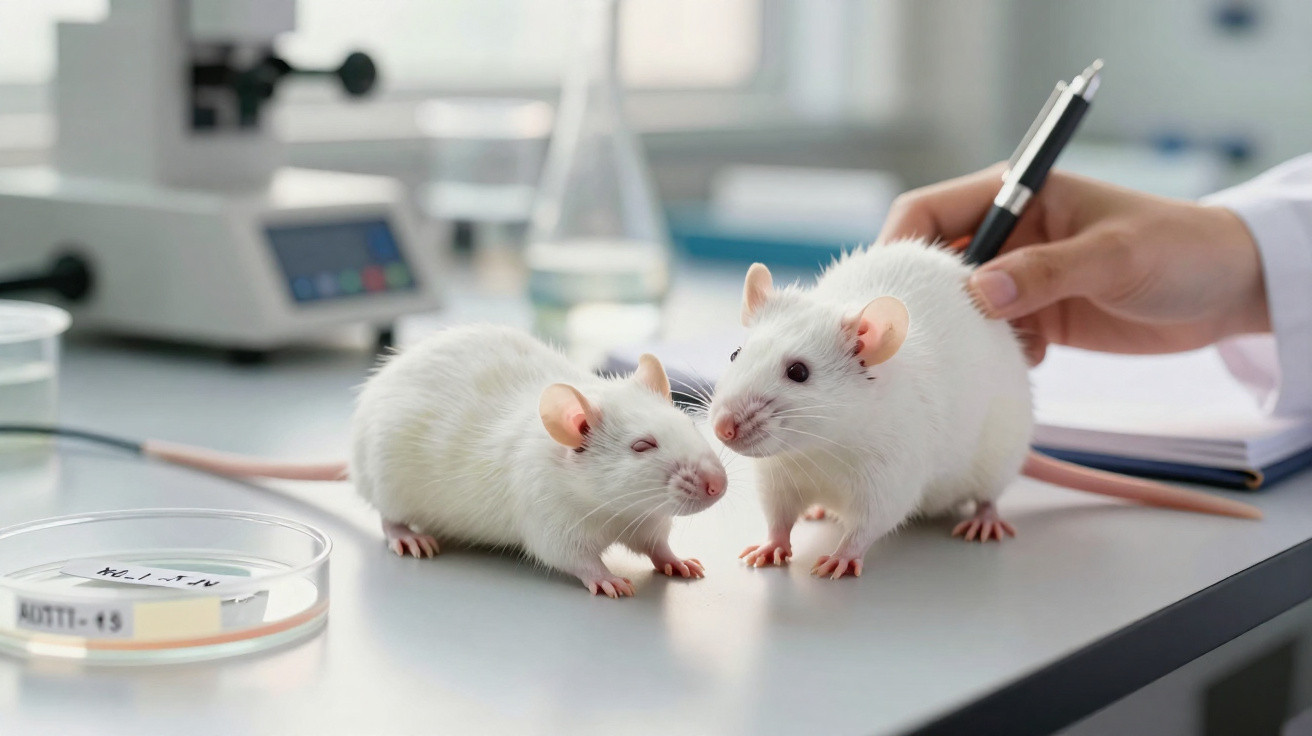
A mouse comes across another that is motionless and unconscious, yet it neither runs away nor ignores it. Instead, it moves closer, touches its companion, licks its face and may even pull at its tongue. Recorded by researchers, this sequence resembles emergency procedures and challenges the view of these rodents as creatures driven solely by individual survival.
What did the mice do in the experiment?
In the 2025 study published in Science, conscious mice were placed near companions that had been temporarily anaesthetised. When the other animal did not respond, they performed an ordered series of actions: first sniffing and touching the body, then increasing contact around the head and mouth.
The mice licked their partners’ faces, gently nibbled around the mouth and, in many instances, carefully pulled the tongue outwards. This movement helped widen the airway. Mice that received this attention also began moving again sooner than those left without another mouse nearby.
Why does this mouse behaviour resemble first aid?
The comparison arose because the observed gestures served a purpose similar to clearing the airways. In a further test, scientists placed a small object in the unconscious animal’s mouth. In most attempts, its companions removed it before continuing to lick and manipulate the area.
The researchers do not claim that mice understand the situation as a human would. Even so, the response did not appear random. It was stronger when the animals were genuinely unconscious and followed a consistent progression, as though the lack of response acted as an emergency signal.
Which actions did scientists record?
Video recordings showed that the assistance involved more than one gesture. The mice gradually escalated their actions as their companion remained still, suggesting a response adapted to the absence of reaction. The main behaviours identified during the tests included:
- Sniffing the unconscious companion’s body and face.
- Licking the head, eyes and mouth area intensely.
- Gently biting parts of the face to trigger a reaction.
- Pulling the tongue to widen the airway.
- Removing objects blocking the other animal’s mouth.
Researchers also noted that mice familiar with the unconscious individual showed stronger responses. This difference suggests that social recognition may affect their willingness to help, although the basic behaviour also appeared towards less familiar animals.
Watch the video shared by the YouTube channel Vivian Roncon Pets, showing some unusual mouse behaviours that you should know before deciding to keep one as a pet.
Is this urge to help learned?
The evidence suggests that this response may be innate. The mice in the experiment had never encountered an anaesthetised companion or watched another animal carry out this sequence. Nevertheless, they displayed similar actions, indicating that natural neural circuits may be prepared to respond when group members are immobile.
Brain analyses pointed to the involvement of regions associated with emotions, social interaction and oxytocin release, including the amygdala and hypothalamus. This does not demonstrate conscious altruism, but it reinforces the hypothesis that rescue behaviours may have ancient evolutionary roots and occur in social animals of different sizes.
What does the discovery change about rodents?
Mice are often regarded merely as urban pests or laboratory models, a perception that reduces socially complex animals to disposable nuisances. The study does not turn these rodents into tiny paramedics, but it does reveal an ability to recognise vulnerability and respond with actions that may support another individual’s recovery.
The finding invites a reassessment of assumptions about empathy, cooperation and survival in the animal kingdom. Paying attention to behaviours such as this is urgent, because they suggest that the urge to help may be far older and more widespread than we imagine. Even a creature that is often dismissed may hold clues to the origins of care.

















Comments
No comments yet. Be the first to comment!
Leave a Comment