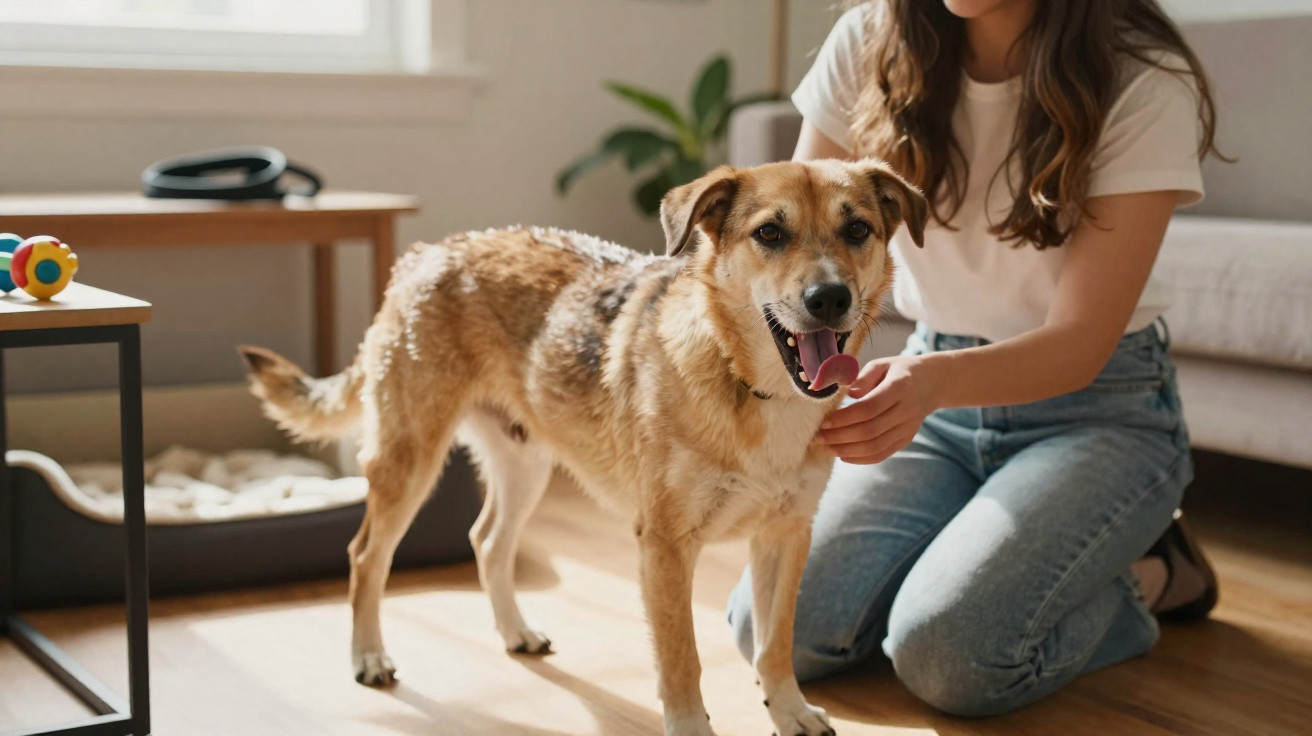
A dog does not need to growl or try to escape to show that something is wrong. Out-of-context yawning, quick nose licks and changes in ear position may point to stress or discomfort-signs that often go unnoticed, even by attentive owners.
Which body changes indicate tension?
A dog’s body often shows discomfort before any more obvious reaction occurs. Stiff muscles, a low or tucked tail, ears pinned back and a hunched posture may appear when the animal feels uneasy around a person, environment or situation.
It is also worth noticing when a dog turns its head away, avoids eye contact or keeps its body angled away. These behaviours do not mean guilt or stubbornness. They are often an attempt to defuse conflict and ask for more space.
Why should yawning and licking be taken seriously?
Yawning does not always mean a dog is sleepy. If it happens during a veterinary appointment, forced interaction, loud noise or an unfamiliar approach, it may act as a sign of tension. The same applies to quick, repeated nose licking.
These gestures need to be considered in context. One yawn after waking up is normal, whereas several signs appearing together may indicate discomfort. Panting without heat or exercise, along with unusual salivation, also warrants attention.
Which subtle dog stress signals can appear together?
Canine stress commonly presents as a combination of small behavioural changes. Spotting this group of signals can help stop the situation before the dog has to rely on barking, growling or other more intense responses to be understood.
- Looking away or turning its head when someone approaches.
- Shaking its body when it is not wet, or lifting one paw.
- Suddenly freezing, with a rigid body and closed mouth.
- Seeking a hiding place or staying very close to its owner.
Some dogs may also tremble, develop dilated pupils, shed excessively or become repeatedly restless. As every animal responds differently, the most useful approach is to understand its usual behaviour and identify changes that occur in particular situations.
Watch the video shared by the YouTube channel PeritoAnimal, which shows and explains 10 animal behaviours.
What can cause stress in a dog?
Visitors, boisterous children, fireworks, house moves, travel and forced contact with other animals are among common triggers. Pain, itching and health issues can also cause irritability, withdrawal or resistance to touch, including in dogs that are usually sociable.
When behaviour changes for no apparent reason, it is not safe to assume that everything is anxiety. Refusing food, avoiding movement, vocalising or reacting to touch may signal physical discomfort. In these circumstances, a veterinary assessment can help investigate the cause.
How can you help a dog feel safe?
When you notice signs of tension, increase the distance from the trigger and let the dog choose where to stay. Avoid hugs, telling it off or trying to force it to interact. A quiet place, a predictable routine and positive associations can help restore its sense of safety.
Do not wait for discomfort to develop into a stronger reaction. Pay attention to the subtle signs today and respect the animal’s boundaries. If stress is frequent, intense or accompanied by physical changes, promptly seek advice from a veterinary surgeon or behaviour specialist.

















Comments
No comments yet. Be the first to comment!
Leave a Comment