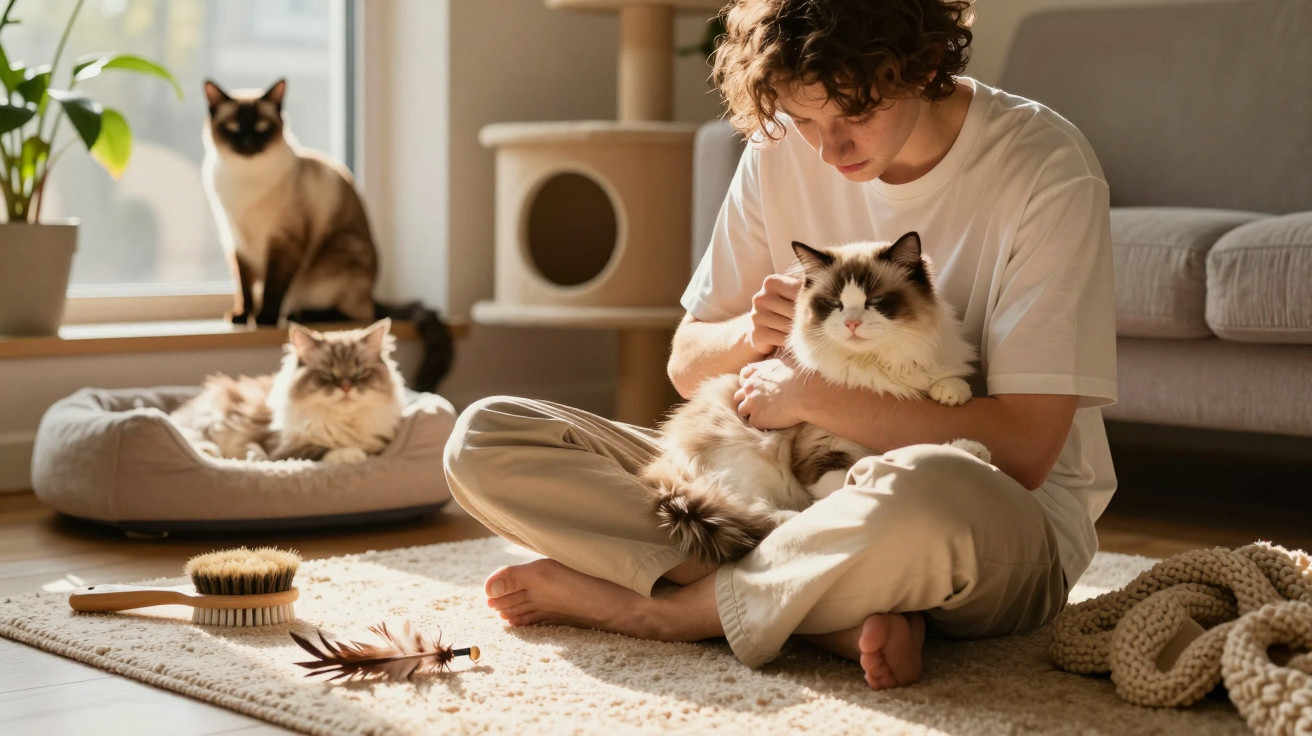
Picture purr-motor warmth, velvet-soft paws and peaceful routines that fit naturally into everyday life.
You may be looking for a cat that settles on your lap rather than treating the curtains as a climbing frame. Certain breeds are more inclined towards gentle, people-centred behaviour. The key is to pair your lifestyle, the size of your home and your willingness to groom with a cat that truly enjoys being close.
Why temperament matters more than trends
Social media may favour striking markings and huge, moon-like eyes, but your sofa benefits from tranquillity. Temperament should be the priority, particularly in lively households or compact flats. A relaxed cat can reduce stress, tolerate being handled and settle again swiftly after unexpected events such as visitors or a ringing doorbell. Families, new cat owners and people who work hybrid hours often suit cats that welcome affection and do not resent slightly awkward cuddles.
Warmth without drama comes from cats with low startle, low conflict, and a genuine interest in people, not just food.
How this list of cuddly cat breeds was chosen
I selected breeds that UK behaviourists and breed clubs regularly describe as calm, people-oriented and dependable indoors. Preference went to cats that cope with changes to routine, appreciate peaceful cuddle time and are unlikely to respond with scratching when handled thoughtfully. Every cat has its own personality, but these breeds are generally more suited to life on the sofa.
Breeds that lean into cuddles
Ragdoll
Ragdolls commonly relax in your arms, trail you between rooms and tolerate gentle handling. They enjoy laps, soft voices and reliable routines. Indoor living suits them well when they have climbing spaces and regular opportunities to play. Brush their semi-long fur twice weekly to avoid knots beneath the front legs and around the neck.
British Shorthair
With their round eyes and teddy-bear texture, British Shorthairs have a nature that appreciates calm. They tend to sit beside you rather than directly on you, although many enjoy unhurried, predictable cuddles. They can cope well with children who behave gently. Their dense coat sheds with the seasons, but a brief weekly brush is usually enough.
Birman
Gentle, affectionate and composed, Birman cats offer quiet closeness without commotion. They often sleep near your feet, welcome you at the door and enjoy brief bursts of play. Their silky fur tangles less readily than a Persian's, although weekly grooming keeps it tidy.
Burmese
Burmese cats are highly sociable and strongly attached to their household. They enjoy being carried, overseeing Zoom calls and having a chat. Because they make close bonds and do not enjoy lengthy periods alone, a second cat or a dependable routine may be worth considering. Their coat is short and needs little grooming, while their personality shines brightly.
Selkirk Rex
Relaxed character, loose curls. Selkirks have an easy-going manner and welcome gentle attention. They adjust well to flat living, excel at napping and generally accept visitors calmly. Regular combing helps prevent tangles on the legs and belly.
Persian
Persians are renowned for their peaceful nature. They flourish in quiet households and love a soft blanket. Grooming is the compromise: daily brushing protects their skin and stops mats from forming. Seek a responsible breeder who prioritises comfortable breathing and healthy eyes.
Devon Rex
Elfin appearance, loving nature. Devon Rex cats gravitate towards warm places, shoulders and tunnels beneath the duvet. They have a playful side, but drama remains limited when their energy is directed into two brief play sessions each day. Their fine coat benefits from occasional wiping instead of intensive brushing.
Tonkinese
Tonkinese cats are social, affectionate and remarkably adaptable when given enough attention. They suit households that enjoy engaging with their pet. They like laps and conversation but seldom seek conflict. Expect a regular need for play, followed by a contented nap on the sofa.
Meet the individual cat at least twice. The right temperament beats any pedigree line on paper.
Quick comparison at a glance
| Breed | Cuddle tendency | Grooming | Energy | Notes |
|---|---|---|---|---|
| Ragdoll | High | Medium (2x weekly) | Low–medium | Indoor life suits; provide vertical space |
| British Shorthair | Medium | Low (weekly) | Low | Enjoys calm homes; not overly vocal |
| Birman | High | Low–medium | Low–medium | Gentle with kids who handle softly |
| Burmese | High | Low | Medium | Dislikes long solitude; plan engagement |
| Selkirk Rex | Medium–high | Medium | Low–medium | Easygoing; watch for curls matting |
| Persian | Medium | High (daily) | Low | Pick lines bred for comfort and health |
| Devon Rex | High | Low | Medium | Wants warmth; gentle skin care |
| Tonkinese | High | Low | Medium | Thrives on interaction and routines |
What about controversial or sensitive breeds?
Some popular breeds also raise welfare concerns. The Scottish Fold's ear-cartilage mutation is associated with joint problems. Many UK organisations urge caution or recommend avoiding the breed altogether. If you are drawn to its rounded appearance, look instead at a British Shorthair or a Scottish Straight from healthy lines. The aim remains unchanged: a comfortable, friendly cat that can rest and move without pain.
Setting the tone at home
The first week matters
- Set up a small “base camp” room containing a litter tray, water, food and a box to hide in.
- Provide meals to a schedule, creating trust and predictability.
- Plan two short play sessions daily to direct energy appropriately.
- Give the cat a warm place to sleep close to you; many affectionate cats choose physical contact at night.
- During the first few days, ask children to speak quietly and move calmly.
Handling that reduces scratching
Encourage contact instead of picking the cat up without warning. Begin by stroking the cheeks and shoulders. Look for slow blinks and a still tail, as both suggest comfort. End the interaction at the first turned head, tail flick or flattened ear. Gentle cats remain gentle when their body language is respected.
Five minutes of grooming often doubles as bonding. It prevents matting and trims vet bills later.
Choosing between a kitten and an adult
Kittens adapt quickly, but their personalities are still taking shape. Adult cats reveal their character from the first day. Many mature cats are ideal for cuddle-focused homes because they settle sooner, sleep for longer and are less likely to wreck the curtains. Rescue centres can help you meet cats that look for laps rather than ladders.
Costs and care that preserve harmony
Ragdolls and Persians require time and suitable grooming equipment. Devon Rex and Burmese cats need daily play. Allow for a straightforward budget covering food, litter, annual health checks, flea and worm prevention, insurance if you choose it, plus an allowance for dental treatment. Even calm cats need stimulation. A window perch, a cardboard scratcher for marking territory and puzzle feeders can help keep the household peaceful.
Allergies, flats and the British weather
No cat breed is completely hypoallergenic. Some people find short-haired or lower-shedding cats easier to tolerate, though reactions differ from person to person. Where possible, meet the cat and spend time together in a closed room first. Cuddly breeds can do well in UK flats when provided with vertical shelving and gentle play at dawn and dusk, their natural high-activity periods. Heated beds prove worthwhile when winter weather turns cold.
Extra notes to help you decide
A cat's temperament is shaped by three factors: genetics, early socialisation and everyday surroundings. Gentle breeds improve the odds, but the environment makes the difference. Create routines, offer consistent touch and reward quiet behaviour with treats and gentle praise. When adopting, ask staff about lap-sitters and sofa-shadows, as many rescue centres record these characteristics. Black and black-and-white cats often wait longer to attract interest, despite many meeting every requirement for a cuddly companion.
For a quick assessment during a visit, sit on the floor and read aloud for five minutes. A cat that comes over, relaxes beside your knee and accepts a brief cheek stroke without becoming overstimulated is likely to suit a home that puts warmth first. Do not rush, meet several potential cats and choose the one that chooses you too.

















Comments
No comments yet. Be the first to comment!
Leave a Comment