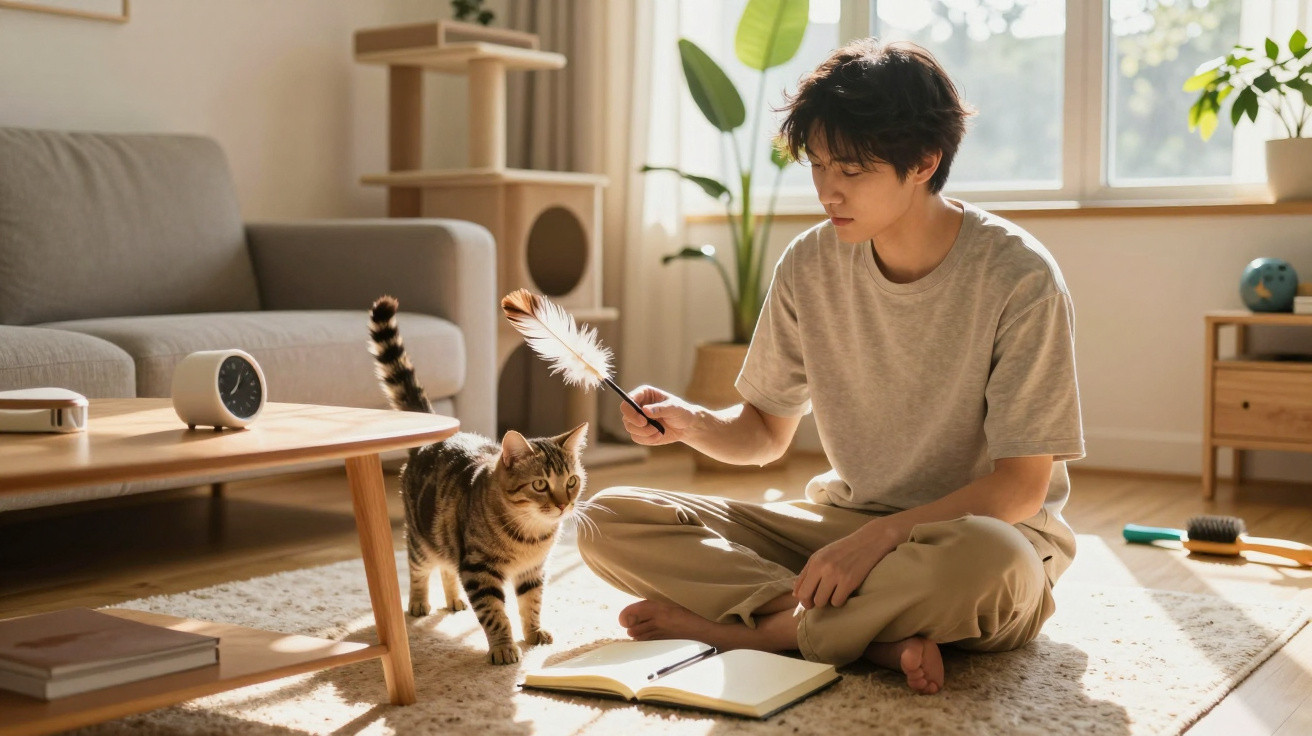
Between endless meetings, mobile phone notifications and evenings in front of the television, there is a quiet resident of the home who is often almost entirely overlooked.
In this fast-paced setting, the domestic cat is often seen as an independent “roommate” that can manage on its own. That assumption may suit people with busy lives, but it bears little resemblance to what animal behaviour science tells us about feline wellbeing.
The myth of the independent cat is proving costly
For decades, the belief that cats enjoy complete solitude has endured. It fits their reserved manner and their reputation as animals that “do not need anyone”. Yet veterinarians and ethologists have gradually been challenging this idea.
Domestic cats retain the instincts of hunters while also having social needs, although these tend to be subtler than a dog’s. They watch, sniff and assess the household routine. When nothing happens, they are not necessarily feeling calm: often, they have simply become resigned.
A cat that sleeps all day may be conserving energy because it lacks stimulation, rather than because it is especially relaxed.
This long-term boredom can lead to a range of behavioural issues: damaged furniture, persistent night-time meowing, aggression during ordinary petting, and toileting outside the litter tray. It can also contribute to obesity and anxiety, which are often mistaken for a “difficult personality”.
In this equation, human presence should involve more than practical care - someone who fills the food bowl and cleans the litter tray. For a cat, its owner is a social partner and part of its surroundings and, when things are going well, the main source of meaningful interaction in its day.
How much time your cat genuinely needs from you
Research into feline behaviour and the experience of specialist clinicians point to the same range for active engagement: between 30 and 60 minutes of exclusive attention for the cat each day.
Being in the same room is not enough: this time needs to involve direct interaction, eye contact, movement and attention focused on the animal.
There is no need to set aside a full hour in one go. Cats are crepuscular creatures of habit and generally respond better to short, intense and predictable sessions. For people with packed schedules, a practical split could be:
- 10 to 15 minutes in the morning before leaving home, with play or a small ritual;
- 15 to 30 minutes in the evening, recreating hunting behaviour and using up built-up energy;
- Brief five-minute breaks where possible when working from home or at weekends.
This daily period can help manage weight, improve the cat’s sleep quality and lower the likelihood of compulsive behaviours, such as excessive grooming or attacking moving feet in the middle of the night.
Why live interaction is better than automatic toys
The market offers countless toys: self-moving balls, lights projected onto the wall and smart feeders. These can be useful, but they do not replace an owner who is actively involved.
When a person controls the toy, its movements are unpredictable: the speed changes and the direction shifts suddenly. This more closely resembles real prey and engages chasing and catching instincts far more fully.
For a cat, play is not only about the object that moves. It is also about the social interaction with the person making it move.
In these moments, the cat regulates its strength, jumps, judges distances and assesses its own body. The more varied the experience, the more stimulation it provides for both mind and body. This is where the bond grows deeper: the owner becomes a source of enjoyment, predictable in timing but unpredictable in play.
Types of interaction that count as “quality time”
Not every cat enjoys energetic play. Some prefer gentle physical contact, while others are drawn to mental challenges. It is worth observing your cat’s individual character and creating a range of interactions.
Simulated hunting games
- A wand with feathers or ribbons, dragged across the floor and hidden behind furniture;
- A lightweight ball that can be chased and “caught”;
- A thin string pulled beneath a rug, as though something were crawling underneath.
Ideally, the cat should be allowed to “win” sometimes by reaching, biting and grabbing its prey. This brings the hunting sequence to a satisfying close.
Brushing, structured petting and checking over your cat
For some cats, the best part of the day is brushing or being stroked in key areas, such as the cheeks and the base of the tail. Physical contact of this kind, while respecting the animal’s boundaries, strengthens the bond and allows the owner to check for matted fur, wounds or ticks.
Short training sessions and mental stimulation
Cats can learn tricks too. With small treats, you can teach a cat to sit, offer a paw, climb onto a particular surface or enter its carrier on command. Sessions should be brief, involve few repetitions and provide an immediate reward.
| Activity | Suggested duration | Main benefit |
|---|---|---|
| Hunting play with a wand | 10–15 minutes | Energy expenditure and stress reduction |
| Brushing and petting | 5–10 minutes | Stronger bond and coat care |
| Treat-based training | 5–10 minutes | Mental stimulation and basic obedience |
| Scent-based games | 5–10 minutes | Environmental enrichment and curiosity |
When time is limited: changes to routine and environment
For anyone who is out all day, 30 to 60 minutes a day may seem like an ambitious target. One realistic approach is to turn some late-afternoon tasks into opportunities to interact with the cat.
Some practical examples include:
- Talking to the cat and giving it a quick stroke while preparing dinner;
- Putting food into slow-feeding toys instead of tipping it into a single bowl;
- Setting a regular time for a “night-time hunting session” before switching on the television.
The environment can help as well. Shelves, tall scratching posts, cardboard boxes and paper bags can create a vertical “playground”. This does not replace the owner’s presence, but it provides extra challenges during periods alone.
When too little time becomes a health concern
A chronic lack of interaction affects more than behaviour. A sedentary lifestyle increases the risk of diabetes, joint disease and urinary problems, all of which are common in indoor cats.
A cat that seems listless, gains weight quickly, vocalises more at night or begins avoiding physical contact is sending warning signs about its current routine.
In these situations, it is best to combine changes to interaction time with veterinary guidance. Sometimes diet needs adjusting, chronic pain needs investigating, and it may even be necessary to consider a second cat, where personalities are highly compatible, to share some of the social load - but this should be considered carefully and planned properly.
From the clock to everyday practice: real situations at home
Imagine a cat that spends 10 hours alone in a small flat. When its owner returns, it meows constantly, races around the home and scratches the sofa. Rather than dismissing this as “attention-seeking”, it is worth recognising it as an urgent request for stimulation.
If the owner sets aside 15 minutes for intense play as soon as they arrive home, followed by 10 minutes of brushing before bed, the cat is likely to sleep better and become less destructive. Within two or three weeks, the household can begin to notice the difference.
In another situation, someone works from home but only engages with their cat when it jumps onto the keyboard. By introducing brief scheduled breaks - five minutes with a wand between meetings and three minutes of petting after a call - the cat learns that it will receive attention at specific times and is likely to interrupt work less often.
These small adjustments show that the question “how much time to spend with your cat each day” is not only about minutes on the clock. It is about the quality of that contact, its predictability and how consciously the animal is included in the already busy routine of the people in the home.

















Comments
No comments yet. Be the first to comment!
Leave a Comment