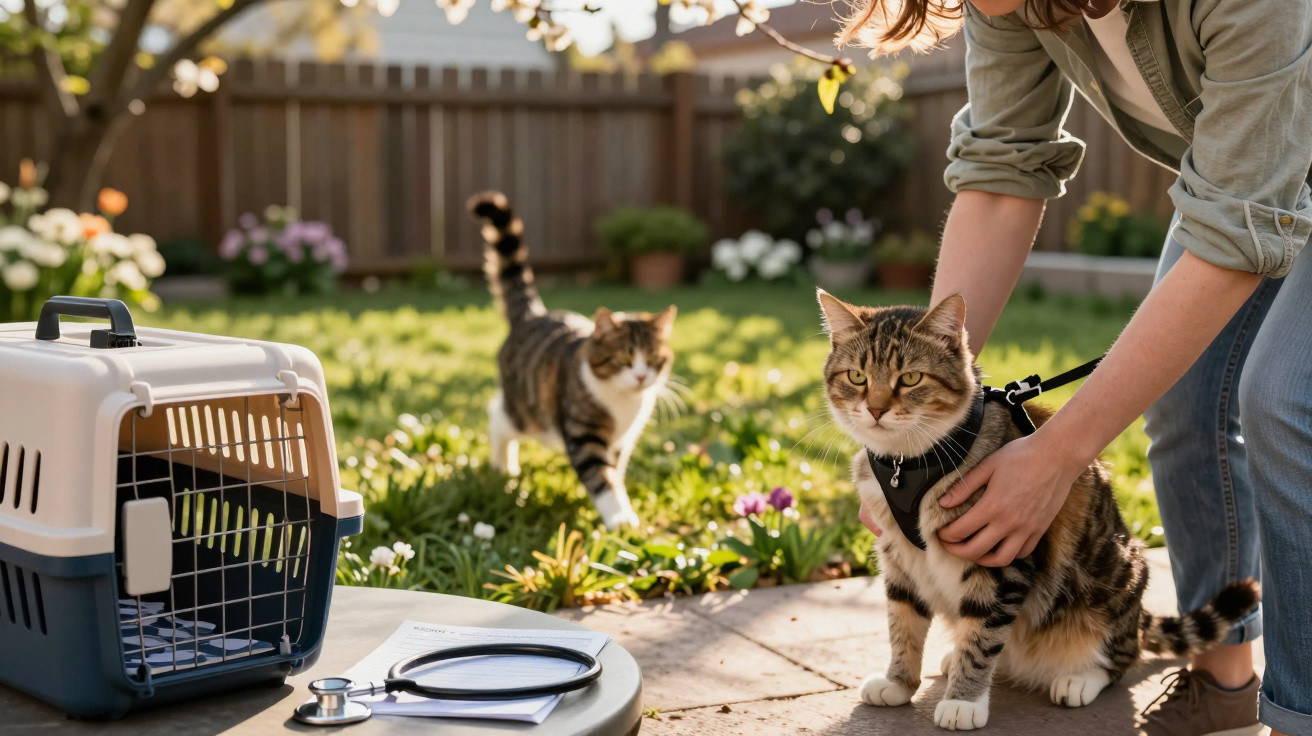
As the days grow longer, peaceful sofa lions can suddenly turn into fierce garden rivals – much to their owners’ dismay.
When the spring sunshine begins appearing more often, many outdoor cats undergo a noticeable shift in mood. Rather than dozing contentedly on the windowsill, they patrol front gardens, fences and garage roofs on high alert. To many owners, it can seem like an abrupt change in personality, but there is a clear biological trigger behind it.
When light stimulates hormones
The key factor is light rather than temperature. Even a few extra minutes of daylight each day can alter a cat’s body. Its brain detects the lengthening days and signals for hormone production to change.
Sex hormones in particular rise noticeably. Male and female cats become more energetic, restless and adventurous. Their urge to secure and expand their own surroundings increases. Even neutered cats often display far more territorial behaviour than they do in winter – neutering softens the strongest peaks, but does not remove these instincts entirely.
With the light of spring, a cat’s body switches from “winter sleep mode” to “territory and reproduction mode”.
Studies and practical experience from veterinary practices indicate that reports of territorial fights rise sharply towards the end of winter. From a cat’s perspective, every front garden, hedge and wall must be negotiated again: who “owns” this route, who may scent-mark here, and who takes priority at food sources and quiet sleeping places?
Why neighbours suddenly become enemies
Cats are naturally solitary and territorial animals. In densely built-up residential areas, however, they are often forced to live side by side. During winter, many put their rivalries partly on hold, as cold weather and darkness curb their desire to roam.
Once conditions become warmer and brighter, the reality emerges: many streets contain considerably more cats than a traditional feline territory can accommodate. This results in:
- more encounters in confined spaces
- greater competition for routes, hiding places and resting spots
- more frequent confrontations at bottlenecks such as gaps in hedges or passages beside garages
- loud threats during the night – hissing, yowling and screaming
Owners often see only the consequences: tufts of fur, small wounds and frightened behaviour. The actual dispute usually takes place outdoors at dusk or overnight, when people notice very little.
Health risks: when scratches become dangerous
Bleeding ears and split claws may look alarming, but in many cases they heal. The real danger lies in the “invisible” injuries: deep bite wounds and concealed scratches.
When a cat bites, saliva and bacteria are carried deep into the tissue. If the surface of the wound closes quickly, it creates ideal conditions underneath for inflammation and abscesses. There is also a second issue that many people underestimate: viruses.
Every bite injury can transmit more than bacteria – it can be the start of a lifelong viral infection.
The most significant risks associated with territorial fights include:
- FeLV (feline leukaemia virus): weakens the immune system and can cause tumours and serious blood disorders. It is usually transmitted through bite injuries or close contact.
- FIV (feline immunodeficiency virus): its effects in cats resemble severe immune deficiency, greatly increasing susceptibility to other illnesses. It is almost always transmitted through deep bites.
Both infections often initially progress without obvious signs. Following a fight, a cat may merely seem slightly tired or eat less well for a few days – serious symptoms may only become apparent much later. Anyone who keeps an outdoor cat should be aware of this hidden risk.
Protection through vaccinations – with one gap
The most important part of a protection plan is up-to-date vaccination against feline leukaemia. Many cats receive this vaccine as part of their primary course, but owners can easily overlook the fact that protection needs regular boosters.
It is worth checking the vaccination record before spring properly gets under way. Anyone uncertain should call their veterinary practice to confirm the exact status. They can also establish whether a feline leukaemia vaccination is appropriate based on the cat’s lifestyle – fully outdoor, indoor with a secured balcony, or part-time outdoor.
The situation is different for feline immunodeficiency virus: no vaccine is currently available. At this point, behaviour determines how great the risk becomes.
| Measure | Effect |
|---|---|
| Booster for feline leukaemia vaccination | reduces the risk of serious viral infections after bite injuries |
| Regular health checks | allow illnesses resulting from fights to be detected early |
| Neutering (if not already done) | reduces territorial urges and roaming, but does not prevent every conflict |
Planning wisely: when outdoor cats are safest outside
Rather than keeping a cat indoors for months, owners can achieve a great deal by avoiding the critical times of day. Most territorial conflicts occur at dusk and during the night. This is when most cats are out hunting, scent-marking their territory and encountering rivals.
Moving outdoor access to the quieter hours of the day significantly reduces the risk of fights.
The following approaches have proved particularly effective:
- early, supervised morning outings – many rivals are tired after the night or have already returned indoors
- calling the cat in before sunset – the four-legged companion should be inside by nightfall at the latest
- consistent routines – keeping the same times helps the cat adapt and reduces stress
An automatic cat flap with a timer can be a major help here. It can be set to block night-time outings entirely during the high-tension spring months.
Spotting warning signs after a fight
Not every injury is immediately visible. Bite marks and scratches can easily remain hidden beneath thick fur. In spring, owners should monitor outdoor cats more closely in day-to-day life.
A veterinary assessment is urgently needed if a cat:
- suddenly reacts sensitively when touched on particular areas of its body
- limps or avoids movement
- has warm, foul-smelling swellings, which may indicate an abscess
- appears lethargic or eats markedly less
- has a fever or unusual drooling
The earlier an abscess is opened and treated, the lower the burden on the animal and the smaller the risk of permanent damage.
More activity at home lowers frustration levels
Anyone keeping their cat indoors more often during the sensitive evening hours needs to provide an alternative indoors. Otherwise, energy builds up and the cat’s mood can quickly deteriorate. Particularly useful options include:
- short, intensive play sessions with hunting toys
- food puzzles that require the cat to work for treats
- elevated resting places by the window for watching the garden from indoors
- a clear daily routine with set feeding and play times
A cat that is adequately stimulated will generally approach its limited outdoor periods more calmly and is less likely to become involved in escalating conflicts.
How owners can ease conflicts between neighbourhood cats
Many tensions develop between animals that encounter each other regularly, such as in terraced housing estates or residential developments with shared courtyards. In these cases, it is worth speaking with neighbours. Knowing roughly when others let their cats out makes it possible to adjust your own cat’s schedule accordingly.
In particularly tense stretches of a street, it can help to make passageways less confrontational: dense screening at problem areas prevents rivals from seeing each other directly. Several separate feeding stations, rather than placing them all at the same hotspot, can also ease the pressure.
Ultimately, everyone benefits when spring is planned well: the cat can enjoy its much-loved outdoor experiences while staying as healthy as possible, and owners can sleep a little more peacefully despite seasonally heightened territorial tempers.

















Comments
No comments yet. Be the first to comment!
Leave a Comment