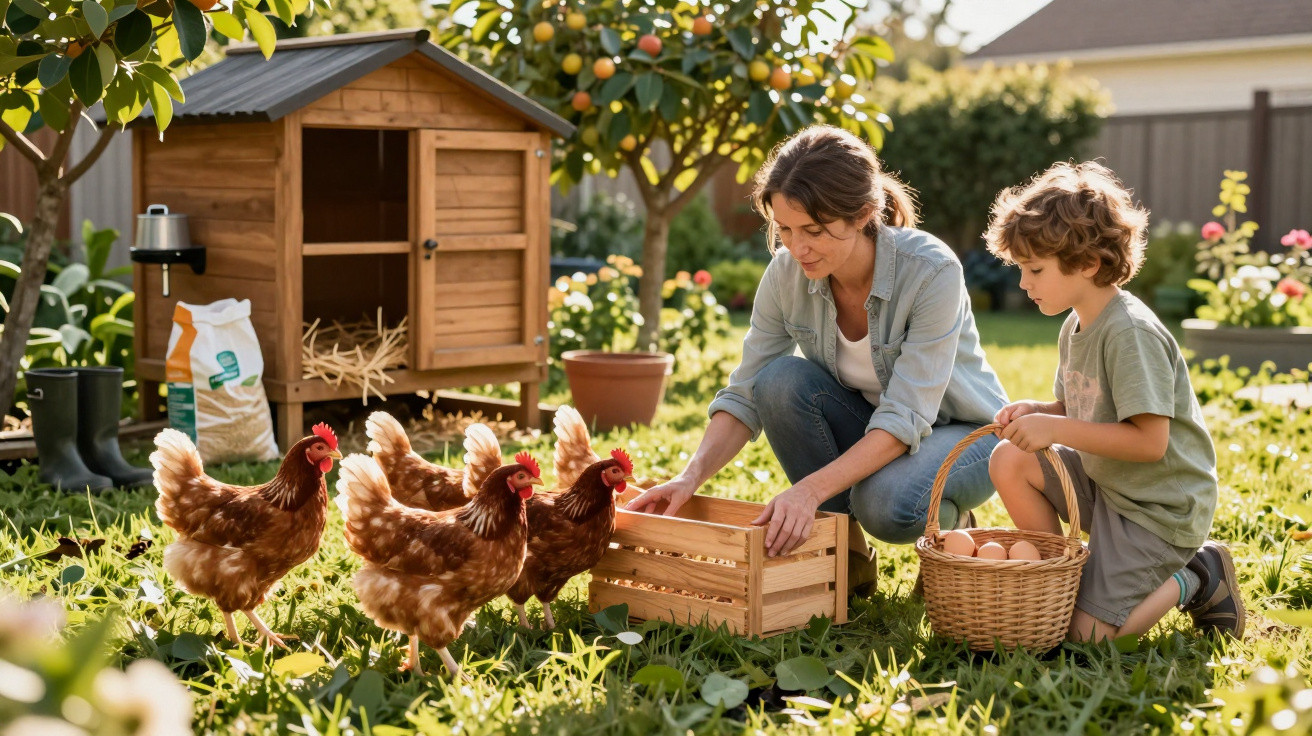
While millions of chickens are removed from production after a short working life every year, a farm in the Oise department is launching an unusual initiative: around 3,000 laying hens are to avoid the slaughterhouse and instead move in with private households – providing breakfast eggs and becoming rather unconventional pets.
From retired farm animal to garden companion
In industrial agriculture, laying hens are viewed as an economic asset with an expiry date. After roughly one to two years, their egg production declines, they lay fewer eggs and feed costs rise – so they no longer fit the business model. Usually, the next stop is the slaughterhouse.
The initiative in Mory-Moncrux begins precisely at this point. The farm is working with animal welfare campaigners to offer thousands of these so-called retired hens to private homes. Rather than ending up as a by-product of the system, they are intended to spend several more years scratching around gardens, taking dust baths and continuing to lay eggs – just no longer at an industrial rate.
In the industry, the hens are considered “no longer profitable”, yet they can live for years in a private garden and continue to lay eggs regularly.
Interested people can travel directly to the farm, select one or more birds and take them home in transport crates. Those who wish can immediately establish a small flock, as chickens need the company of their own kind.
Why these hens are surplus – despite still laying eggs
Professional egg producers operate according to tightly calculated production schedules. The birds reach very high egg output early in life, before it noticeably falls as they age. For the trade, every figure in the statistics matters; a hen’s character in the shed does not.
This is where the gap arises: the hens are generally still physically fit, their plumage often recovers quickly, and they may keep laying eggs for years. They simply do so with breaks, seasonal variation and without producing an egg every day in succession.
For many of these animals, rehoming offers their first experience of grass beneath their feet, daylight rather than fluorescent lighting and a life no longer entirely dictated by production cycles. For families with a garden, this can be a very tangible form of animal welfare.
How Oise laying-hen adoption works and what it costs
The farm in the Oise area arranges collection days on which interested adopters can collect their new chickens directly from the site. There is no extensive paperwork, although several basic questions must be addressed: Is there a garden? Is a coop available? Have the neighbours been informed?
A small adoption fee is usually charged for each bird. It is not intended as a “purchase price”, but rather to:
- cover transport and logistics;
- offset part of the feed costs;
- ensure that birds are not taken home on an impulsive, poorly considered basis.
In return, new keepers receive chickens that have already worked but are far from reaching the end of their lives. Many farms report that these “second-career chickens” settle into garden life quickly and become trusting.
What prospective chicken keepers should know first
As appealing as the idea of collecting your own breakfast egg from the garden may sound, chickens are not garden ornaments; they are animals with needs. Anyone choosing to take them in should be able to provide certain minimum standards.
Essential equipment for a welfare-friendly chicken life
- Secure outdoor run: A fenced garden or enclosure protects birds from dogs, foxes and martens.
- A coop for the night: It should be dry, draught-free and lockable, with perches and nesting boxes.
- Food and water: A grain mix or feed for laying hens, green food and clean drinking water are required.
- Regular cleaning: Droppings boards need cleaning, bedding must be replaced and parasites should be monitored.
Those who can provide this receive plenty in return: chickens eat kitchen scraps such as vegetable peelings, turn over compost heaps, loosen soil and produce fertiliser for flowerbeds. They also have distinct personalities – some follow their people around the garden, while others remain cautious and prefer to watch from a safe distance.
How many chickens make sense?
Chickens are highly social animals and only thrive as part of a flock. Two birds are the absolute minimum; three to five hens fit comfortably into many average-sized gardens, provided neighbours do not object to the occasional clucking.
People new to chicken keeping often begin with a small group. Later, more “rescued” birds may be added, and they generally integrate well into established flocks when there is enough space.
Benefits for animals, people and the climate
The Mory-Moncrux initiative represents a trend emerging across several European countries: more and more people want to do more than merely support animal welfare in theory and are choosing to take direct responsibility.
Anyone who takes in a retired laying hen does not save industrial agriculture, but they do save one life in a very concrete way – and often change their own view of farm animals at the same time.
For the birds, the result is straightforward: they get to live on. Rather than ending up in a slaughterhouse after only months or years, they can make far greater use of their natural life expectancy. Keepers, meanwhile, gain a direct connection to what appears on their breakfast table.
There is also a modest environmental benefit: chickens consume many kitchen scraps that would otherwise go into general waste. This reduces the quantity of organic waste, while the garden benefits from nutrient-rich manure. Eggs do not get much more local than those from your own garden.
Risks and challenges that should not be underestimated
For all the appeal of keeping chickens, it also comes with responsibilities. In particular, formerly intensive-farmed hens can initially look somewhat worn: sparse plumage, little muscle and occasional minor injuries. Good food, space and peace help many of them recover, although not every bird improves at the same pace.
Potential veterinary bills must also be considered. Chickens are generally hardy animals, but parasites, egg binding and infections can occur. Having an avian vet within reasonable reach is therefore a clear advantage before the first hens arrive.
Anyone living in a densely built-up residential area should speak to neighbours in advance. Hens are considerably quieter than cockerels, but they will sometimes loudly announce that they have laid an egg. A brief conversation can prevent unnecessary disputes and establish whether everyone can live with the new feathered residents.
Why initiatives such as the one in Oise could catch on
Animal welfare organisations and agricultural businesses have observed for years that interest in keeping chickens in private gardens is growing significantly. The coronavirus period, when people spent more time at home, gave this trend additional momentum. Many people want to know where their food comes from and how the animals lived.
The initiative in northern France demonstrates that agriculture’s financial pressures and the wish for better animal welfare can, at least in individual cases, be brought together. Farms reduce disposal costs and improve their image, private households gain an unusual pet and fresh eggs, and some chickens avoid an early route to slaughter.
Anyone considering taking in chickens themselves – whether in France, Germany, Austria or Switzerland – should research the commitment thoroughly in advance, plan the coop and outdoor run, and realistically assess whether the daily work fits their life. When all these elements come together, a “retired farm animal” can become a very likeable garden resident, waiting at the patio door each morning and quietly clucking for food.

















Comments
No comments yet. Be the first to comment!
Leave a Comment