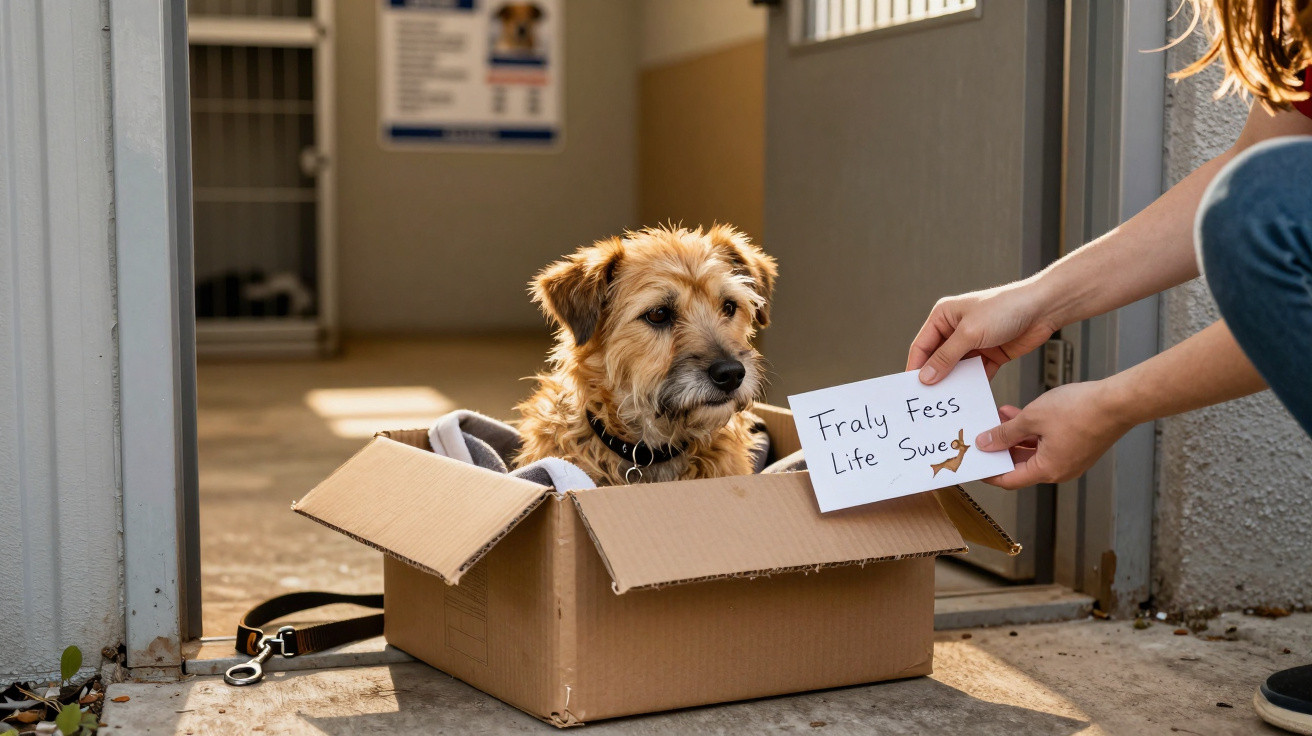
A lone pet carrier sits outside the doors of an already overcrowded animal shelter early in the morning.
Inside is a frightened tomcat - and a sentence nobody will ever forget.
The day begins like any other at the US shelter Saving Sage Animal Rescue Foundation. Staff unlock the building and prepare food while dogs bark and cats meow all around them. Then they spot it: an abandoned carrier directly outside the entrance. There is nobody in sight. A tabby tomcat is sitting inside, with a handwritten note beside him that leaves the rescuers suddenly speechless.
A familiar scene that is painful every time
A carrier left outside the door is almost part of daily life for animal shelters. Volunteers know the sight, yet it affects them afresh each time. This morning is no exception. The carrier appears to have been put down in a rush, and its latch has barely been secured. Behind the grille, a tomcat stares out with large, questioning eyes.
When a member of staff carefully opens the carrier, she immediately notices that he has been well cared for. He is not underweight and his coat is glossy. Until very recently, someone had looked after him properly. Then she sees the note tucked into the carrier's roof. She unfolds it, reads it - and pauses.
“He is not safe with me. He does not deserve to be hurt. Please help him.”
The underlying message is clear: the owner did not want to give up the tomcat. They feared for him. Perhaps there was violence in the household, or perhaps another animal had created a dangerous situation. The only certainty is that someone saw no alternative but to ask the shelter for help - anonymously, in the middle of the night.
A shelter at capacity - but no option to look away
On this particular morning, the shelter officially has no space left. Every kennel and every foster placement is occupied. The adoption lists are long, and the waiting lists are even longer. Anyone working in an animal shelter knows this dilemma all too well:
- Too many animals and too little space
- Rising veterinary costs
- An increasing number of emergencies from private households
- A risk of burnout among volunteers
Even so, the team has no doubt: the tomcat will stay. They carry him into the building, away from the road and away from fear. As they take him inside, they speak softly to reassure him. They also think of the person who wrote the letter - and who probably walked away in tears.
The rescuers sense not indifference behind the “abandonment”, but desperation and concern.
Later, they share the story on their social media channels. In essence, they say that the cat looks as though he has been loved - and that he is now safe. It is a message clearly aimed at his unknown former owner.
Georgie the tomcat receives a name and a second chance
Before his new life can begin, he undergoes the usual health check. The tomcat is taken to the vet, where his heart, teeth, eyes and coat are examined. Thankfully, the findings are reassuring: he has no serious illnesses. He is simply stressed, which is normal in these circumstances.
Only then is the tomcat given a new name: “Georgie”. It is a small, friendly name for an animal who urgently needs stability. The shelter prepares a separate area for him, with soft blankets, a quiet hiding place and fresh food.
By the evening, the first signs of relaxation appear. Georgie eats, grooms his coat, curls up on the blanket and falls asleep. The note found in his carrier stays with the rescuers. Some save messages like these in a drawer, as a reminder of why they do this frequently demanding work.
From emergency case to a happy-ending story
To help Georgie find a home more quickly, the shelter works with a specialist organisation: Ten Lives Club, a group focused specifically on rehoming cats. Before long, Georgie is able to move there.
In many cases, cats at facilities such as this wait weeks or months for the right family. Georgie's experience is different. Soon after he arrives, a woman visits the centre. She had actually come to see another tomcat, but when she notices Georgie, she cannot look away.
She had come for another cat - and fell in love with Georgie.
Within a few days, it is decided: Georgie can go home with her. The organisation posts a photograph of the tomcat in his carrier - this time heading for “home” - and writes in essence: “Our lovely Georgie moved into his new home today!”
For the shelter, this is one of those stories that gives the team strength. Many cases do not end so happily. All the more, the staff hope that Georgie's former owner will one day learn that the tomcat is alive, safe and once again has someone who loves him.
Why people leave animals in this way
In public debate, anonymous handovers like this are often condemned harshly. It is quickly said that anyone who leaves an animal at an entrance is irresponsible. The reality is more complicated. Shelter staff repeatedly encounter similar circumstances:
- Domestic violence that also affects the animal
- Dangerous conflicts between pets in the same household
- Severe financial hardship, for example after losing a job or a separation
- Health problems affecting owners that make care impossible
- Shame about asking openly for help
For animal shelters, this creates a difficult balance. On the one hand, they must make it clear that animals are not disposable items to be left outside a door at night. On the other, this very action saves lives in many cases - particularly if the animal truly was in danger.
What animal lovers can learn from Georgie's story
Every animal story shared publicly prompts reactions. Some users call for tougher penalties for owners who surrender animals anonymously. Others show compassion. Ultimately, Georgie's case offers several important messages:
- Ask for help early: Anyone who realises they are struggling to care for an animal should contact an animal shelter, animal welfare organisation or vet - ideally before the situation escalates.
- Do not remain silent out of shame: Advice, temporary foster care or financial support can ease many problems.
- Take household conflicts seriously: Aggression between animals, or towards an animal, is a warning sign that must not be ignored.
- Remember the animals in shelters: Anyone who can help should donate money, supplies or time, so that, in an emergency like Georgie's, nobody has to be turned away.
How one note can reveal entire lives
The short letter in Georgie's carrier powerfully demonstrates that an animal often has a whole story behind it, one that remains invisible from the outside. Words such as “He does not deserve to be hurt” speak of concern, fear and someone who no longer knows what to do, but is at least trying to find a solution for the animal.
For animal shelters, messages like these serve two purposes: they are emotionally moving, and they highlight that support for people and animals must be considered together. Where relationship violence, poverty or illness are involved, it is not enough simply to “remove” the animal. Advice services, social services and animal welfare groups should work more closely together.
What adoption really involves
Georgie's new owner represents many people who give a rescue animal a home. Adoption is not a spontaneous decision that ends with a signature. It involves:
- Patience with an animal that may have had negative experiences
- Financial responsibility for food, veterinary care and equipment
- A willingness to adjust everyday life - from holiday plans to working from home
- An emotional commitment, including when the animal becomes ill or grows older
Cats from difficult situations in particular often need time before they learn to trust. Small setbacks are part of the process: hiding, hissing and meowing at night. Being aware of this helps prevent a well-intentioned fresh start from quickly becoming another emergency at an animal shelter.
Georgie's story shows how narrow the line can be between a life in danger and a safe place on the sofa. An anonymous note, an overcrowded animal shelter, a woman who falls in love at first sight - and a tomcat who ultimately ends up exactly where he belongs.

















Comments
No comments yet. Be the first to comment!
Leave a Comment