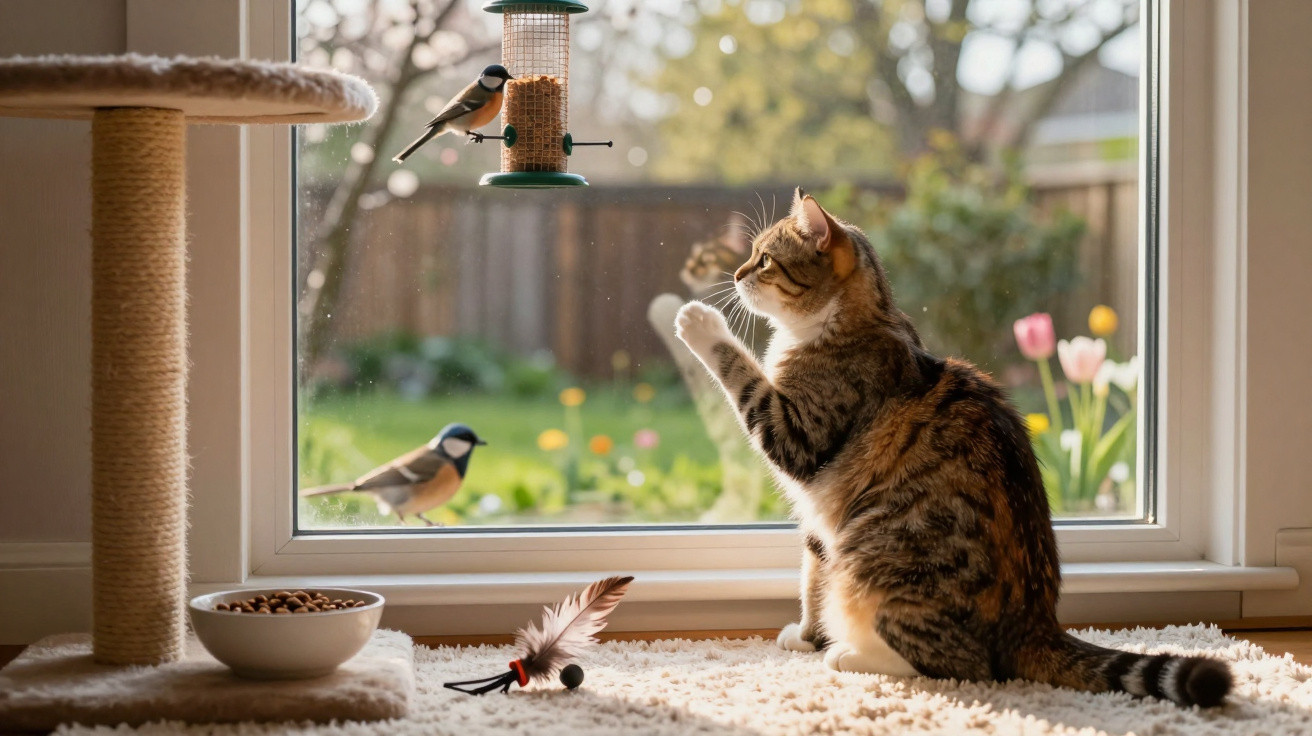
The reason goes deeper than many people realise.
With the first mild days, gardens, parks and fields come back to life. While many owners want to give their cats more freedom again, experts are sounding the alarm: early spring is a sensitive period, both for wildlife and for pet cats themselves. Letting a cat roam freely outdoors in March and April can unknowingly harm nature while exposing the animal to further dangers.
Why spring is such a sensitive time for cats
Between March and April, nature is working at full speed behind the scenes. Many songbirds begin nesting, while small mammals such as mice and shrews raise their first litters. Young animals are everywhere: close to the ground, in shrubs and in hedgerows. They are often inexperienced, slow and easy to catch.
To a cat, this can seem like an all-you-can-catch buffet. Even calm, less energetic cats can instantly switch into hunting mode when they notice fluttering wings or twitching movement. A cat's urge to hunt has little to do with whether it has eaten; it is deeply rooted in its behaviour.
“Between March and April, particularly large numbers of inexperienced young animals encounter fully developed hunters on four paws – a dangerous combination for biodiversity.”
European studies have long shown the considerable pressure on breeding birds in agricultural landscapes. Habitat loss and pesticides take their toll, and many populations have declined markedly. When intensive hunting pressure from domestic cats is added, vulnerable species can quickly reach their limits.
How severely cats really affect bird populations
People often say, “My cat only brings home a mouse now and then.” The figures, however, paint a different picture. In countries with large numbers of roaming cats, biologists estimate that domestic cats kill hundreds of millions of small animals every year, chiefly birds and mice. Individual owners see only a fraction of this, as many animals are never brought home but are eaten immediately or left behind.
- Young birds often sit on the ground or low branches, making them easy prey.
- Many species nest close to the ground, including in hedgerows and meadows.
- Especially in spring, parent birds gather food from the ground and can quite literally walk straight into a cat's path.
Leaving the patio door open for a cat in March and April therefore increases the pressure on already weakened populations at a crucial time. Every reduction in hunting helps more young animals survive.
Why staying indoors also benefits your cat
Veterinary professionals recommend greater restraint not only for nature conservation reasons. Spring brings several additional risks for cats that go outdoors.
More traffic, more accidents
As the weather improves, more people are out in cars, on bicycles and on motorbikes. Cats cross roads more frequently, chase across property boundaries and are more easily caught unawares. Collisions are particularly common at dusk, often proving fatal or resulting in costly operations.
More territorial fights and disease
Other cats are much more active at this time of year, too. Territorial disputes become more frequent, with tomcats fighting over territory or receptive female cats. Bites and scratches can easily become infected, and illnesses may be transmitted through wounds or saliva, including:
- Feline immunodeficiency virus (feline AIDS)
- Feline leukaemia
- Bacterial abscesses
- Parasites such as fleas and ticks
Keeping a cat indoors more often during this period also lowers the risk of such confrontations, along with veterinary costs and stress for the animal.
Helping pet cats through March without them going stir-crazy
Many owners worry that their cat will be unhappy if it cannot go out as usual in spring. Vets and behaviour advisers offer reassurance, but on one condition: the home needs to become more stimulating.
Activities instead of boredom
For contentment, a cat primarily needs three things: stimulation, places to retreat to and opportunities to observe. Owners who take these needs seriously can manage the critical spring weeks successfully.
| Need | Possible solution at home |
|---|---|
| Hunting instinct | Fishing-rod toys, hidden food, dry food in puzzle toys |
| Exercise | Cat tree, climbing shelves, short play sessions spread across the day |
| View outside | Window perch with a cushion, secure balcony, cat netting |
| Retreat | Hideaways, cardboard boxes, quiet rooms where nobody intrudes |
Consistency matters more than one long play session. Five to ten minutes of energetic play several times a day is often more effective than half an hour in one go, after which the cat is completely exhausted.
Why cats in the garden are so keen to chase birds
Many owners are shocked when their usually affectionate cat suddenly appears at the door with a bird in its mouth. From the animal's perspective, however, this is normal behaviour. Several factors are involved:
- Movement stimulus: Anything that wriggles or flutters triggers the hunting instinct.
- Sense of achievement: Once a hunt has been successful, the cat repeatedly seeks that feeling.
- Territorial behaviour: The garden is seen as the cat's own area, and intruders are pursued.
- Hormonal factors: Unneutered animals display stronger hunting and roaming behaviour.
Even if a cat does not eat what it catches, the harm to the prey animal remains the same. For this reason, many experts believe owners have a responsibility to limit hunting behaviour, at least during particularly sensitive periods.
Practical tips: protecting nature and your peace of mind
Those who do not want to keep their cat indoors entirely can still achieve a great deal through a few compromises.
- Limit outdoor times: Where possible, keep the cat indoors during the peak nesting period, especially at night and in the early morning. This is when many birds are most active.
- Structure the garden: Dense hedges, longer grass and shrubs give birds more cover and make hunting more difficult for cats.
- Consider neutering: Neutered animals generally roam less far and are less likely to become involved in territorial fights.
- Use a secure balcony: Anyone without a garden, or who wants to keep their cat indoors consistently, can create a safe outdoor space with netting or mesh.
Many local authorities and conservation organisations now actively encourage people to restrict their cats' outdoor access in spring. In some areas with strictly protected species, roaming cats may even be subject to temporary lead requirements or indoor restrictions. The aim is not to ban cats, but to relieve pressure on wildlife during its most vulnerable period.
Why a few weeks of restraint can make a real difference
Keeping a cat indoors more often in March and April does more than make a small contribution. In local neighbourhoods especially, many individual decisions add up to a measurable effect: more young birds survive the start of life, and fewer cats end up at the veterinary surgery after accidents.
For owners, this means above all reconsidering old habits. Cats do not need to go outside at every time of day and in all weather to be happy. A well-designed indoor environment, regular play routines and a little patience are often enough to keep a four-legged companion purring contentedly, while blackbirds, tits and other birds raise their young undisturbed outside.

















Comments
No comments yet. Be the first to comment!
Leave a Comment