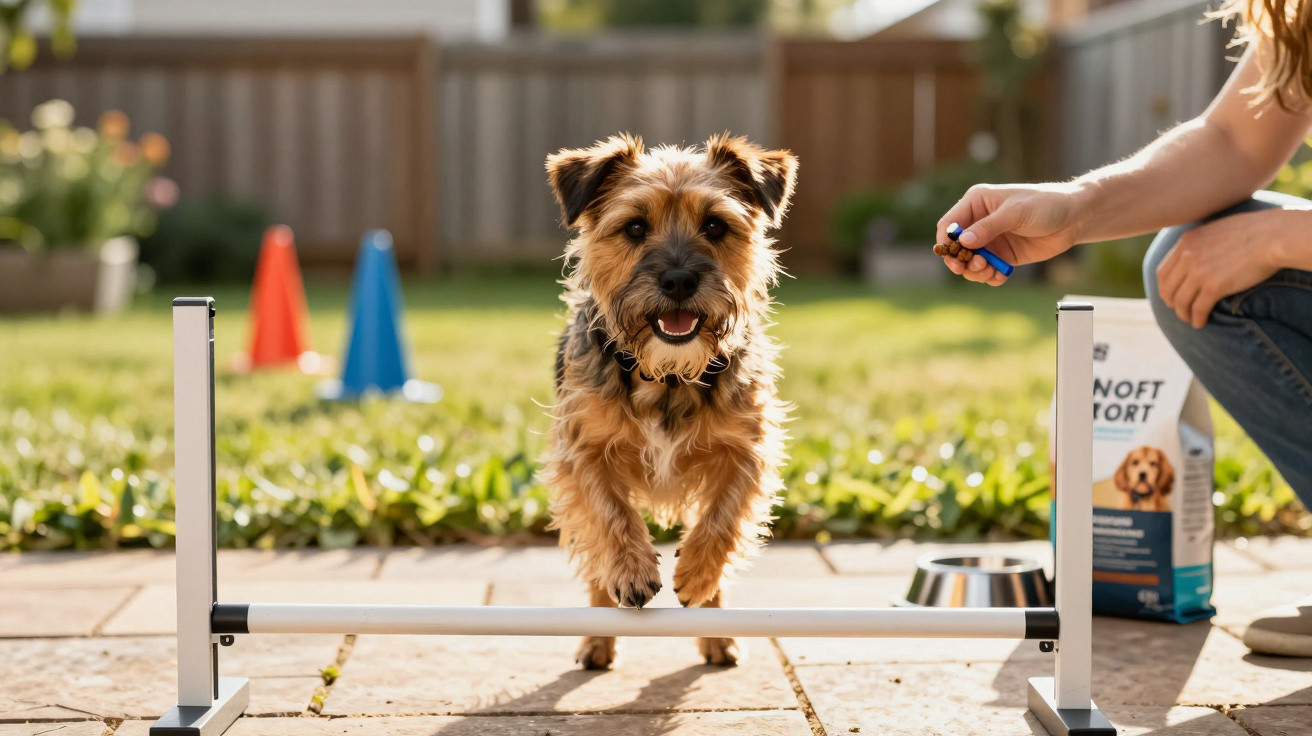
The border terrier originated in the area known as the Border Country, on the boundary between England and Scotland. Bred by local farmers and hunters, its main role was to follow horses and packs of hounds during fox hunts, going into dens to flush out animals when required. While it has retained its working-dog qualities, its even temperament and strong bond with its family have also made it a welcome addition to the home.
Discover the main characteristics of the border terrier dog breed below.
1. Physical appearance
At first glance, the border terrier stands out for its distinctive appearance. According to the Brazilian Confederation of Cynophilia (CBKC), it is a small dog, yet it is sturdy, well balanced and has a narrow body frame, a feature that once enabled it to enter dens easily while hunting. Males weigh between 5.9 kg and 7.1 kg, while females weigh from 5.1 kg to 6.4 kg.
One of the breed’s most recognisable features is its head, which the CBKC describes as resembling that of an otter. Its eyes are dark, and its ears are small and V-shaped, folding forwards and sitting close to the cheeks.
According to the CBKC, the border terrier has a double coat comprising a dense, harsh, weather-resistant outer layer and a short, thick undercoat that provides protection from cold, damp conditions and vegetation. Accepted colours include red, wheaten, grizzle and tan, as well as blue and tan.
2. Border terrier temperament and personality
The border terrier retains many of the behavioural traits developed through centuries of work in the countryside. The CBKC describes it as an alert dog that is brave and determined. Its character brings together confidence, intelligence and a strong desire to investigate its surroundings.
At home, it is usually very affectionate towards its family and forms a particularly close attachment to its owner. It also enjoys taking part in everyday activities and rarely likes being left alone for extended periods. As a sociable breed, it generally gets on well with children and other dogs when socialised from an early age.
However, its strong hunting instinct remains. Small animals may attract its attention, especially outdoors. For this reason, lead walks and securely fenced spaces are important to prevent unexpected chasing.
Energy is another defining trait of the breed. Despite being a small dog, the border terrier needs play, walks and activities that challenge both its body and mind. Without this stimulation, it may develop boredom-related behaviours, such as digging, excessive barking or finding its own ways to use up energy.
3. Feeding and health care
As with other active breeds, the border terrier requires a balanced diet suited to its size, age and exercise routine. Good-quality food helps maintain muscle tone, coat condition and physical vitality.
Coat care involves more than weekly brushing. The border terrier generally retains the natural texture of its coat more effectively with the technique known as hand stripping, in which dead hairs are removed by hand.
In addition to grooming, its routine should include regular veterinary appointments, vaccinations, worming, flea and tick control, dental hygiene and preventative monitoring. Daily exercise is also an essential part of health care, as the breed was developed to stay active for long periods.
4. Training and socialisation
The border terrier is regarded as an intelligent dog that is willing to learn. It is naturally alert and active, traits that support training. Training should begin during puppyhood, using rewards, play and simple commands. Positive-reinforcement methods generally produce excellent results because they encourage the dog’s interest in learning without creating fear or insecurity.
Socialisation also deserves attention from the first months of life. Gradual exposure to different people, settings, sounds and other animals helps the border terrier develop balanced, confident behaviour. This process reduces the likelihood of excessive fears and makes everyday coexistence easier.

















Comments
No comments yet. Be the first to comment!
Leave a Comment