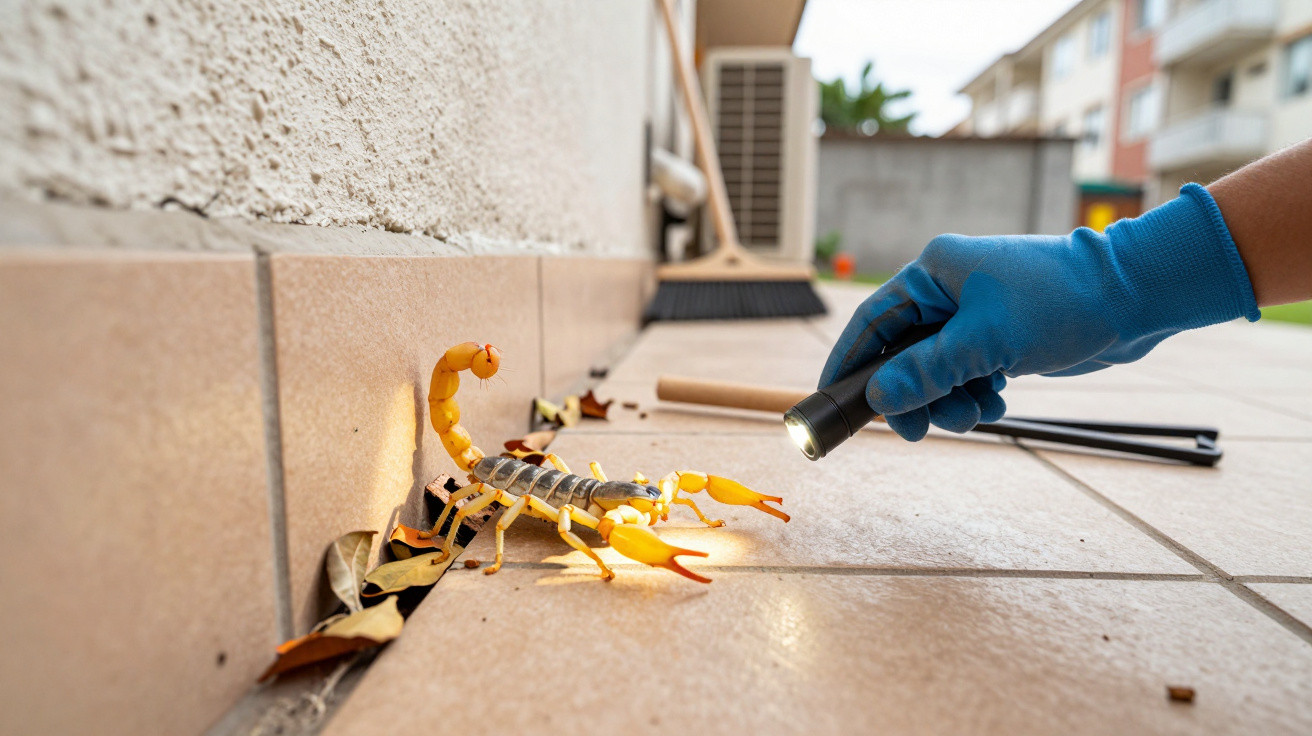
A single female can be enough to establish a new population. This trait helps explain why the yellow scorpion (Tityus serrulatus) has become a cause for concern in Brazilian urban areas, where it finds shelter, food and favourable conditions to multiply without needing to encounter a male.
How does the yellow scorpion reproduce without a male?
The key is parthenogenesis, a reproductive process through which the female can produce offspring without fertilisation by a male. In Tityus serrulatus, this ability greatly increases its colonisation potential, since a female carried to another location can produce new individuals.
This does not mean a population appears immediately, but it removes a major obstacle faced by many species: finding a mate. Where suitable shelter, food and conditions are available, the offspring can remain in the area and contribute to the gradual spread of the scorpion.
Why do cities encourage its spread?
Urban environments offer much of what scorpions seek in nature: dark, sheltered places with little disturbance. Cracks, pipes, rubble and underground structures create routes and hiding places that make them hard to detect while allowing them to move between different locations.
There is another crucial attraction: food that is available for almost the entire year. Cockroaches are among these animals’ prey and are often plentiful in sewer systems, grease traps and areas containing waste. As a result, urban problems that encourage insects can also make an area more suitable for scorpions.
Which areas around the home need attention?
The risk is not limited to rooms inside the home. Gardens and utility areas can contain small habitats suitable for hiding, particularly where materials have been left to accumulate, moisture is present, cracks exist or insects appear regularly. Routine checks help identify spots that may go unnoticed in everyday life.
- Piles of bricks, roof tiles, timber, stones and other materials stored directly on the ground.
- Drains, grease traps, pipes and access points connected to the sewer network.
- Gaps in walls, skirting boards, masonry, floors and little-used external structures.
- Rubble, accumulated leaves and objects left in damp corners or places protected from light.
- Areas with a constant presence of cockroaches and other small animals that may provide food.
Keeping these areas tidy reduces opportunities for shelter, but it is important not to put your hands directly into holes, piles of materials or objects that have been undisturbed for a long time. When moving stored items, taking care and using suitable protection lowers the chance of an unexpected encounter.
Watch the video shared by the YouTube channel Richard Floriani – Pest Control, showing where the yellow scorpion is most likely to hide.
How can it hide so close to people?
Scorpions are mainly nocturnal and spend much of their time under cover. This means they can remain relatively close to homes without being noticed. During the day, they may stay beneath objects, inside gaps or within structures that protect them from intense light and sudden environmental changes.
They can also use urban infrastructure itself to travel. Sewer networks and pipework may act as routes between separate areas, particularly where seals are defective. For this reason, drain covers, sealed gaps and cockroach control can help make a home less accessible.
Prevention starts before you find a scorpion
Parthenogenesis makes the yellow scorpion a particularly effective coloniser, but its spread also relies on the opportunities created by its surroundings. When gardens collect rubble, cracks remain unsealed and cockroaches can find food, the result is a favourable combination for shelter, hunting and continued presence.
For that reason, do not wait for a scorpion to appear before checking the surrounding area. Inspecting drains, removing hiding places, sealing entry points and reducing insect activity are measures that should become part of your routine now. A small environmental change can remove precisely the conditions that allow this animal to remain close to the family.

















Comments
No comments yet. Be the first to comment!
Leave a Comment