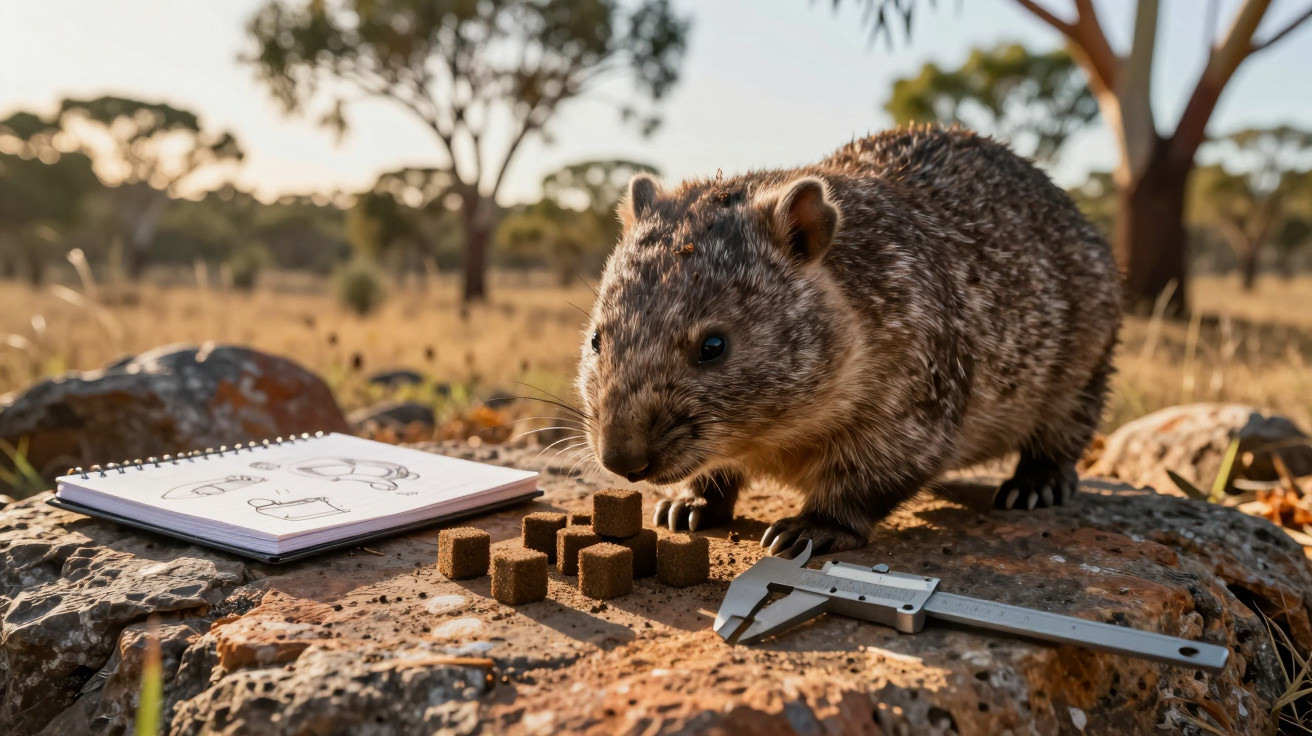
In Australia, one mammal stands out for an ability that seems to defy logic: the wombat produces faeces that are almost cube-shaped. This is no coincidence. Their form is linked to the unusual way its intestines work, while also helping the animal leave signs of its presence throughout its territory.
Why is wombat poo cube-shaped?
For a long time, this shape puzzled researchers, as wombats do not have a square structure at the end of their digestive tract. The answer lies inside the intestine, where the material is gradually compressed before it is expelled.
Research has found that different sections of the intestine have different levels of elasticity. Certain areas contract and stretch more than others, squeezing the faeces in varying ways as they move through the gut and helping to create clearly defined faces and corners.
How can the intestine shape the faeces?
A wombat’s intestine acts rather like a moving biological mould. As the faeces travel through it, firmer and more flexible areas of the intestinal wall apply different pressures to material that is already becoming drier and more compact.
Rather than being cut into shape all at once, the process happens gradually. Water loss, muscular contractions and differences in elasticity combine to turn the contents into small cube-like pieces before they leave the body.
What does the wombat use these small cubes for?
The faeces play an important role in communication between the animals. Wombats typically leave them in strategic, noticeable places, creating scent signals that allow other individuals to recognise that an area is being visited or occupied.
- Rocks can be raised spots where the faeces are deposited.
- Logs and other natural surfaces are also used for markings.
- Routes used for travelling help spread territorial signals between animals.
This behaviour turns something that seems merely curious into a means of communication. By placing the pieces in carefully selected locations, the wombat can leave a kind of chemical warning for other animals without being there at the time.
Watch the video shared by the YouTube channel ANIMAL TV showing wombat behaviour.
Does the cubic shape offer an advantage?
There is a very practical benefit: the cubes do not roll away easily. Since wombats deposit their faeces on rocks, logs and other raised surfaces, a rounded shape could cause them to fall and lose some of their territorial purpose.
Their flatter sides help the pieces stay in place for longer, even on uneven surfaces. In this way, a feature created by the intestine’s workings also supports the animal’s strategy for marking its presence in the environment.
How many cubes can a wombat produce each day?
A single wombat can produce dozens of these pieces over the course of a day, distributing them across different parts of its roaming area. That quantity underlines the importance of faeces in the species’ routine of communication and territorial recognition.
Unusual cube-shaped wombat poo shows how seemingly strange details can have efficient explanations in nature. The next time an animal feature appears absurd, it is worth taking a closer look: share this discovery and keep an eye out for the surprising solutions created by evolution.

















Comments
No comments yet. Be the first to comment!
Leave a Comment