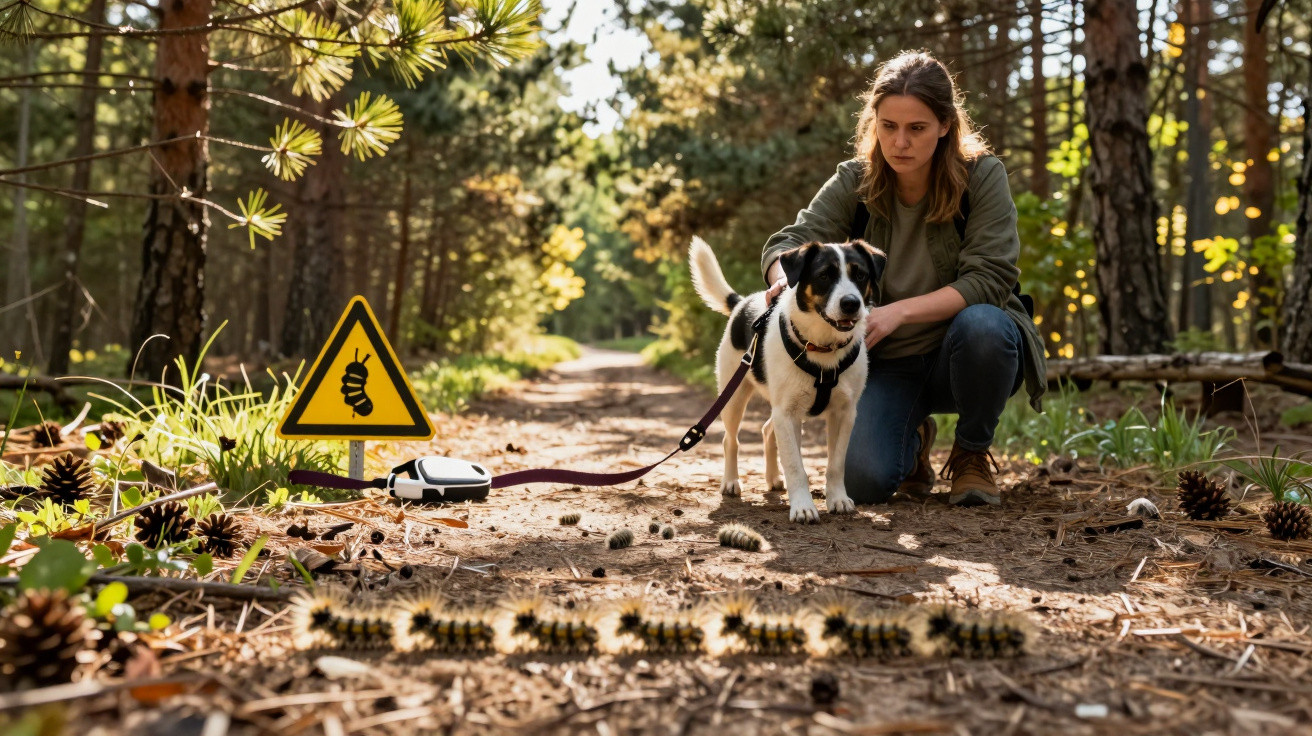
Milder temperatures are extending the activity period of processionary caterpillars. For dogs, the threat no longer ends when winter is over.
In spring, woodland paths and gardens fill up with walkers again. Dogs run about, sniff and explore around pine trees. These are precisely the places where they may encounter processionary caterpillars. Their time spent moving across the ground now extends later into the season, sometimes until the end of April depending on the area and weather conditions.
A risk period stretching well into spring
For many years, pet owners linked processionary caterpillars solely with February and March. That assumption is no longer enough. Milder winters support larval survival and alter their development cycle.
When temperatures remain high and frosts are infrequent, caterpillars may leave their nests over a more extended period. They then come down from the trees in long lines, often across paths, woodland floors, parks and gardens planted with pine trees.
The risk does not vanish with the first fine days: depending on the region and weather, it can remain high until the end of April.
Pine processionary caterpillars make highly visible white nests in the branches, resembling large silk bags. Their presence should be treated as a warning, even where no insects can yet be seen on the ground. The caterpillars usually travel in groups, with one following directly behind another, creating a striking line that readily catches the attention of a curious dog.
Why brief contact can become a veterinary emergency
The danger does not come from a bite. These caterpillars are covered in large numbers of microscopic urticating hairs. The hairs detach easily and may spread through the air, onto plants or into the soil.
They contain a substance known as thaumetopoein. This irritating protein triggers an inflammatory reaction that can sometimes be extremely severe. If a dog licks a caterpillar, picks it up in its mouth or sniffs it at close range, the hairs can lodge in its tongue, lips, palate or nose.
Warning signs to take seriously
Symptoms usually develop very quickly. They require immediate action; do not wait to see whether the animal improves.
- Heavy, unusual drooling;
- Whining, restlessness or repeated attempts to rub its mouth;
- A red, swollen or painful tongue;
- Swelling of the nose, lips or face;
- Vomiting, breathing difficulties or lethargy;
- An area of the tongue that rapidly changes colour.
Without prompt treatment, the inflammation can progress to tissue destruction. In serious cases, part of the tongue may become necrotic. The consequences can be severe, including lasting pain and difficulty drinking or eating. A dog's condition can deteriorate within a few hours.
A swollen tongue after a walk near pine trees must be regarded as an emergency, even if no caterpillar has been clearly seen.
What to do before heading to the vet
The first rule is not to panic. The dog will be in pain and may struggle, making first aid harder to provide. You must also protect yourself, as the urticating hairs can affect the owner's hands, eyes or face.
If you suspect contact, flush the mouth and affected area thoroughly with water. A water bottle may be enough while out walking. At home, continue rinsing with a gentle stream of lukewarm water. The aim is to remove as many hairs as possible without breaking them or pushing them further in.
- Move the dog away from the affected area straight away.
- Protect your hands with gloves or, if necessary, a clean plastic bag turned inside out.
- Rinse the mouth, lips and tongue with plenty of water.
- Do not rub with a cloth, towel or your fingers.
- Call a vet immediately and travel to the nearest available practice.
Rubbing is a major risk. It can break the urticating hairs and release more of the irritating substance. Do not try to remove the hairs with tweezers or give the dog human medication either. Only a vet can assess the injury and provide suitable treatment.
Avoiding the areas most exposed during walks
Caution starts before you set off. In areas with pine trees, look up at the branches. White silky nests are often found at the ends of branches, sometimes at considerable height. On the ground, watch for long caterpillar trails as well as patches of loose soil close to trees: caterpillars may burrow there to continue their life cycle.
During the risk period, it is best to keep your dog on a lead in pine woods, public gardens and places known to host these insects. Reliable recall remains useful, but it is no substitute for close supervision. A dog needs only seconds to lick a line of caterpillars on the ground.
A threat to people as well
Processionary caterpillars do not endanger animals alone. In humans, their hairs may cause red rashes, itching, eye irritation or breathing difficulties in sensitive people. Children must never touch them, even if they appear motionless.
In a garden, do not attempt to remove a nest yourself without suitable protective equipment. Local authorities, specialist companies or the relevant services can advise residents on an appropriate treatment method. Reporting nests in frequently used places also helps warn walkers and dog owners.
On April walks, keeping a water bottle within reach, avoiding areas around infested pine trees and monitoring your dog's behaviour are three straightforward precautions. If sudden drooling or tongue swelling occurs, water is an essential first-aid measure, but the journey to the vet must never be delayed.

















Comments
No comments yet. Be the first to comment!
Leave a Comment