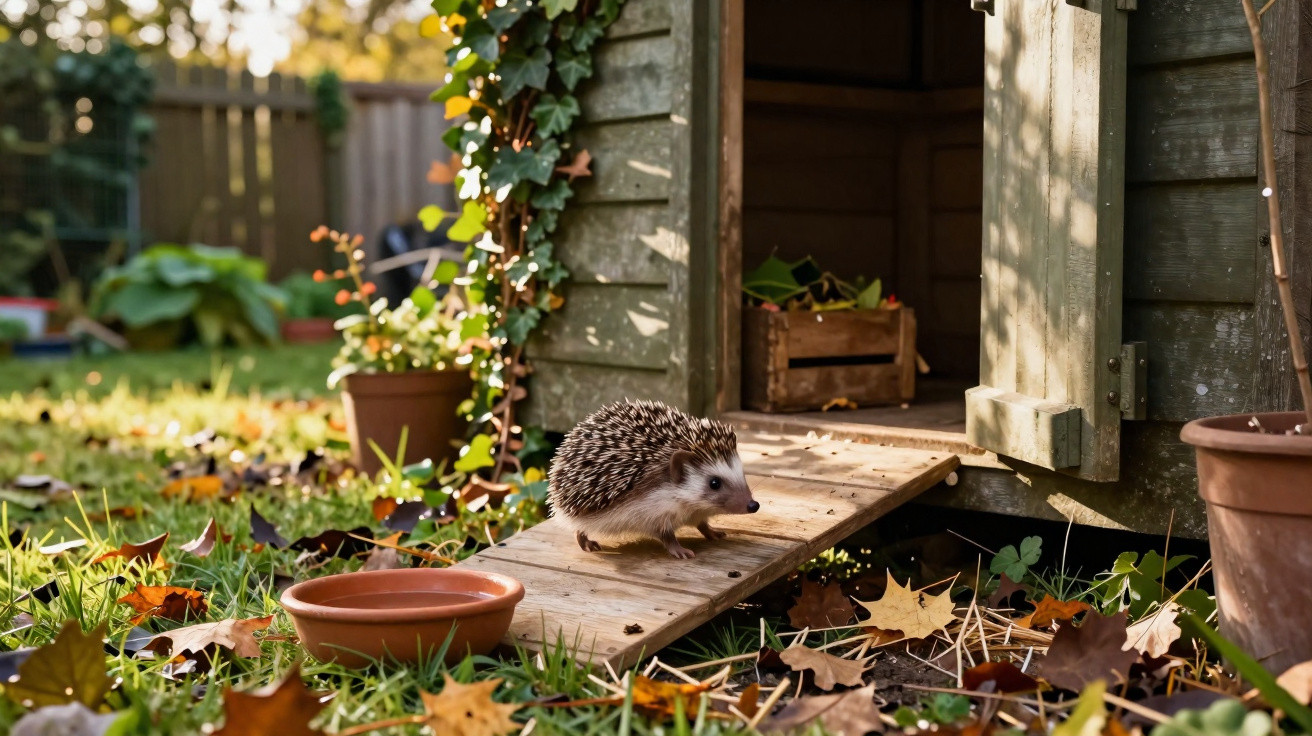
One September evening, as he was shutting up his garden shed, Marc spotted a small dark shape slipping beneath a shelf. At first, he thought it was a pile of leaves shifted by the wind, before hearing a faint breath, almost startled at having been discovered. Two seasons earlier, he had simply placed a rough plank between the ground and a low opening in the shed. Nothing particularly impressive: just an easier route, intended to stop small animals becoming trapped against the concrete step. Visits followed regularly. Then, on a cold morning, the hedgehog was no longer merely passing through.
An ordinary plank, but an entrance that makes all the difference
In many gardens, the shed becomes a place for broken pots, an ageing lawnmower and bags of compost left open for three years. Marc's shed also had a small step that a hedgehog could not manage: only 15 centimetres high, yet a genuine cliff for an animal with short legs. Set in place without nails or elaborate DIY, the sloping plank formed a gentle ramp into the shed. What matters most is not the plank itself, but the ability to get in and out safely.
During the first year, Marc noticed dry leaves disturbed in a corner behind wooden crates. Small, shiny black droppings then appeared, easy to identify once you know what to look for. By the following spring, the bowl of water left outside was regularly empty by early morning. An adult hedgehog can travel several kilometres in one night in search of food, water and shelter. It had not settled there because the shed was attractive; it had found somewhere quiet, usable and rarely disturbed.
This story highlights something very simple about our gardens. Hedgehogs do not need a five-star hotel or expensive installations; above all, they need routes through, cover and no immediate hazards. A rough plank provides grip, while dry ground and a few leaves offer somewhere to hide. Wildlife often appears where we simply leave it a little room. Let us be honest: nobody does this every day, but a few modest actions can have a lasting effect on the balance of a plot.
How to create a hedgehog shelter without turning the garden into a trap
To recreate this arrangement, choose an untreated plank that is wide enough to prevent the animal from slipping, then position it at a gentle angle from the ground to the shed's low opening. A width of around 20 centimetres is generally suitable, with small wooden crosspieces if the slope is smooth. Above all, make sure there is a clear way out: a hedgehog must be able to leave freely, even if you are away for several days. Inside the shed, keep a peaceful corner away from the lawnmower, chemicals and tools that could fall.
A common mistake is trying too hard to help. People sometimes confine the animal to “protect” it, offer it milk or bread, or move its nest as soon as it looks untidy. Yet milk can cause serious digestive problems, while bread does not meet its nutritional needs. A shallow dish of fresh water remains the most helpful measure during dry spells. If you find a hedgehog that is active in midwinter, severely underweight or injured, it is better to contact a wildlife rescue centre than to improvise.
A suitable refuge does not need to be perfect; above all, it should remain calm, dry and accessible. Wildlife charities also point out that a welcoming garden is built through simple habits, not constant staging.
“The best shelter for a hedgehog is often one that you forget about a little, while still paying attention to what is happening there.”
A few straightforward measures can make a real difference:
- leave a gap of at least 13 cm beneath a gate or in a fence;
- avoid slug pellets and pesticides;
- cover ponds or fit them with an escape ramp;
- check piles of leaves before moving or burning them.
When a forgotten corner becomes a valuable hedgehog refuge
After two seasons, Marc had not “adopted” hedgehogs in the literal sense. He had simply stopped blocking their way. In his shed, leaves remain on the ground until spring, and the shelf at the back is no longer moved without a careful look first. This discreet coexistence is a reminder that our outdoor spaces are never entirely empty, even on neatly maintained housing estates. Scratching beneath a pile of branches, a mark in damp soil or an overturned water bowl: these small signs reveal a nocturnal life that we rarely see.
Hedgehogs are protected in France, so their presence in a garden calls for particular care. Do not catch one to keep it, move it to a neighbour's garden because it might be “better off there”, or disturb a nest that may contain young. The real reward comes from doing the opposite: watching from a distance, making adjustments where possible, then allowing the space to breathe. A simple sloping plank is not a magic solution, but it can become the first link in a more permeable garden.
Sometimes, all that is needed is a different view of what once seemed like clutter. The old shed, the woodpile behind the hedge and the slightly wild strip of grass at the bottom of the garden can all create a useful corridor for small wildlife. Neighbours can also discuss routes between their plots, because a hedgehog recognises neither our fences nor our property boundaries. Sharing a sighting, showing a homemade ramp or highlighting a road hazard often helps more than a grand speech. And if, one morning, a few leaves seem to have moved by themselves, perhaps a story is beginning.
| Key point | Detail | Added value for the reader |
|---|---|---|
| Access ramp | A rough, stable, gently sloping plank makes both entry and exit easier. | Prevents a small step from becoming an obstacle or a trap. |
| Quiet corner | Dry leaves, a dry space, minimal handling and no hazardous products. | Creates a realistic refuge without unnecessary expense. |
| Respectful observation | Fresh water, vigilance for injuries, and no catching or moving. | Protects the hedgehog while respecting its natural behaviour. |

















Comments
No comments yet. Be the first to comment!
Leave a Comment