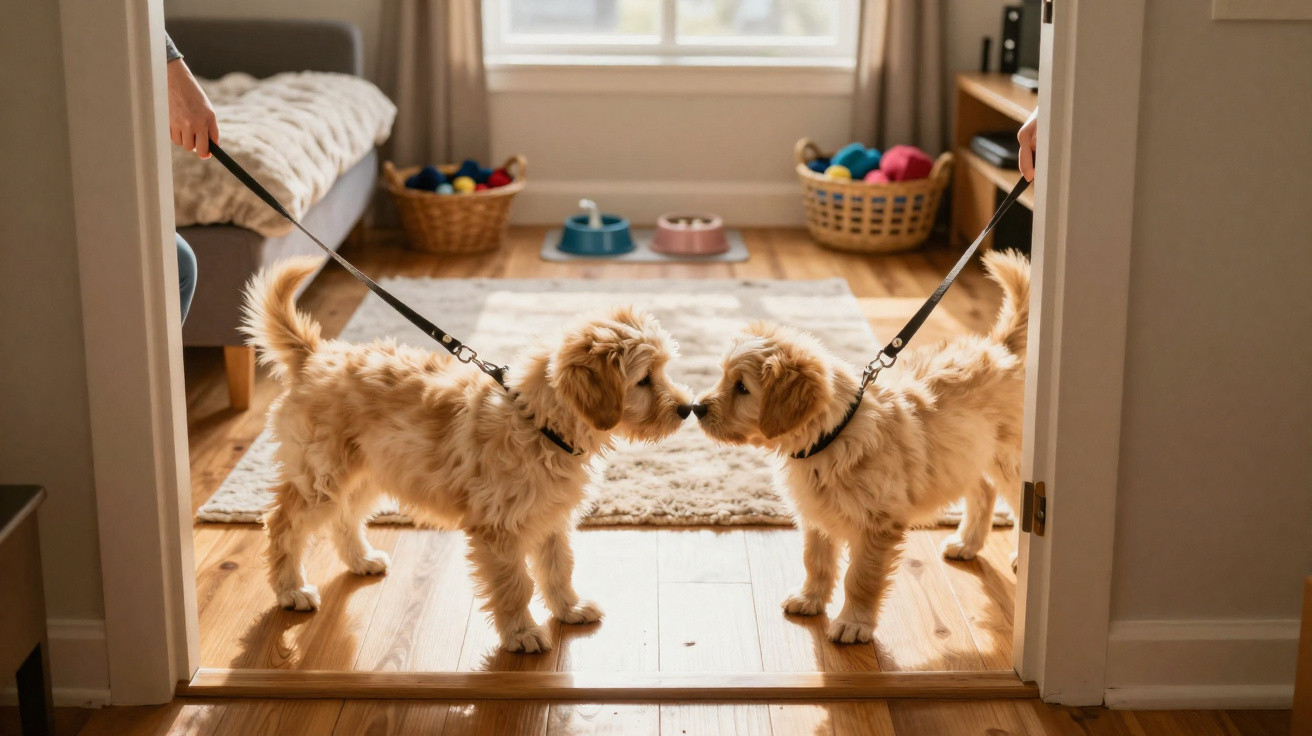
The arrival of a puppy often fills the home with joy. After adopting one dog, many owners soon want to expand the family and give another animal a home. After all, anyone who lives with dogs knows how much affection, companionship and fun they bring to everyday life.
However, if an older dog already lives in the household, the adjustment calls for some care. Sudden changes can cause insecurity, jealousy or stress, particularly for an animal accustomed to its territory and routine. With patience and introductions handled properly, though, it is possible to encourage harmonious living together from the very first days.
Below are tips on how to introduce a puppy to an older dog.
1. Arrange the first meeting in neutral territory
Whenever possible, the dogs' initial meeting should take place somewhere neutral, such as a quiet park or a lightly used street. This makes the older dog less likely to feel the need to protect its territory. Keep both dogs on leads at this stage, allowing them to watch one another and move closer naturally rather than forcing an interaction.
2. Allow each dog time to adjust
Not every dog forms a friendship on the first day. Some show an immediate interest in the puppy, while others may need several days or even weeks to accept the change. For this reason, do not pressure them to play or stay together all the time. Letting the older dog have time to rest and enjoy privacy can help lower stress levels.
3. Do not encroach on the older dog's space
The older dog will probably already have favourite places for sleeping, resting and watching the household. Where possible, keep these areas unchanged when the puppy arrives. This helps prevent the dog from feeling that it has lost its own place in the home. It is also advisable to stop the puppy from continually disturbing its companion, especially during naps or mealtimes.
4. Give both animals attention
A puppy's energy and playfulness naturally generate plenty of excitement. Nevertheless, the older dog should not feel overlooked. Continue to provide both animals with affection, walks and time to interact. Whenever possible, retain some of the adult dog's established habits, such as walk times or favourite games. This reassures it that it is still loved and valued, helping to reduce insecurity.
5. Supervise the first interactions between the puppy and older dog
During the first few days, never leave the puppy and the older dog alone together for extended periods. Supervision makes it possible to stop play that is becoming too intense or prevent situations that may lead to conflict. Puppies can be very persistent and do not always recognise when adult or senior dogs are tired.
6. Build positive associations between them
An effective approach is to link the puppy's presence with pleasant experiences. Offer treats, toys or praise whenever the dogs remain calm near one another. These positive associations can ease the initial tension and encourage acceptance of the new family member. Over time, both dogs will begin to see living together as enjoyable, strengthening the bond between them.
7. Provide separate food bowls, water bowls and toys
Although some dogs can share belongings without difficulty, it is best for each to have its own bowls and toys, especially during the first few weeks. This limits competition over resources and helps avoid uncomfortable situations. At mealtimes, serve their food in separate places so that both can eat peacefully.

















Comments
No comments yet. Be the first to comment!
Leave a Comment