In a bustling French secondary school, the most soothing “adult” on the premises neither marks homework nor hands out detentions.
He simply purrs.
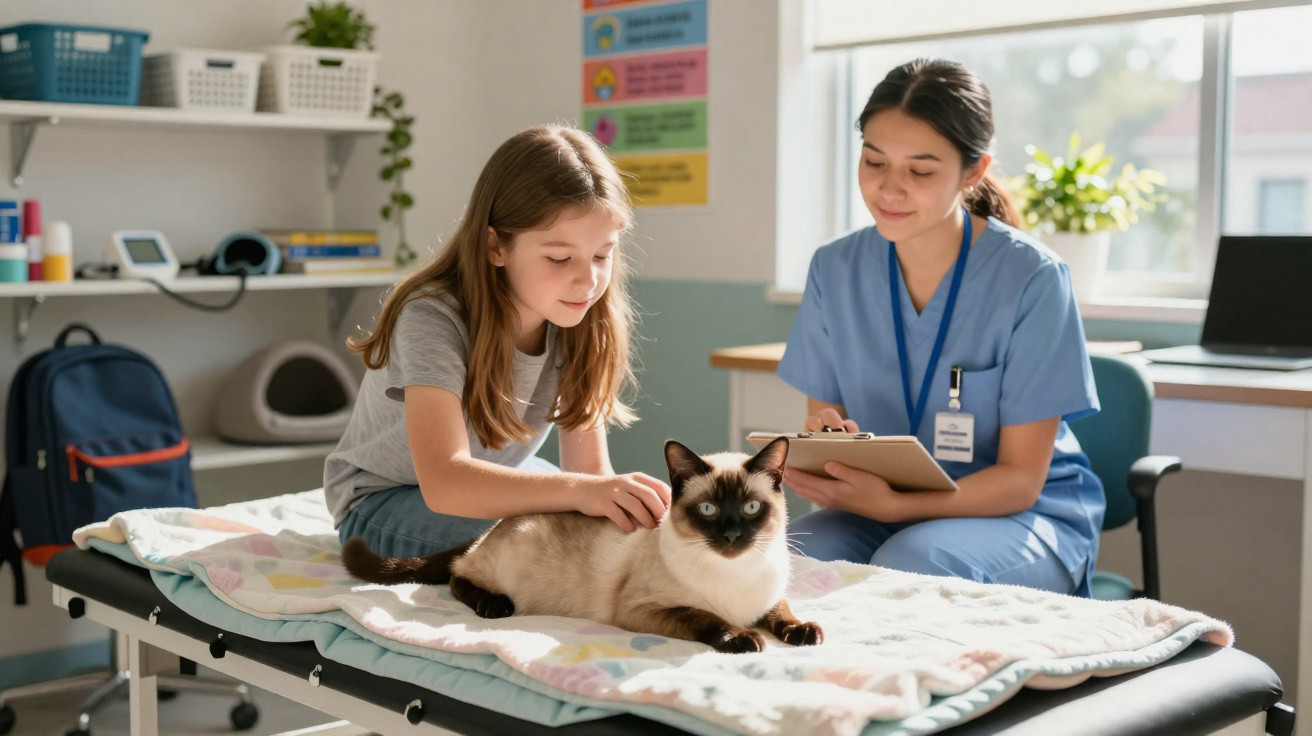
At Collège Alphonse Daudet in Alès, southern France, Vegas, a rescued Siamese cat, has discreetly become an everyday source of support for anxious and stressed pupils. He has transformed the school infirmary into an unlikely refuge for emotional wellbeing.
A vulnerable kitten and the nurse who took him in
Several years ago, school nurse Sylvie Nouza found a weak Siamese kitten in obvious trouble. He was frightened, underweight and entirely on his own. Nouza brought him home, fed him, dealt with his health issues and named him Vegas.
Once he started getting better, Vegas wanted to be wherever she was. Keeping him at home for the whole day no longer seemed workable, so Nouza made an unusual request: she asked the school leadership whether he could remain with her in the infirmary.
Vegas went from abandoned kitten to permanent staff member, thanks to one nurse who refused to look away.
Headteacher Christine Lecoeuche gave her approval, provided the arrangements were carefully managed, particularly concerning allergies and safety. With permission granted, Vegas became, in effect, a member of the school staff.
An infirmary for more than headaches
Pupils at Collège Alphonse Daudet now associate the infirmary not only with plasters and ice packs, but also with its blue-eyed feline inhabitant. Vegas usually lies near Sylvie’s desk, and his slow, relaxed movements quickly alter the atmosphere in the room.
Many young people arrive with stomach pains, severe headaches or difficulty breathing. While some have genuine physical complaints, others are dealing silently with anxiety, bullying, problems at home or examination stress.
For a lot of teenagers, talking about pain is easier when it sounds like a medical issue, not an emotional crisis.
Vegas provides a way in. He may walk over, settle beside a trembling leg or blink serenely from a chair. Such a small moment can lead to much bigger conversations. As pupils stroke his soft coat, they often begin to talk.
What Vegas does during a typical school day
Vegas is not a trained therapy animal in the strict clinical meaning of the term, but his daily presence has become close to therapeutic. On a typical day, he may:
- Lie beside a pupil experiencing a panic attack during a maths test
- Settle on an infirmary bed as a teenager speaks about their parents’ separation
- Divert a child who has just been humiliated in class
- Give pupils tempted to stay at home a reason to return to school
Some pupils say almost nothing. They sit on the floor with Vegas purring softly on their lap. Others speak continuously while the nurse listens and the cat absorbs their tears.
Why Vegas the cat helps anxious teenagers feel calmer
Researchers are increasingly recording the benefits of animals in school environments. Contact with a friendly pet can reduce cortisol, the hormone associated with stress. It can also raise oxytocin, which is linked with attachment and feelings of safety.
Slow breathing, regular purring and soft fur send the brain a simple message: you are safe right now.
During adolescence, feelings may seem intense and impossible to control. A non-judgemental presence such as Vegas can help in several ways:
| Effect of Vegas | Benefit for pupils |
|---|---|
| Physical contact (stroking, holding) | Relieves muscle tension and slows breathing |
| Non-judgmental presence | Helps pupils speak more easily about shame, fear or anger |
| Predictable routine (he’s always there) | Creates a feeling of stability during an unsettled stage of life |
| Shared focus on the animal | Reduces the pressure of eye contact in difficult conversations |
Unlike an adult, Vegas never cuts anyone off or hurries them. He does not become impatient if someone tells the same story for the third time. For pupils who struggle to trust teachers or parents, the cat can become their first trusted confidant, while the nurse gradually develops a human relationship alongside him.
Careful planning behind the calm
The school did not make the decision to have an animal on site throughout the day casually. As soon as Vegas was permitted to stay, headteacher Christine Lecoeuche and her team introduced clear procedures.
Allergies were the primary issue. Families were told that a cat would be present, while pupils with recognised allergies or phobias may avoid the infirmary when Vegas is there. He remains mainly in the nurse’s office and does not roam the corridors or classrooms.
The cat’s presence feels natural and gentle, but it rests on careful planning, parental consent and daily hygiene checks.
The cleaning schedule was adapted as well. Surfaces are cleaned more often, bedding is regularly replaced, and the litter tray is positioned well away from areas where pupils sit or lie down. The nurse keeps track of Vegas’ vaccinations and routine veterinary appointments as diligently as she would maintain a pupil’s medical records.
The place of animal-assisted support in mental health care
Vegas does not take the place of psychologists or doctors. If a pupil displays signs of depression, self-harm or serious trauma, the nurse directs them to professional support services. However, the cat can make taking that next step less difficult.
A teenager who has been able to quietly share their fears while holding Vegas may be more prepared to attend a later appointment with a counsellor. The cat makes the initial contact gentler, helping pupils progress from silence to speech.
Other schools are taking notice
Accounts from Alès are beginning to spread among education professionals. Some schools are trying reading dogs in libraries, allowing pupils to read aloud to a calm animal rather than a teacher. Others are exploring short animal-assisted sessions during examination periods.
The French case forms part of a broader international movement, as schools seek affordable and compassionate ways to help teenagers confronting anxiety, social media pressures and academic rivalry.
Specialists generally advise institutions considering a similar scheme to:
- Check local rules covering animals in public buildings
- Collaborate with vets and animal behaviourists to select calm, suitable animals
- Begin with restricted hours or trial days before introducing a full-time animal presence
- Provide opt-out arrangements for families and staff who object
What “emotional support” means at school
The phrase “emotional support animal” regularly features in mental health discussions, although it can describe very different situations. In many countries, these animals are distinct from assistance dogs supporting disabled people. They are generally pets that offer comfort through being present, without a specific legal designation.
Vegas fits more closely into this group: he is a school pet with an established wellbeing role rather than a medical tool. His presence suggests that emotional support can be straightforward, tactile and quiet, well removed from formal therapy rooms. Sometimes a warm body and a steady purr can ease defences more quickly than a lengthy questionnaire.
Parents may also take inspiration from this approach. At home, gentle pet-related routines can help children manage their emotions: feeding a cat after a difficult day, grooming a dog before bed, or simply lying on the carpet while a rabbit hops close by. These small habits provide breaks in demanding routines and offer young people a non-verbal release for stress.
There are, naturally, boundaries. Animals can also experience stress and require rest, secure spaces and respectful treatment. Schools hoping to introduce their own “Vegas” must consider both elements: the possible benefit for pupils and their duty to safeguard the animal’s welfare. Where that balance is maintained, a former stray in a school infirmary can quietly become one of the campus’s most trusted presences.













Comments
No comments yet. Be the first to comment!
Leave a Comment