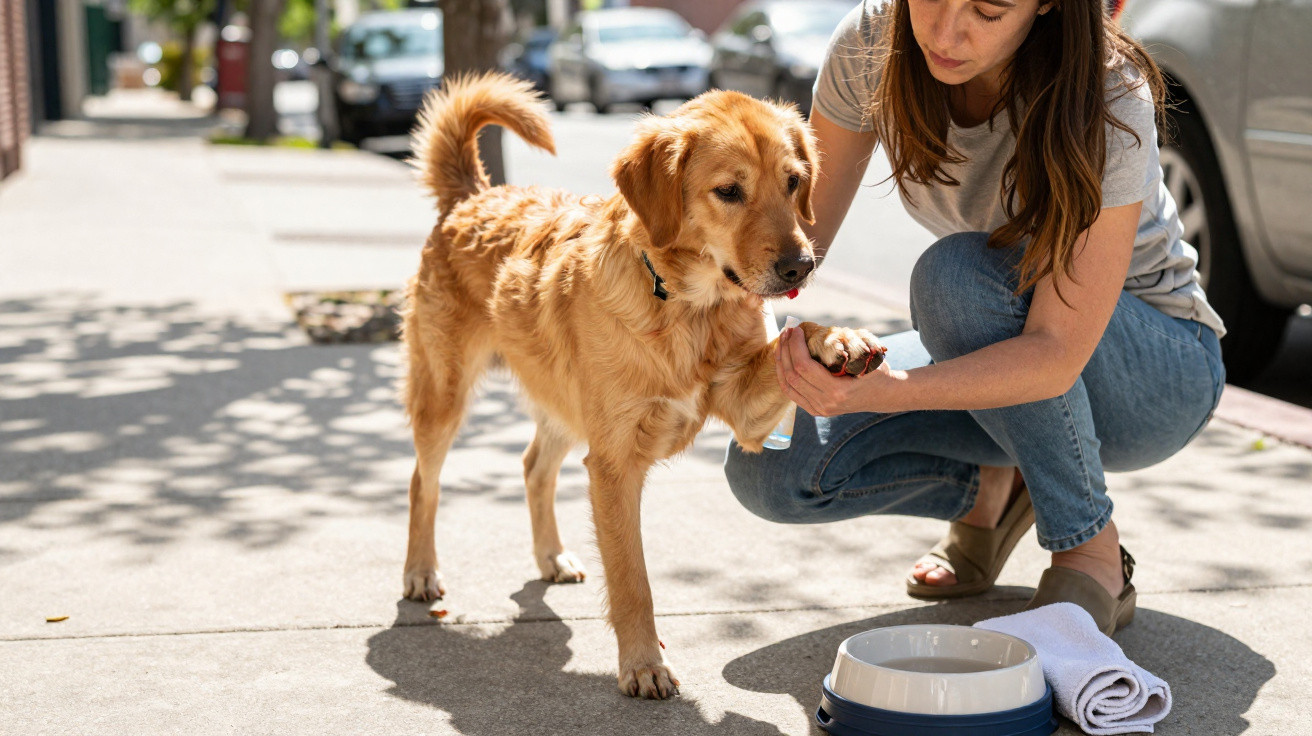
Hot pavement, paving stones and sand can become hazardous for dogs far sooner than many owners realise. Paw pad burns may appear minor at first, yet they can turn into deep, infected wounds within hours. Recognising the warning signs and responding properly can spare your dog considerable pain as well as prevent costly, prolonged treatment.
How to spot burned paw pads in your dog
Burns to the paw pads often develop gradually: a dog may take several more steps before the pain fully sets in. The following signs then commonly become apparent.
- Limping or suddenly refusing to keep walking
- Repeated, frantic licking of the paws
- Red, swollen or blistered paw pads
- A painful reaction when the paws are touched or when weight is put on them
- Dry, cracked pads or darkened patches
If your dog’s gait changes after a walk on hot ground, inspect its paws immediately – every minute matters.
Some dogs are especially stoic and barely show that they are in pain. For this reason, look out for subtle changes in behaviour too: if your dog stops more frequently, walks cautiously, sits down or seems stressed, its paws may already be badly irritated.
What happens if burned paw pads are left untreated?
A small, superficial injury can rapidly deteriorate when a dog continues walking on damaged skin or keeps licking it.
- Painful infections that take a long time to resolve
- Permanent damage to paw tissue
- Ongoing difficulties with walking and playing
- Severe stress, restlessness and persistent pain
- In extreme cases, more serious complications affecting the whole body
Open, burned paw pads provide an ideal entry point for bacteria and fungi. Without treatment, what appears to be a minor burn can become a serious wound requiring anaesthesia, dressing changes and extended periods of rest.
First aid for burned dog paws: what to do straight away
Move your dog away from the heat
End the walk immediately and, where possible, carry your dog away from the hot surface – particularly if it is a small dog. Every additional step on heated ground makes the injury worse.
Cool the paws gently
- Rinse the paws with cool, not ice-cold, water
- Let the water run slowly over the pads for several minutes
- Do not apply ice or ice cubes directly to the skin
Very cold water or ice can cause cold shock and worsen the burn. Lukewarm to cool water reduces the temperature within the tissue without disrupting circulation too severely.
Prevent licking and chewing
Injured dogs instinctively try to “clean” the wound. However, saliva can spread bacteria and further soften the skin. A simple temporary protective collar or a clean dressing may help until your vet takes over.
Do not experiment with home remedies
Do not apply cream from the medicine cabinet, oil or spray without advice – paws are more sensitive than many owners assume.
Products made for people often contain fragrances, alcohol or substances that are toxic to dogs or irritate their skin. Greasy creams can trap heat in the tissue, while iodine or highly concentrated alcohol can sting intensely.
See a vet as soon as possible
Even when an injury appears “only mild”, a vet is better able to assess the depth and extent of the burn, provide anti-inflammatory medication and recommend appropriate paw care. A veterinary visit is essential where there are blisters, bleeding, pronounced limping or a noticeable smell.
Why paws burn so quickly in summer
At the height of summer, surfaces can become extremely hot – far hotter than the air temperature. Asphalt, concrete and sand act like hotplates.
- Asphalt and paving stones can reach more than 60 °C
- Dogs walk barefoot, with no insulation at all
- Paw pad skin is more sensitive than many people realise
- Walks in the midday heat greatly increase the risk
- Sand and stone retain heat for a long time, including in the evening
While we wear trainers, a dog’s paw skin is in direct contact with the heated ground. Just a few seconds may be enough to damage the tissue. Even when the air feels pleasant, the ground can still radiate heat absorbed earlier in the day.
Caring for burned paws: supporting healing
Gentle cleaning and protection
- Carefully clean the paws with a suitable solution, such as saline rinse
- Then pat them dry thoroughly but gently
- Protect the pads from dirt, gravel and further heat
Your vet may recommend special paw balms or wound ointments with anti-inflammatory and moisturising properties. These create a protective layer over the pads and support recovery.
Use suitable products only on veterinary advice
Many paw creams sold in shops can be useful, but not every product is suitable for every dog. Some dogs have allergic reactions, while others immediately lick everything off. Tell your vet the ingredients or take the tube to the practice so they can better decide what may safely be applied to the paw.
Increase activity gradually
Until the wound has healed, your dog should avoid rough, hot or very wet surfaces wherever possible. Short, frequent toilet walks on soft ground are preferable to one long outing. For deeper injuries, dog boots may be useful temporarily if your vet agrees.
How long does it take for fur and skin to return to normal?
Paw burns mainly affect the pads, although they can also damage fur on the toes and between them.
- Around 1 month: for superficial burns where the hair roots remain intact
- Up to 3 months: for deeper tissue damage
Where tissue has been severely destroyed, less fur – or no fur at all – may grow back in some areas permanently. Prompt treatment, good care and avoiding excessive strain during healing are crucial.
What you can do for red or inflamed paw pads
Not every red paw pad is a burn. Irritation is often caused by grit salt, long hikes or small cracks. The first steps are similar:
- Avoid hot or extremely rough ground
- Check the pads every day
- Clean the paws and dry them thoroughly but gently
- Use a suitable, mild disinfectant
- Apply caring, soothing products on veterinary advice
A cream containing gentle moisturising and germ-inhibiting ingredients can help strengthen the skin barrier. If the redness is more severe, there is an unpleasant smell, pus is coming out or your dog hardly wants to put weight on the paw, it needs to be seen at the practice – a bacterial or fungal infection may be the cause.
Preventing burned dog paws every day
| Situation | Recommended action |
|---|---|
| Summer midday, 30 °C and sunshine | Walk your dog early in the morning or late in the evening, and choose shaded routes |
| Urban walk with plenty of asphalt | Favour routes with grass verges, parks or woodland ground |
| Holiday at the beach | Test the sand with the back of your hand, and only allow walking when the temperature is tolerable |
| Long outings or hikes | Take breaks, check the paws regularly and use paw balm |
Balms and wax-based products form a light protective coating on the pads and help retain moisture. They are no substitute for taking temperatures seriously, but they can improve the paws’ resilience.
Practical everyday tips for dog owners
- Back-of-the-hand test: if you cannot keep the back of your hand on the ground for five seconds, it is too hot for your dog too.
- Inspect paws after every walk – this helps you spot small cracks or redness early.
- Practise handling paws: a dog taught from puppyhood to accept touch calmly can be helped more quickly in an emergency.
- Keeping claws short and paw pad skin well cared for reduces the risk of uneven loading and cracks.
Many dogs will keep going for their owner “until they drop”. They often reveal pain only late on, especially outdoors when there is plenty to interest them. The responsibility lies with the owner: check the ground, avoid periods of heat and respond at once if your dog’s gait changes – this keeps paws healthy and makes every walk enjoyable.









Comments
No comments yet. Be the first to comment!
Leave a Comment