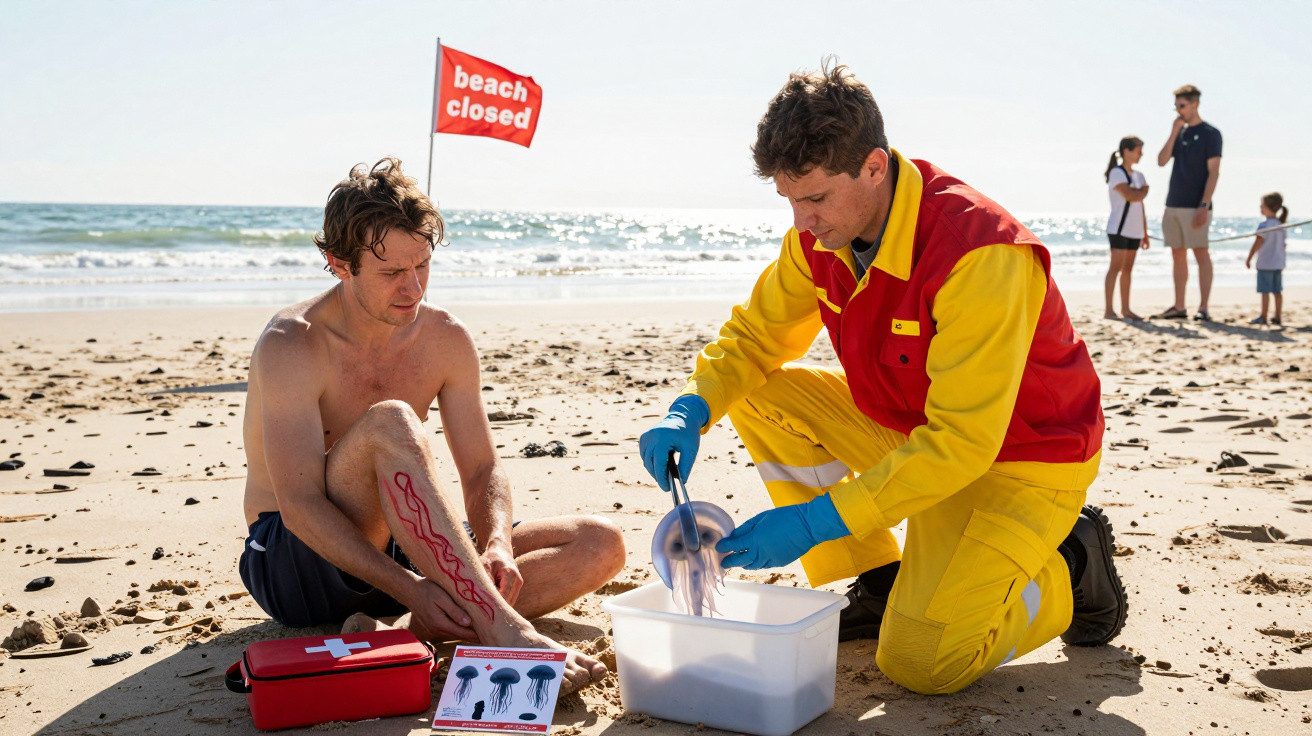
The Landes coast is facing a huge influx of physalies, fascinating creatures that resemble jellyfish. Swimming has been prohibited on several beaches - and it is easy to see why. Beware of their sting, for both you and your dog.
For several days, the Landes shoreline has been experiencing an unexpected and highly dangerous invasion. From Tarnos to Biscarrosse, including popular seaside resorts such as Hossegor, Capbreton, Vieux-Boucau and Mimizan, many beaches have had to close temporarily as a precaution. Red and purple flags flying above lifeguard stations warn holidaymakers of an unseen threat: a large presence of venomous physalies.
This is seriously disrupting the summer season, particularly as the weather is ideal for swimming. One contributing factor is water temperatures approaching 25°C in some places, an unusually high level for this part of the Atlantic. So why is swimming forbidden, and why are physalies so dangerous for you and your dog?
What is a physalia, and why is it not a jellyfish?
Frequently mistaken for a jellyfish, the physalia (Physalia physalis) - also known as the Portuguese man o’ war or sea bladder - is a marine siphonophore species. In other words, it is a colony of genetically identical marine organisms called zooids. Rather than being one individual animal, it consists of several specialised units working together as a single organism.
It can be identified by its translucent, violet or bluish bubble-shaped pneumatophore, measuring up to 30 centimetres, which acts as a sail at the water’s surface. Beneath it are long, beaded tentacles that may extend for several metres and contain millions of venomous cells.
How can you recognise a physalia sting?
When a person comes into contact with a physalia’s tentacles, this is not merely a heat burn but a genuine envenomation. The thousands of tiny stinging cells spread along the tentacles act like miniature harpoons, injecting a toxic cocktail as soon as they brush against a swimmer.
The pain is instant, sharp and severe, often likened to a powerful electric shock or a lash from a whip. Distinctive injuries quickly develop as red streaks and striped marks that closely follow the contact area. The venom can also cause papules, inflamed patches, vesicles and blisters similar to those caused by a second-degree burn.
@france.tv
What is this strange animal that has appeared on French beaches? No, it is not a jellyfish but a physalia. Its filaments cause severe burns. Above all, do not use fresh water, as this would worsen the sting by releasing more venom. The solution: shaving foam and a rigid piece of card to remove the tentacles, followed by a rinse with sea water. Unfortunately, summer holidays do not come without their share of incidents! “Health investigation: the actions that save your summer” is available on france.tv. (📌 link in bio) #physalia #danger #awareness #beaches #whatwatch
♬ original sound – France.tv – France.tv
What should you do after a physalia sting? Never urinate or use fresh water
Traditional burn remedies must be avoided: never use fresh water, ice cubes or rub the affected area. Any mechanical or thermal irritation could release further toxins. Treatment should therefore follow a precise procedure:
- Remove the tentacles carefully: Never touch the filaments with bare hands. Sprinkle dry sand over the area, then use a rigid object, such as a bank card or the back of a blade, to gently remove the remaining tentacles and sand together.
- Rinse with sea water: Clean the area using salt water only. Fresh water is strictly forbidden because its osmotic effect would cause the remaining stinging cells to burst.
- Neutralise and relieve: If available, apply white vinegar for 30 seconds. Do not use lemon juice, alcohol or urine under any circumstances. Then immerse the affected area in very hot water for around 20 minutes to break down the venom proteins and ease the pain.
View this post on Instagram
A post shared by Bio’vet Veterinary Clinic Saint Paul lès Dax (@biovetdax)
When should you seek urgent medical help? Go straight to the lifeguard station or call 15 if the burn covers a large area, especially in a child, or if systemic symptoms occur: breathing difficulties, dizziness, nausea, cold sweats or faintness.
In the Landes, emergency services are monitoring the situation hour by hour in order to reopen areas as soon as possible, but caution remains essential along the entire coast.

















Comments
No comments yet. Be the first to comment!
Leave a Comment