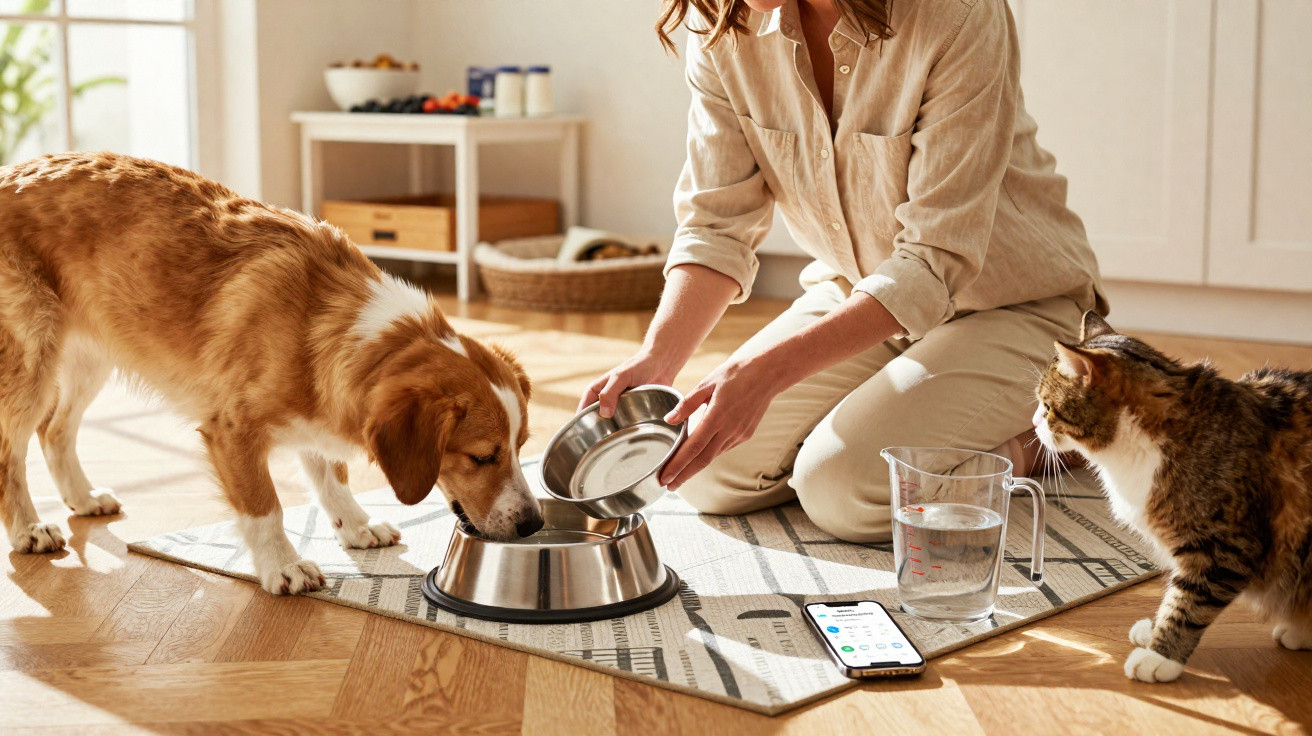
Maintaining good hydration is essential to the proper functioning of dogs’ and cats’ bodies, yet it is not always easy to tell how much water an animal is actually drinking. Temperature, activity levels, diet, routine and health conditions may affect both fluid requirements and a pet’s behaviour at the water bowl.
According to veterinary surgeon Rogéria Coelho, coordinator of the Veterinary Medicine course at Faculdade Anhanguera, everyday observations can help owners spot changes in water consumption. Rather than simply deciding whether an animal “drinks a lot” or “drinks little”, it is important to understand the pet’s usual pattern and notice any changes.
Here are some points that can help you monitor your pet’s hydration.
1. Monitor how much water is put in the bowl
A practical way to estimate intake is to measure the amount of water offered during the day. Put a known volume in the bowl and check how much remains after a set period, allowing for any water that may have been spilt and ensuring the animal cannot access other water sources.
“Knowing an individual animal’s usual drinking pattern is more important than setting one fixed number for every dog and cat. An animal that starts drinking far more or far less than usual needs attention,” explains Rogéria Coelho.
2. Check how often the animal seeks water
Repeatedly going to the water bowl, or conversely no longer seeking it out, may point to a change. Increased thirst can occur on hot days or after physical activity, but it may also be linked to health changes, particularly when it persists.
It is important to note whether the change continues or occurs alongside other signs, including more frequent urination, weight loss, vomiting, diarrhoea, lethargy or changes in behaviour.
3. Pay attention to urine
The animal’s toileting routine can also provide clues. Very concentrated urine in smaller amounts may occur when the animal is taking in less fluid. A substantial increase in urine volume and urinary frequency, especially when accompanied by increased water intake, requires professional assessment.
“Changes in water consumption and urine production need to be considered together. An owner should not try to address a persistent change simply by offering more water, as it may be connected to a condition that needs investigating,” the specialist advises.
4. Look at the gums and behaviour
Very dry or sticky gums, lethargy, weakness and reduced interest in food can occur in cases of dehydration. However, these signs should not be used alone to decide whether an animal is dehydrated. A veterinary assessment may include a physical examination and, depending on the case, further tests.
Hydration status should be assessed by considering all signs together and, where necessary, by a veterinary surgeon. In cases of vomiting or diarrhoea, for instance, fluid loss may be substantial even when the animal is still drinking water.
5. Take the type of diet into account
The amount of water drunk directly from the bowl does not necessarily represent all the fluid an animal consumes. Dogs and cats fed wet food, for example, obtain a significant proportion of their water through their diet.
For this reason, assessment should take account of the diet, ambient temperature, physical activity level and the pet’s individual characteristics. “In animals fed mainly on dry food, a greater proportion of their water intake comes directly from the water bowl,” the veterinary surgeon explains.
How to encourage your pet to drink more water
To make water easier to access, keep more than one bowl available in different areas of the home, particularly in larger properties or where there is more than one animal. Bowls should be kept clean and filled with fresh water.
For cats, which may have individual preferences regarding the location and type of bowl, certain measures may help. These include providing running-water fountains and placing bowls in quiet, clean places away from the litter tray. For some animals, it may also be helpful to offer water separately from food.
Rogéria Coelho also warns that persistent changes should not be treated as normal. “If the animal shows a significant, ongoing change in water consumption, especially if it is drinking much more or much less than usual, the best course is to see a veterinary surgeon to investigate the cause,” she says.
It is also worth remembering that there is no single water quantity considered ideal for every dog and cat. Hydration needs vary according to factors such as species, body size, age, diet, ambient temperature, activity level and health status.
By Luana Figueiredo

















Comments
No comments yet. Be the first to comment!
Leave a Comment