
What is going wrong?
Cocker and Springer Spaniels rank among Britain’s most popular dog breeds. Yet a growing number of owners are giving them up because they feel unable to cope. The dogs are usually not the problem: persistent misconceptions about the breed are often to blame, particularly about how much exercise Spaniels need and whether they will train themselves.
A popular breed with a downside
Spaniels are instantly recognisable, with their long, floppy ears, soft coats, alert expressions and compact bodies. Friendly and cuddly in appearance, they can look like the archetypal family dog. Yet they also have a strong working heritage. For decades, they accompanied hunters through fields and woodland, finding game and working closely alongside people.
That combination is causing difficulties today. British experts report that Spaniels are turning up at animal welfare organisations much more frequently than they did only a few years ago. Although the overall number of dogs being surrendered has remained relatively stable, the proportion of Spaniels has risen sharply. Shelters report full kennels and long waiting lists.
Spaniels are rarely “born difficult” – more often, they are simply misunderstood.
Many owners describe damaged homes, dogs that no longer come when called, or extremely nervous behaviour. Desperate owners seek advice on social media, where the suggestions they receive are often well meant but wrong. Three myths crop up repeatedly in these appeals for help.
Myth 1: Spaniels need hours of exercise every day
Few claims are repeated as often as this one: “With a Spaniel, I’d have to walk for three hours a day.” It reflects a misunderstanding of the breed’s working history. Spaniels were indeed bred to endure long days in the field, but they did not spend those days running continuously. Instead, they worked in a controlled partnership with people.
The key message from practical experience is that covering more miles will not solve most problems and may even make them worse.
Anyone who tries to “run their Spaniel empty” every day can quickly end up with an endurance athlete in a permanent state of adrenaline-fuelled excitement.
Rather than hours of throwing a ball or endless jogging sessions, a Spaniel needs a combination of:
- Moderate physical exercise – brisk walks, free running and an occasional short trip through the woods.
- Mental work – scent work, search games, simple dummy training and tricks that require concentration.
- Learning to settle – deliberate relaxation indoors, short rest periods after each activity and clear cues to “wind down”.
Many dogs miss out on that final element. They learn to run faster and faster, but never learn how to switch off afterwards. The result is a restless dog that constantly demands “more” and struggles to settle at home.
From a trainer’s perspective, a useful daily routine might look more like this:
| Part of the day | Example of a suitable activity |
|---|---|
| Morning | A 30–45-minute walk on a long line, with sit and recall exercises along the way |
| Lunchtime / early evening | 10–15 minutes of scent work or searching for a dummy in the garden or park |
| At home | Several clearly defined rest periods, chews and time lying on a mat |
With this kind of routine, a Spaniel can happily snore on the carpet despite spending comparatively less time running, instead of racing around the living room like a Duracell bunny.
Myth 2: Spaniels will grow out of it – “he’s just an adolescent”
At around eight months old, many owners start to hope for the same thing. Their dog is testing boundaries, responding less reliably and behaving restlessly, so they tell themselves it is “just the teenage phase” and will eventually pass on its own.
Experts take a different view. During this period, roughly from six to 18 months of age, a dog’s behaviour becomes particularly firmly established. Whatever the dog regularly does now, it is practising – whether the behaviour is desirable or not.
A Spaniel does not grow out of problems. Without intervention, the dog grows into them.
Typical signs during this stage include:
- The dog moves increasingly far away from its owner on walks.
- Distractions such as the scent of game, cyclists or other dogs suddenly become more interesting than any recall cue.
- Boundaries that were previously understood are openly tested.
An owner who thinks “it’ll settle down” is leaving training to chance. A more useful response is to intervene deliberately:
Short, clear training sessions: Three focused five-minute sessions a day are preferable to one half-hearted 20-minute session. Recall, loose-lead walking, “stay” and frustration tolerance should all be on the timetable at this stage.
Everyday structure: Consistent routines are enormously helpful to dogs. Set clear times for walks, food and rest, without entertaining the dog constantly. Otherwise, Spaniels in particular tend to find their own activities.
Enforce boundaries kindly but clearly: If the dog does not come when called, do not shout “come” another five times. Practise with the dog safely attached to a long line instead. This helps prevent the recall cue from becoming background noise.
Myth 3: The “crockerdile” is just a funny phase
In many online groups, people jokingly use the term “crockerdile” for Cocker puppies that like to snap hard at hands, clothes or feet. The underlying message is often: “Laugh it off; it’ll pass.” Professional trainers find that attitude alarming.
Spaniels were originally bred to carry game gently in their mouths without damaging it. A deliberate, hard bite does not fit that breed profile. When a puppy bites frequently and firmly, there is almost always more to it than “normal nibbling”.
Making light of persistent hard snapping means ignoring a genuine warning sign – and risks problems when the dog is an adult.
Trainers recommend a practical response:
- Set a clear boundary: If the puppy’s teeth touch skin, play ends immediately. There is no need to scold or make a fuss – simply become still and stop interacting.
- Offer suitable alternatives: Provide chew toys, tug games with rules, including letting go on cue, and food games. This keeps the mouth occupied in a socially acceptable way.
- Check for sources of stress: Overtiredness, overstimulation and frustration can intensify biting. Shorter play sessions and more breaks reduce arousal.
Addressing the issue early teaches the dog that putting teeth on human skin never pays off, while calm behaviour brings attention.
Why Spaniels in particular so often run into trouble
Spaniels appeal to the current mood: they look cute, seem cheerful and fit perfectly into idyllic family photographs. On social media, they are often presented as accessories – in campervans, cafés or on the beach. That creates desire and encourages impulse purchases.
Many people only later discover that behind the “Instagram dog” is a highly motivated worker with a strong hunting instinct, a sensitive nose and considerable stamina. If those instincts are not directed, the dog may quickly find jobs of its own, such as chasing joggers, dismantling garden fences or “standing guard” in the garden for hours.
Anyone considering a Spaniel should answer a few questions honestly:
- Do I have time for short daily training sessions, not just walks?
- Am I prepared to stick to the rules, even when the dog “begs” with those big, round eyes?
- If necessary, can I seek professional help before problems escalate?
How a Spaniel learns to cope with everyday life
Given the right approach, a Spaniel can be a wonderful family dog: affectionate, funny, usually cheerful and exceptionally people-oriented. Getting there depends on clear structure and activities suited to the breed, not on frantic activity for its own sake.
Useful building blocks include:
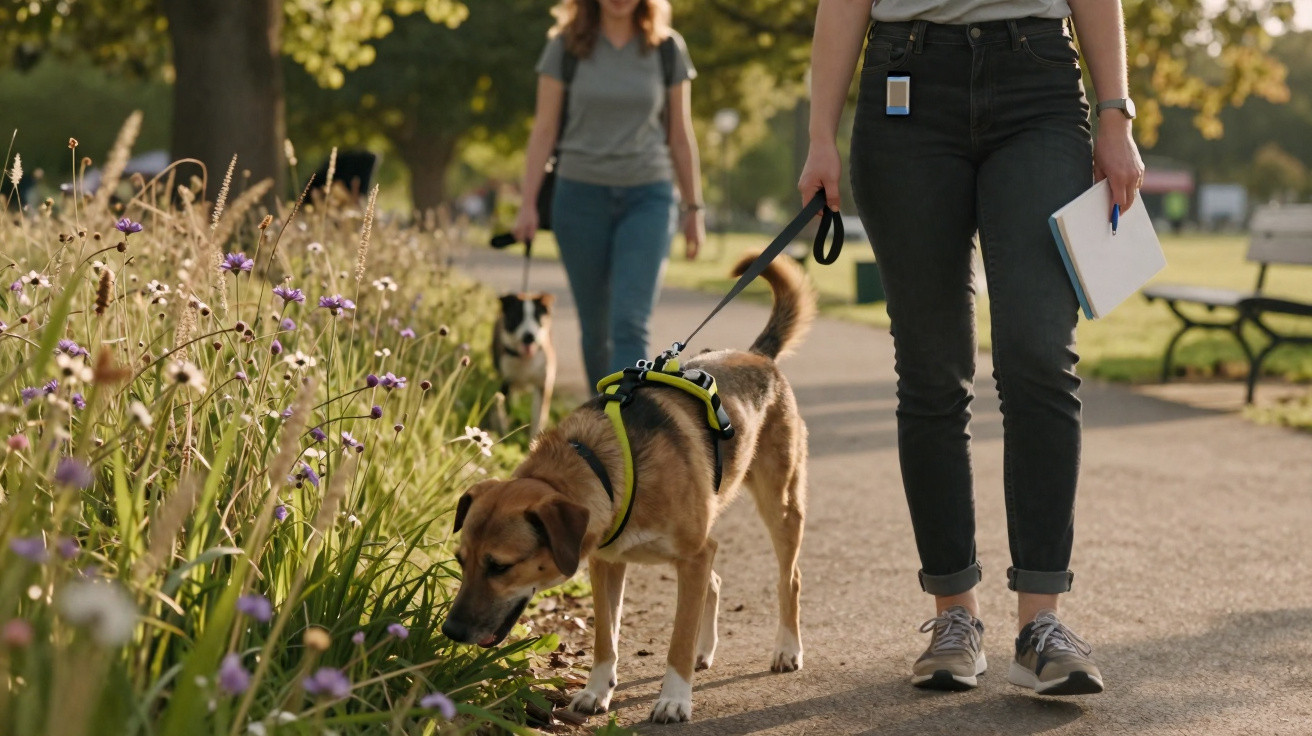
- Scent work: Let the dog search for food in the grass, find hidden small dummies or follow a laid trail.
- Impulse control: Ask the dog to sit and wait while a ball rolls or a dummy is thrown, releasing it only on cue.
- Rest cues: Establish regular resting places and a cue such as “mat” that genuinely means relaxation, rather than “we’re about to start again”.
With this approach, owners do not have to “run their Spaniel into the ground” to tire it out. The dog learns to manage its own emotions and cope better with tense situations. That reduces the likelihood of it responding to something overwhelming by biting, barking or destroying things.
For many owners, it is worth looking at terms commonly used in dog training: “working line”, “show line”, “hunting instinct” and “arousal level”. In Spaniels especially, the line has a significant bearing on how much energy a dog has and how easily it can be managed in everyday life. A breeder who talks openly about the work their dogs have previously done can be a great help to prospective owners making a decision.
People who see Spaniels for what they are – sensitive, intelligent dogs that enjoy working – rather than as attractive accessories have the best chance of enjoying many relaxed years with a loyal companion. The supposed requirement for hours of daily walks can then quickly be put down as a myth.














Comments
No comments yet. Be the first to comment!
Leave a Comment