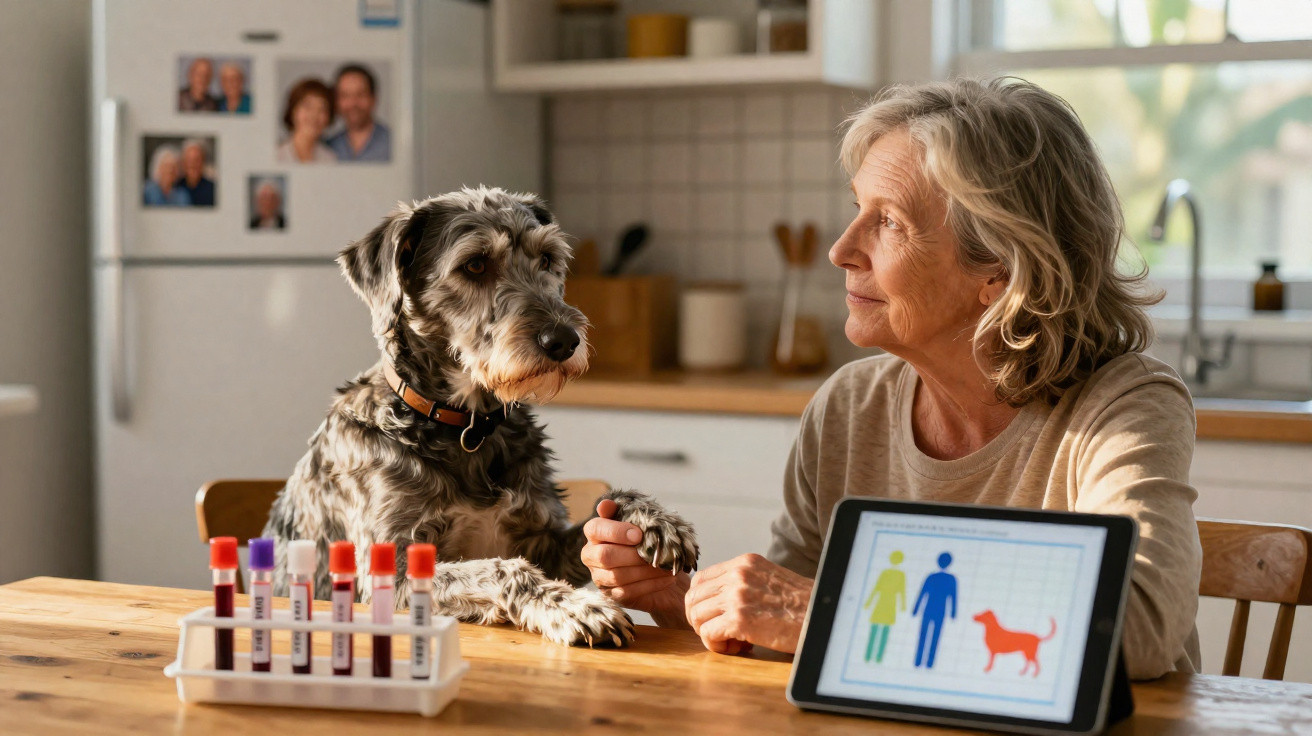
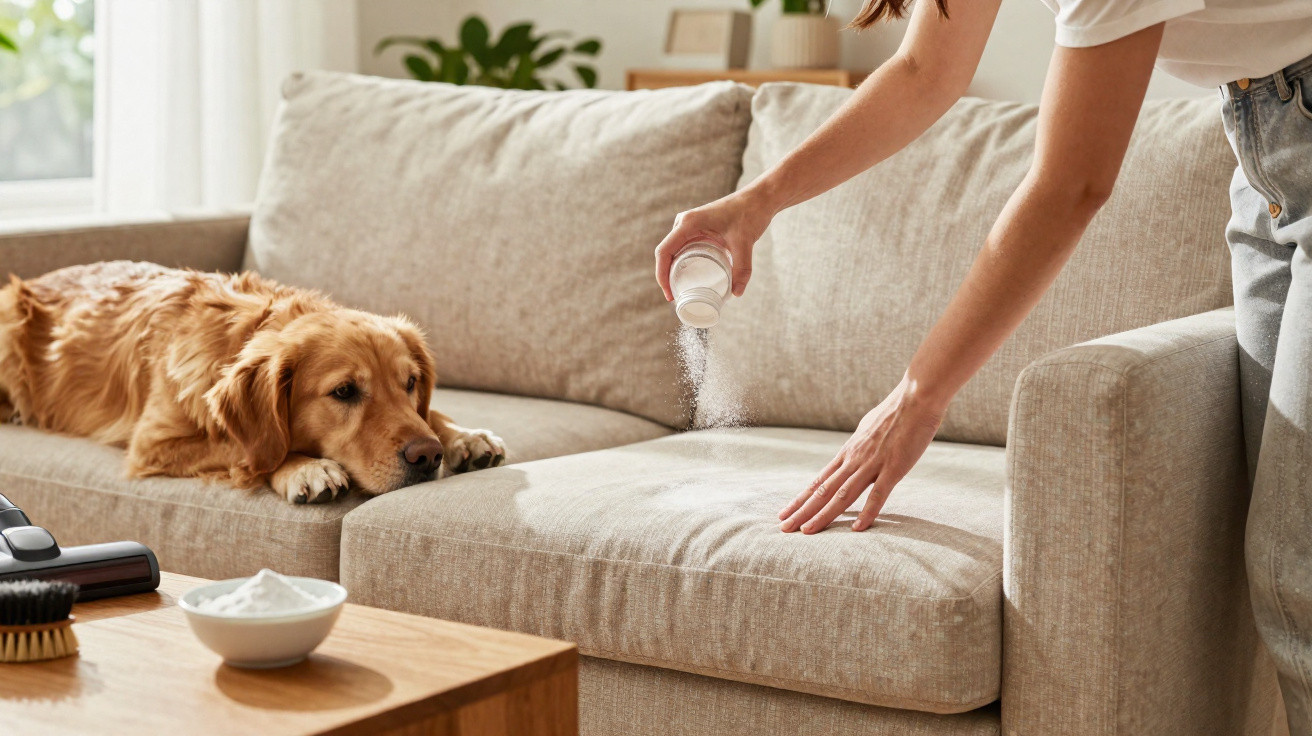
A dog ages more quickly, and often less well, than its owner - no veterinary expertise is needed to recognise that. Yet this study suggests that, from a biological perspective, the two age in the same way.
“Like owner, like dog”: this saying became widespread in the 19th century, when our four-legged companions began to be regarded as pets. Initially an empirical observation, several studies in canine psychology have shown that it is, broadly speaking, fairly close to reality. First, we tend unconsciously to choose a breed whose behaviour resembles our own. Secondly, through living alongside us, dogs acquire habits and responses similar to ours.
We also share around 84% of our DNA with the domestic dog (Canis familiaris or Canis lupus familiaris). According to the Dog Aging Project, a large-scale community research programme in the United States, this genetic closeness is also reflected in the biology of ageing. In a study published on 22 December 2025 in The Journals of Gerontology, researchers showed that the same families of metabolites are linked to shorter or longer life expectancy in both species.
Similar owners, similar dogs - and similar ageing
The term metabolites refers to all the small molecules naturally generated by the chemical reactions taking place in the body: cellular respiration, hormone synthesis, muscular exertion and food digestion. Thousands of these molecules constantly circulate in the bloodstream, and their composition changes according to a vast range of factors, including age.
The researchers focused on this final factor by examining blood samples from thousands of dogs over the long term, while their owners submitted clinical data and biological samples each year. To do so, they used exometabolomics, a discipline that enabled them to measure metabolites present in extracellular fluids such as blood and urine. These substances are secreted by cells and provide a snapshot of their biochemical activity at a given moment.
Kate Creevy, the project’s veterinary director, explains: “The molecules that increase the risk of premature death in dogs are almost the same as those in humans, as are the molecules that are protective. This demonstrates that our two species share fundamental biological features of ageing.”
To test how widely their findings could be applied, the researchers compared their analysed data with five major studies of human mortality based on comparable exometabolomic analyses. In every one of those studies, metabolites associated with early death in dogs were linked to the same mortality indicators in humans. The same was true of protective metabolites.
The dog: an outstanding biological mirror of humans
In this respect, the domestic dog could therefore serve as an animal biological model for studying human ageing, alongside other species including mice, rats, macaques and fruit flies (Drosophila melanogaster). Unlike these animals, however, dogs grow old alongside their owners, under the same environmental conditions, rather than in laboratories.
Creevy considers this eco-epidemiological difference crucial to obtaining data that are not biased by an artificial setting: “One of the things we value most about studying dogs to understand ageing is the enormous diversity in their lifestyles, which reflects those of their owners in a way that we do not see in other companion animals,” she notes.
Blood biomarkers and premature mortality
The authors nevertheless urge against overinterpreting their conclusions: knowing that certain metabolites found in dogs’ blood are associated with early death does not mean they cause it. “When we find a biomarker associated with early or late mortality, we do not know that it is the cause,” Creevy warns. “But if we understand why this biomarker is present in the blood, we may be able to identify what causes this relationship.” The Dog Aging Project team already plans to investigate this avenue, to determine whether these blood biomarkers are therapeutic targets on which it could theoretically be possible to intervene.






Comments
No comments yet. Be the first to comment!
Leave a Comment