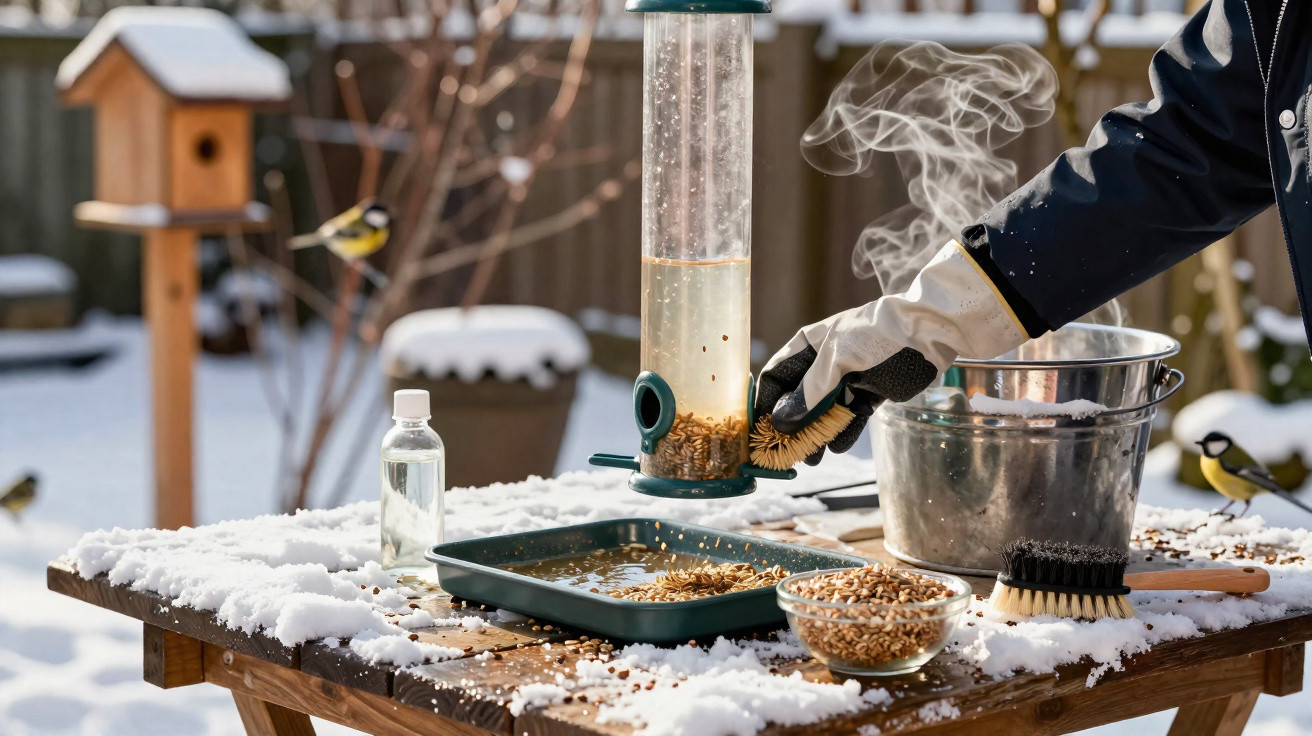
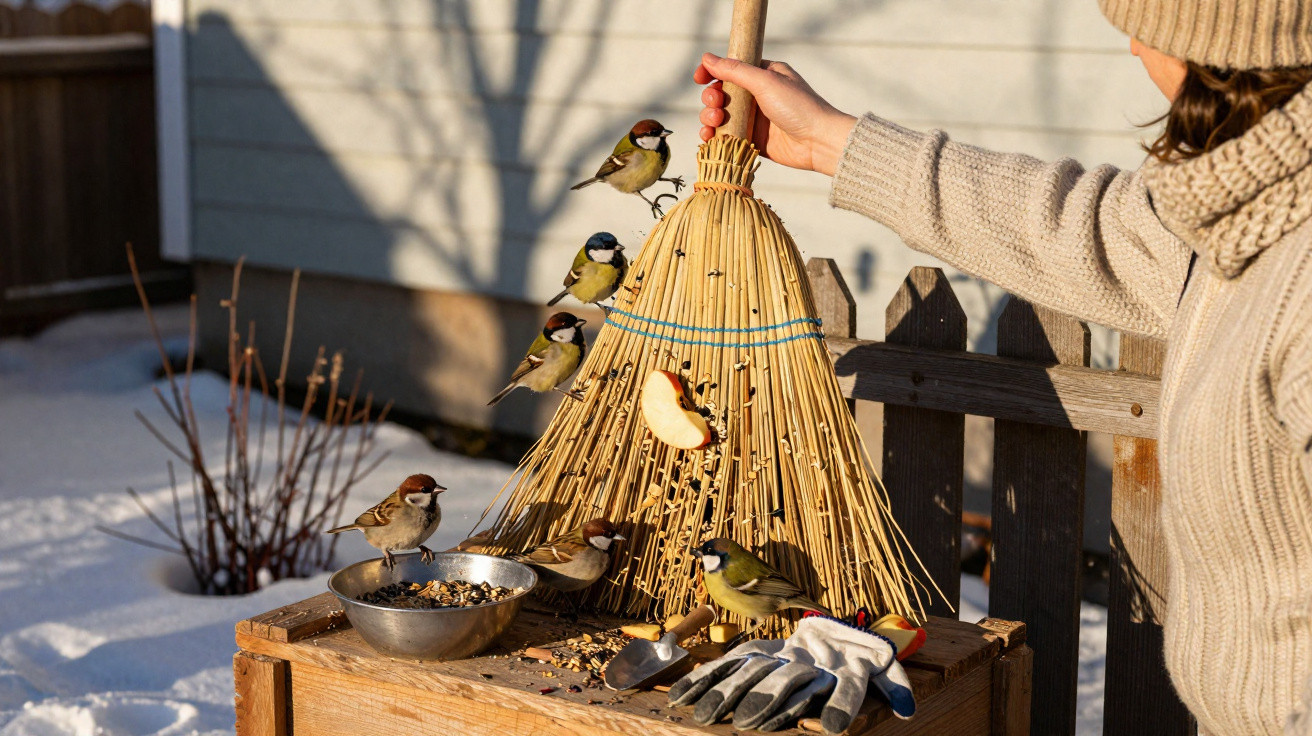
Winter is harsh, the ground is frozen, and insects and seeds are scarce. Wildlife enthusiasts therefore put out bird feeders, seed dispensers and fat balls to help blackbirds, tits and finches through the cold season. However well intentioned this may be, it can make birds ill if one essential part of helping is overlooked: hygiene. The food itself is not usually the issue; it is the dirty ‘tableware’ on which it is served.
Bird feeding stations: hidden germ hotspots in the garden
Putting up a bird feeder creates an artificial meeting point. In the wild, birds search for food over a wide area and their encounters are brief. At a feeding station, many birds suddenly crowd together, often from different species and territories.
This close concentration resembles an overcrowded restaurant where new diners are constantly seated at the same unwashed table. Droppings build up on perches, edges and among the food. Beaks, feet and feathers transfer germs from one bird to another. The result is a disease hotspot that can appear entirely harmless from the outside.
“Just one sick bird at a feeding station may be enough to infect an entire local population within a few days.”
When leftover food turns into toxic sludge
Moisture makes matters worse. Rain, dew and snow soak seeds, husks and fat-based food. Uneaten remnants fall to the bottom, decay and combine with droppings and mouldy husks.
This soggy material is not harmless ‘sediment’, but a breeding ground for bacteria and moulds, including Aspergillus species. They can cause serious respiratory problems and internal damage in birds. Every mouthful of this mixture raises the risk.
Dangerous diseases: when garden help becomes a death trap
Two pathogens are particularly common at bird feeding stations: bacteria that cause salmonellosis and parasites responsible for the condition known as trichomoniasis. Both diseases repeatedly occur where feeding stations are poorly maintained, leading to noticeable declines among finches, sparrows and greenfinches.
How to spot sick birds at the feeding station
Many bird keepers mistake early signs of illness for normal behaviour in cold weather. Looking more closely reveals the difference:
- ruffled, noticeably puffed-up plumage that is not simply being used to retain warmth
- sluggish, listless birds that barely fly away even when someone approaches
- half-closed eyes, unsteady movements and prolonged sitting directly beside the food
- with trichomoniasis: difficulty swallowing, salivation and repeatedly bringing up seeds
For instance, if you see a greenfinch or goldfinch holding seeds in its beak, drooling or repeatedly spitting them out, you are very likely looking at a bird with a severely advanced infection.
Rapid infection in the crowded ‘bird canteen’
Trichomonads are spread chiefly through saliva and regurgitated food. Once an infected bird contaminates the seeds, the pathogen can spread through the entire food supply like wildfire. The next visitors ingest it in only a few pecks.
The process is similar with bacteria such as salmonella: droppings in food, on perches or in water are enough to pass germs on. Before long, an entire group of finches, sparrows or tits may be affected. Many then die away from the feeder in shrubs, often unnoticed, while we stand at the window indoors and believe we have “done something good”.
The overlooked step: premium food is no help without thorough cleaning
The key factor is not the most expensive seed mix, but the cleaning work. Many people simply top up the food whenever supplies run low. Fresh seed then lands on old dirt and mould residues, which is a serious mistake.
“An empty but dirty bird feeder harms birds more than no food at all.”
Why simply topping up makes the problem worse
Adding fresh seeds on top of old residue preserves the entire cocktail of germs. Bacteria and fungal spores move upwards from the base, contaminate the fresh layer too and once again reach birds’ beaks directly.
Every refill should therefore follow a clear routine: clean first, then feed. Seed dispensers and models with numerous corners and crevices can look clean externally, yet harbour stubborn deposits inside that can only be removed with a brush and water.
Hidden dirt traps at bird feeding stations
The main problem areas include:
- narrow gaps in seed dispensers
- corners of platforms and feeding trays
- wire cages for fat blocks and fat balls
- crevices around screws and hanging fittings
Droppings, fat residue and husks stick in these places, forming thin, almost invisible layers. When birds land and eat, their beaks and feet brush against them, creating direct contact with germs that only thorough scrubbing can stop.
How to clean bird feeding stations properly: simple steps with major benefits
A clean bird feeder does not require aggressive chemicals. On the contrary, strong chlorine products or harsh cleaners can leave residues that harm birds.
The proven combination: hot water, a little soap and vinegar
A practical approach is as follows:
- Put on gloves, empty the feeding station completely and dispose of rotten remnants in general waste, not on the compost heap.
- Scrub every surface firmly with hot water and a little soap, such as soft soap, until droppings and crusted residue have been removed.
- Mix a solution of one part vinegar to two parts water.
- Spray or soak the feeding station with the solution and leave it to work for around 15 minutes.
- Rinse thoroughly with clean water.
An old toothbrush or a small scrubbing brush is ideal for difficult-to-reach corners. Following this routine regularly greatly reduces the risk of disease.
Why complete drying is essential
After rinsing comes the stage that many people skip through impatience: drying. Damp corners immediately provide ideal conditions for fungi and bacteria again. New seeds absorb remaining moisture and spoil more quickly.
The feeding station should dry out completely, ideally in an airy, sunny place or near a radiator. New food should only be added once no moisture can be seen or felt.
Nest boxes also need a winter clean
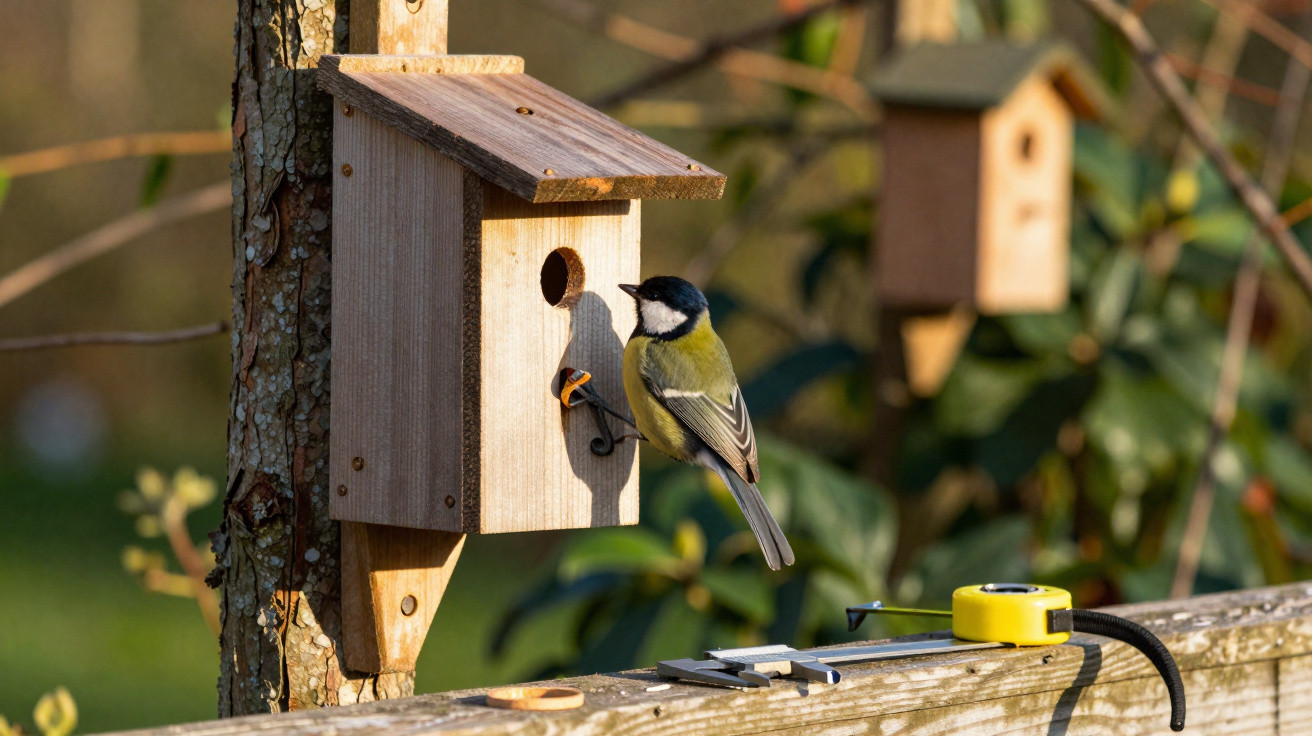
While bird feeders serve as dining rooms, nest boxes act as bedrooms and nurseries. Over the season, they accumulate hair, feathers, nesting material and large numbers of parasites. Anyone who feeds birds but forgets the boxes is only helping them halfway.
Remove old nests to reduce parasite opportunities
Many nest boxes still contain the entire nest from the previous year. Most songbirds do not reuse it because it is full of mites, fleas, lice and other pests. These survive the winter comfortably in the nesting material and wait for new broods.
One simple measure offers protection: open the flap, remove all old material, brush out the box and, where necessary, rinse it with hot water. Chemical sprays should be avoided, as they can harm young birds in spring.
How often should you clean – and when is it better not to feed at all?
A rule of thumb for winter is:
- open feeding places, such as trays or platforms: ideally clean them every few days
- roofed seed dispensers: clean them thoroughly at least once a week
- if visibly ill birds are present: stop feeding completely for one to two weeks and clean feeding stations intensively
No, a break in feeding will not kill the birds. They will turn to natural food sources and other locations. Feeding stations where birds infect each other in large numbers are far more dangerous.
Additional protection around the feeding station
Anyone wishing to go a step further should also consider:
- placing feeders some distance from windows to prevent collisions
- ensuring birds have a clear view so they can spot predators such as cats in time
- offering no more food than needed, so as little as possible is left over to rot
- cleaning drinking and bathing facilities regularly during winter as well
One common misconception is: “Nature will sort it out.” That is only true where people do not intervene artificially. Anyone attracting birds with large feeding stations creates conditions rarely found in open countryside, and has a responsibility to consider the downside.
By including this one frequently overlooked step - consistently cleaning both the bird feeding station and nest box - well-meant help becomes genuinely useful support for birds in winter. A few minutes with a brush, hot water and vinegar can determine whether a garden becomes a safe refuge or a silent breeding ground for disease.









Comments
No comments yet. Be the first to comment!
Leave a Comment