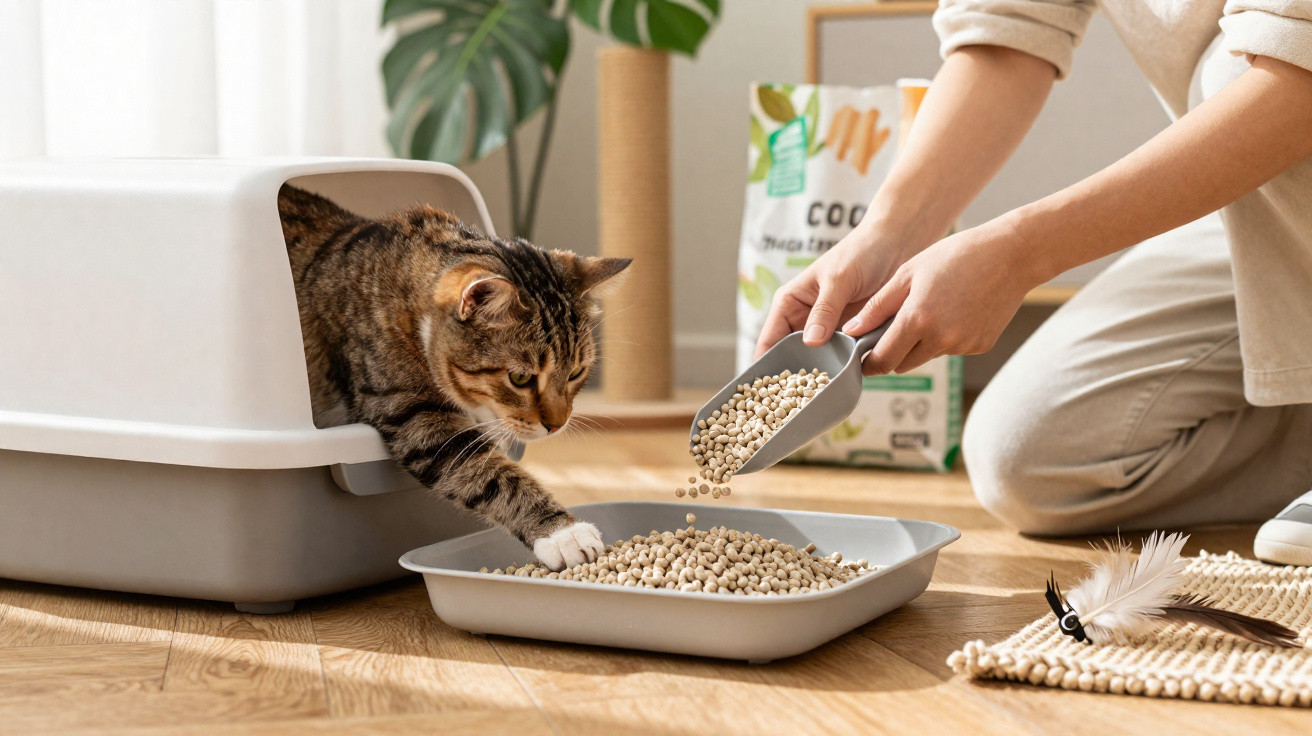
Living with a cat often goes like this: a new tray, fresh litter, high hopes – then your feline companion stands beside it looking offended, or suddenly relieves itself outside the tray. Choosing litter may sound like a minor detail, but it actually influences behaviour, health and odours throughout the home. And yes: not every litter suits every cat, and some varieties are firmly rejected by four-legged friends.
Why choosing the right cat litter matters so much
For many people, cat litter is simply a consumable bought when it is on offer and topped up as needed. For cats, however, it is a highly sensitive space where instinct, comfort and security meet. Making the wrong choice can lead to stress, toileting outside the tray and unpleasant air indoors.
The litter determines whether the tray is seen as a safe retreat – or a no-go area.
Sensitive paws: why texture matters
Cat paws may look soft and adorable, yet they contain countless nerve endings. Cats notice every uneven surface and sharp edge. Litter that feels like ordinary little stones to us can feel like a gravel bed beneath bare feet to a cat.
This commonly happens:
- Coarse mineral litter can feel hard and sharp.
- Crystal litter feels cool and smooth, and is often slippery.
- Very large wood or maize pellets may press uncomfortably while a cat is digging.
Many cats expect something beneath their paws that resembles loose soil. They want to dig, scrape and cover up without pain or unpleasant pressure. If a cat hesitates, places only two paws in the tray or immediately jumps back out, the texture is often the issue rather than the tray's location.
Dust in the litter tray: a risk for airways
Dust is another potential irritant. Anyone who has poured an extremely fine clumping litter into a tray will know the cloud of dust that can form. People briefly hold their breath, while the cat later has its nose directly above it.
This may result in:
- irritated mucous membranes in the nose and throat
- persistent sneezing or watery eyes
- increased coughing in cats with existing conditions, such as asthma
Dust builds up particularly in small flats and enclosed hooded trays. Every digging movement sends further particles into the air. Low-dust litter is therefore not a luxury; it can provide genuine relief for a cat's airways, as well as for the people sharing the home.
Wood cat litter is on the rise: what makes compressed wood so appealing
Plant-based alternatives have gained considerable ground in recent years. Litter made from compressed wood – usually sold as small pellets or fine granules – regularly ranks highly in tests and user reports.
Strong absorption rather than soggy clumps
Compressed wood litter absorbs liquid very quickly. The wood fibres expand, partly break down into soft sawdust and bind urine where it lands. Compared with clay clumping litter, it produces less sticky sludge that clings to the scoop.
For day-to-day use, this means:
- the surface stays dry and firm underfoot for longer
- wet areas can be removed precisely
- less litter is used because the whole tray needs replacing less often
Good wood litter keeps the top layer of the cat tray surprisingly dry – making every clean-up much more pleasant.
Odour control without a cloud of perfume
Cat urine has a powerful smell. Many conventional products rely on strong fragrances to mask it, which can quickly become overwhelming for sensitive noses, whether feline or human.
Wood litter takes a different route: its porous fibres absorb moisture and deprive bacteria of the conditions they need. This produces less ammonia, the very substance responsible for the sharp smell of urine. For many people, the mild natural scent of wood is more pleasant than an intensely perfumed floral fragrance.
More than hygiene: environmental impact and everyday convenience
Few people think about the cat tray and its climate impact. Yet, over a cat's lifetime, the difference between mineral and plant-based litter is substantial.
Renewable raw materials instead of open-cast extraction
Conventional litter is often made from bentonite or other clay minerals. These raw materials are extracted through open-cast mining, which uses large areas of land and requires substantial transport energy. After use, they are incinerated or sent to landfill.
Wood litter is generally made from by-products of timber processing, such as sawdust or wood shavings. Reputable manufacturers use materials from sustainably managed forestry and avoid chemical additives. This significantly reduces the environmental footprint.
| Type of litter | Raw material | Disposal |
|---|---|---|
| Mineral (clay) | Open-cast mining | General waste, incineration |
| Wood litter | Wood residues, renewable | Often garden waste or general waste; sometimes compostable (check local rules) |
Fewer litter crumbs across the living room
Everyone knows the pale trail of crumbs from the cat tray to the sofa. Fine, lightweight particles easily stick to fur and paws. Wood pellets are usually slightly heavier and larger, and many varieties break down only once they come into contact with liquid.
As a result, cats carry less material out of the tray. Using a litter mat catches most crumbs directly in front of it. This noticeably reduces cleaning, especially in homes with several cats or children who like walking barefoot.
How to find cat litter that suits your cat
However tempting a test winner may be, even the best litter is useless if your cat refuses it. A little “market research” in your own home is therefore always worthwhile.
Common signs of dissatisfaction
Watch for these indicators:
- the cat scratches only briefly before leaving the tray in a hurry
- it suddenly toilets beside the tray or in hidden places
- your four-legged companion meows in front of the tray or seems unsettled
- the cat puts only its front paws in the litter and stretches far into the tray
If these signs become more frequent after changing litter, it is worth changing course promptly. Some cats accept blends where the new litter is gradually mixed with the old one.
Key selection criteria at a glance
These questions can help when deciding on a variety:
- How low-dust is the litter really when pouring and cleaning it?
- How does the material feel between your fingers: soft or sharp?
- How strong is its natural smell before the cat has even used the tray?
- Can the litter be scooped out easily without sticking together?
- How much litter ends up outside the tray each day?
Anyone who puts their own hand into the litter quickly understands why a cat avoids certain varieties.
Common mistakes – and how to avoid them
Many cat tray problems have less to do with an animal being “stubborn” and more to do with well-meant but impractical choices.
Too much fragrance, too little privacy
Strongly perfumed litter may disguise odours, but it often irritates a cat's sensitive nose. What smells “nicely fresh” to us can soon become overpowering for animals. Mildly scented or unscented varieties are generally better suited to cats' keen sense of smell.
The combination of a hooded tray and intensely fragranced litter is also problematic. Air becomes even more concentrated beneath the hood. If a cat is toileting outside the tray, try offering an open tray with neutral, low-dust litter.
Cleaning too infrequently, even with good litter
Even the finest wood litter cannot make up for poor maintenance. Many cats expect their tray to be cleaned at least once a day. Households with multiple cats generally need more than one tray and more frequent cleaning.
A useful rough guide:
- remove all solid waste daily
- take out wet areas selectively
- replace the entire filling every one to four weeks, depending on the product
When a cat suddenly reacts differently
If a cat that has previously had no issues suddenly refuses the tray, litter is not always the cause. Pain while urinating, bladder infections or stress within the household may also play a part. In these situations, a veterinary appointment should be added to the to-do list, alongside a critical look at the litter, location and cleaning routine.
Indoor cats in particular spend many years of their lives using the same tray system. Investing in a high-quality, well-tolerated solution improves every day of the animal's life while making cleaning easier for you.
Wood-based litter with a fine, soft texture can offer a good compromise: comfortable for sensitive paws, effective against odours and more resource-conscious than traditional clay products. Ultimately, though, the cat decides – and its behaviour makes it very clear whether the choice is right or not.








Comments
No comments yet. Be the first to comment!
Leave a Comment