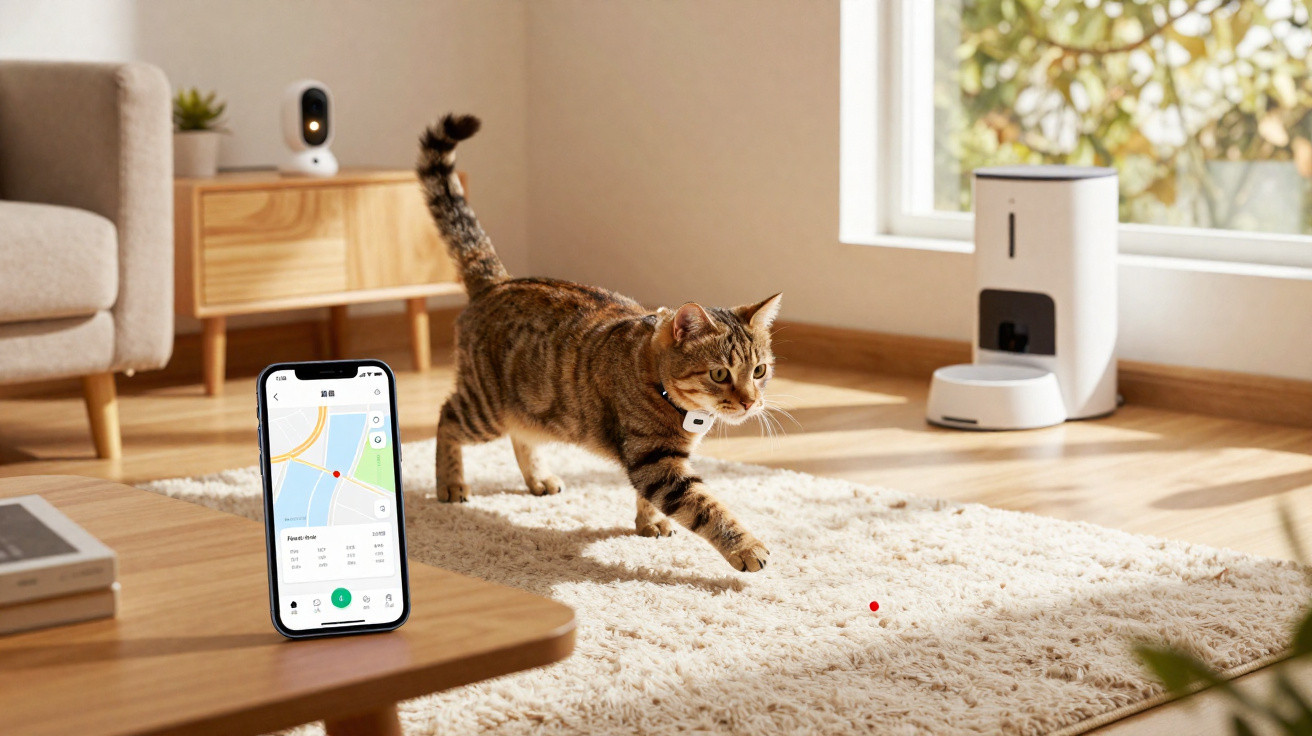
Modern gadgets can significantly ease that knot in your stomach.
Anyone with a pet cat knows the feeling: you leave for work, dinner with friends or a weekend away, and keep wondering how your pet is coping alone at home. Is it eating enough? Is it bored? Is it sitting by the door and crying? Smart pet technology promises reassurance in precisely these situations. Three devices stand out in particular: an interactive camera, a connected automatic feeder and a GPS tracker. Used together, they can make everyday life noticeably calmer for both people and cats.
Why being left alone causes stress for cats and people
Many owners underestimate how unsettling disruptions to routine can be for cats. Animals that are especially attached to one person can be sensitive to long absences. This often appears as unwanted behaviour, including scratching furniture, loud meowing or toileting outside the litter tray.
“Anyone who can better understand and observe their pet will spot signs of stress earlier – and can take action in good time.”
Meanwhile, people can be burdened by the constant sense that they are not there enough. This is particularly true in spring and summer, when spontaneous plans for a pub garden can clash with the desire for freedom and a guilty conscience. Smart aids can offer a compromise: the cat remains safe and cared for, while its owner regains peace of mind and free time.
Interactive camera: a view of the living room instead of imagining the worst
Having a camera in the living room may feel unusual at first, but for many cat owners it quickly becomes an everyday tool. The key is choosing a device that does more than simply provide images.
Checking daily life and monitoring behaviour
Adult cats often sleep for 14 to 16 hours a day. This is normal and even healthy. A live stream quickly reveals whether your pet is completely relaxed on the windowsill or restlessly pacing around the home.
- Normal sleeping: the cat naps regularly, changes resting spots and appears calm.
- Possible signs of stress: constant licking, anxious pacing and frequent meowing towards the door.
- Concerning inactivity: the cat remains rigidly in the same place for hours and seems listless – this may point to a health issue.
Many cameras now offer features such as motion alerts, night vision and audio transmission. These allow owners to see more quickly whether unusual behaviour has only just started or has been continuing for some time.
Playing from the office: a laser dot instead of boredom
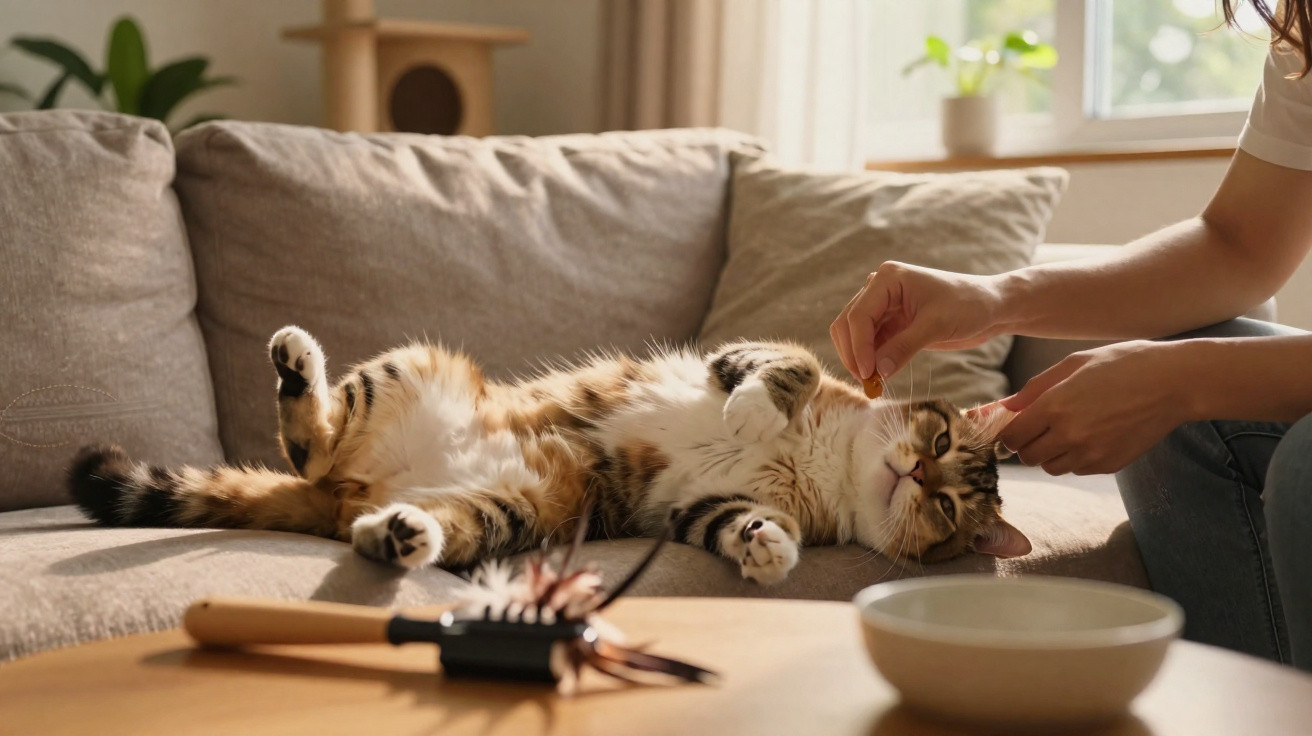
Some models go a step further, with a built-in laser or another interactive feature. Controlled via an app on a smartphone, they let you start small hunting games remotely.
Using them in the right amounts is important: several short sessions of a few minutes spread across the day are preferable to one frantic 20-minute chase. This keeps the cat physically and mentally engaged without overstimulating it.
“Short, spontaneous play prompts throughout the day can noticeably calm typical ‘evening mad moments’.”
One tip: never point the laser directly at the cat’s eyes, and use it in a way that occasionally gives the animal real prey – such as a treat or a tossed toy – so that the hunt has a clear ending.
Connected automatic feeder: no more oversized bowls or prolonged hunger
Before leaving the house, many owners are inclined to leave food out “just in case”. This often creates two problems: too much food is eaten in a short period, followed by long stretches with an empty bowl. Both can contribute to stress and excess weight.
Controlling portions by app and adapting the routine
Modern automatic feeders can be programmed to the minute and adjusted through an app. The cat can therefore receive several small portions over the day, much as it would catch several prey animals in the wild.
| Situation | Automatic feeder solution |
|---|---|
| Working owner with fixed hours | Set fixed feeding times in the morning, at midday and in the evening |
| Irregular work rota | Dispense or postpone portions spontaneously via the app |
| Overweight cat | Plan the calorie allowance with a vet, then divide it precisely |
| Two cats with different needs | Use a feeder with microchip recognition that admits only the correct animal |
The major benefit is that the bowl is not permanently full, so the cat cannot snack out of boredom. At the same time, it does not experience extreme periods of hunger, as the next portion arrives reliably.
A feeding call in a familiar voice
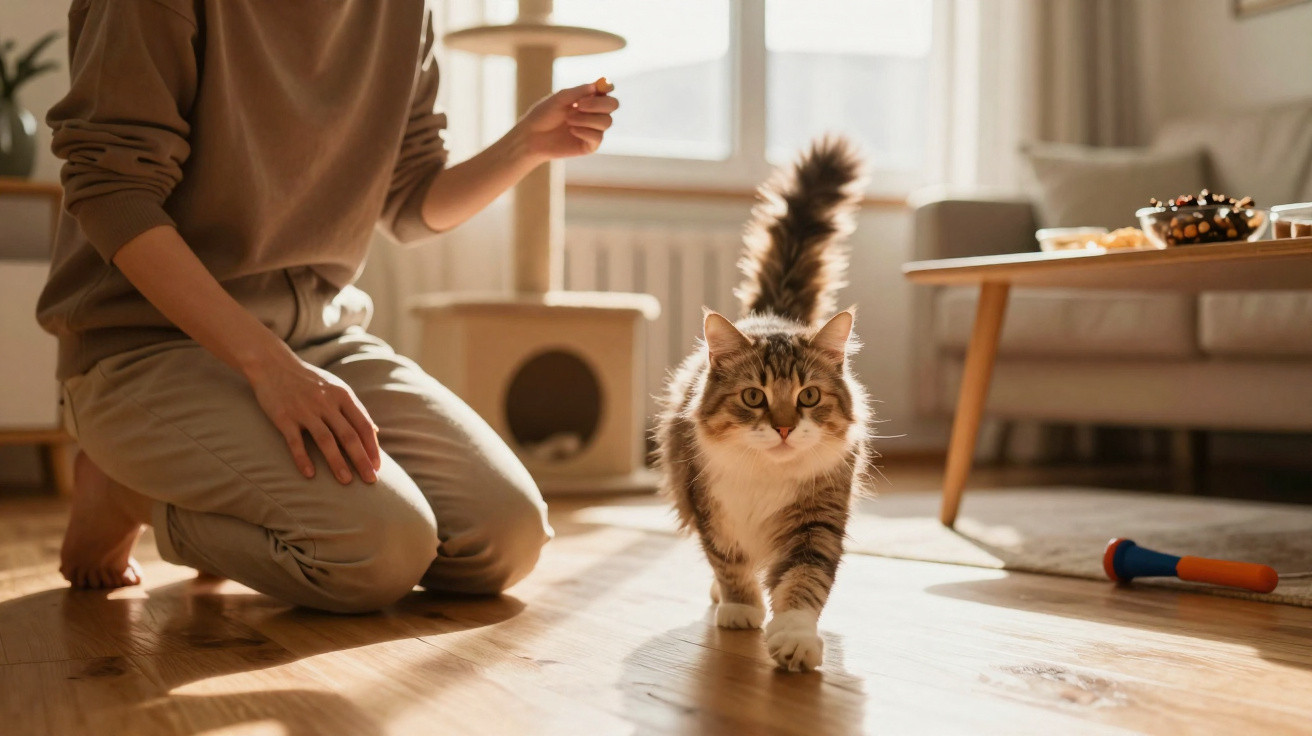
Many devices include a recording function. You can record a short phrase that plays when food is dispensed. For many animals, a familiar voice is a strong source of comfort.
“The regular ‘feeding call’ through the speaker can strengthen the bond and gives us humans the feeling of still being present despite the distance.”
Anyone who spends a lot of time away should avoid making the recording too long or overly emotional. A brief, consistent announcement such as “Mia, your food is here” in a calm voice works best.
GPS tracker: freedom for outdoor cats, less panic while waiting
Cats that go outdoors bring an extra dose of suspense. Many return home reliably at set times, while others may disappear for several hours or even days. A GPS tracker attached to a breakaway collar removes much of that uncertainty.
Staying safe while out in their territory
Most trackers weigh only a few dozen grams and are attached to a collar with a safety release, allowing the cat to free itself if it becomes caught in undergrowth. On a smartphone, you can view the animal’s movements in real time.
Typical functions include:
- Live location on a map
- A route map covering the previous hours or days
- A notification when the cat leaves a defined zone
- Timers to manage battery use
For example, anyone living near a busy road can create a type of “fence” around their property and quieter side streets. If the cat leaves this area, the app sends an immediate alert. This makes it easier to identify risky situations quickly.
Understanding secret routes and conflict zones
It becomes particularly interesting when you take time at the weekend to review the routes from recent days. Many owners are surprised by how large – or how small – their cat’s real territory is.
“Once you know where the favourite spots are, sudden changes in behaviour at home become much easier to understand.”
If the cat suddenly starts scent-marking indoors, checking its GPS history may provide clues: have new meeting spots with unfamiliar cats appeared, or has its territory shifted? This can indicate territorial disputes and often explains the stress in the living room.
What owners should consider with smart cat technology
Anyone considering connecting their home should keep several points in mind, ensuring that the technology genuinely serves the cat rather than simply their own need for control.
- Data protection: Cameras should support password-protected setup, ideally with two-factor authentication.
- Power cuts and internet issues: Check whether devices have backup functions, such as local feeding schedules that work without an internet connection.
- Noise level: Some feeders are noisy. Sensitive animals need a quieter option.
- Getting used to it: Always introduce new devices gradually, so the cat is not frightened.
Technical aids are no substitute for attention, but they can make daily life more structured and less stressful. Those with limited time especially benefit from being able to automate routines such as feeding and brief play prompts.
How much technology can a cat really handle?
Not every cat reacts in the same way. A more anxious character may need only a quiet feeder and a discreet camera without flashing lights. A curious, adventurous cat, by contrast, may love laser-based hunting games and barely notice the tracker on its collar.
The general rule is to watch the animal’s behaviour. If it seems more relaxed, eats regularly and displays stable territorial behaviour outdoors, the setup is suitable. If nervousness increases, features should be reduced or combined differently.
Anyone who coordinates the three technologies – camera, automatic feeder and GPS tracker – effectively gains a very good overview of their four-legged companion’s life. You can see when it eats, how it sleeps and where it spends time outdoors. That takes a great deal of pressure out of everyday life: the front door can close without guilt slipping out with you every time.










Comments
No comments yet. Be the first to comment!
Leave a Comment