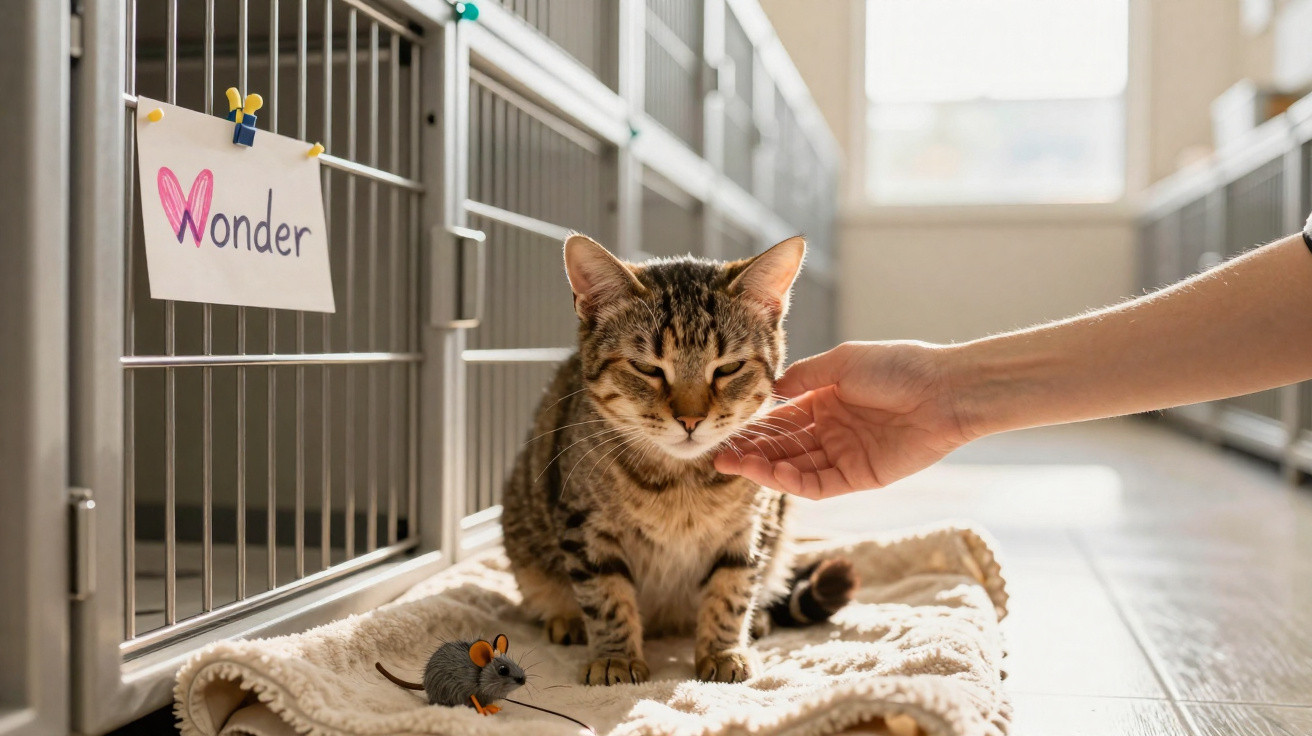
The day the Millers encountered Mabel, a faint mix of disinfectant and tinned food hung in the shelter corridor. Cages ran along both walls: some cats pushed their noses against the bars, while others were curled so tightly that they were nearly unseen. At the far end, in an upper cage, sat a twelve-year-old tabby. Her file contained only: “Shy. Senior. Low energy.” When the family paused, she did not so much as raise her head.
Their children had arrived hoping to choose a kitten, and their father was looking through younger, “adoptable” faces on his phone. Their mother, however, saw the old cat’s ear move when they spoke in quiet voices, followed by the slightest twitch of her tail.
Fifteen minutes later, the kitten idea had been abandoned. Mabel was inside a carrier, her eyes wide and her body rigid as a statue.
Nobody in that car could have anticipated what the following weeks would bring.
The quiet shock of an elderly cat waking up to life
Initially, Mabel drifted through the Miller home like a ghost. She kept close to the skirting boards, slipped beneath furniture and disappeared behind curtains. Her food bowl remained almost untouched. The children whispered whenever they walked past her hiding place, worried that they might frighten her further into herself. She was nothing like the purring lap cat they had pictured.
On the third day, Mum sat on the hallway floor and stayed put. She offered neither persuasion nor treats, only her presence. Twenty minutes later, two golden eyes appeared in the gap beneath the bed. Ten minutes after that came a paw. Then Mabel’s slender body slowly emerged, centimetre by centimetre, and rested just beyond arm’s reach.
It was the first break in the barrier she had created: a small, wordless “maybe.”
By the second week, her change was becoming visible in unexpected and almost funny ways. The supposedly “low energy” senior began making careful midnight zoomies, sliding over the wooden floorboards like a novice ice skater. One morning, the children discovered that every small soft toy had somehow been collected beside the sitting-room rug, as though Mabel had spent the night assembling a peculiar little shrine.
At breakfast, she first tried perching on the back of a chair, then placed one paw on the table, before producing a faint, raspy meow like a creaking hinge. Nobody at the shelter had heard her voice.
A rescue volunteer later explained that many elderly cats shut down in shelters. There is too much noise, too many scents and no reliable person to trust. The version of the animal seen in a shelter can be little more than a shadow.
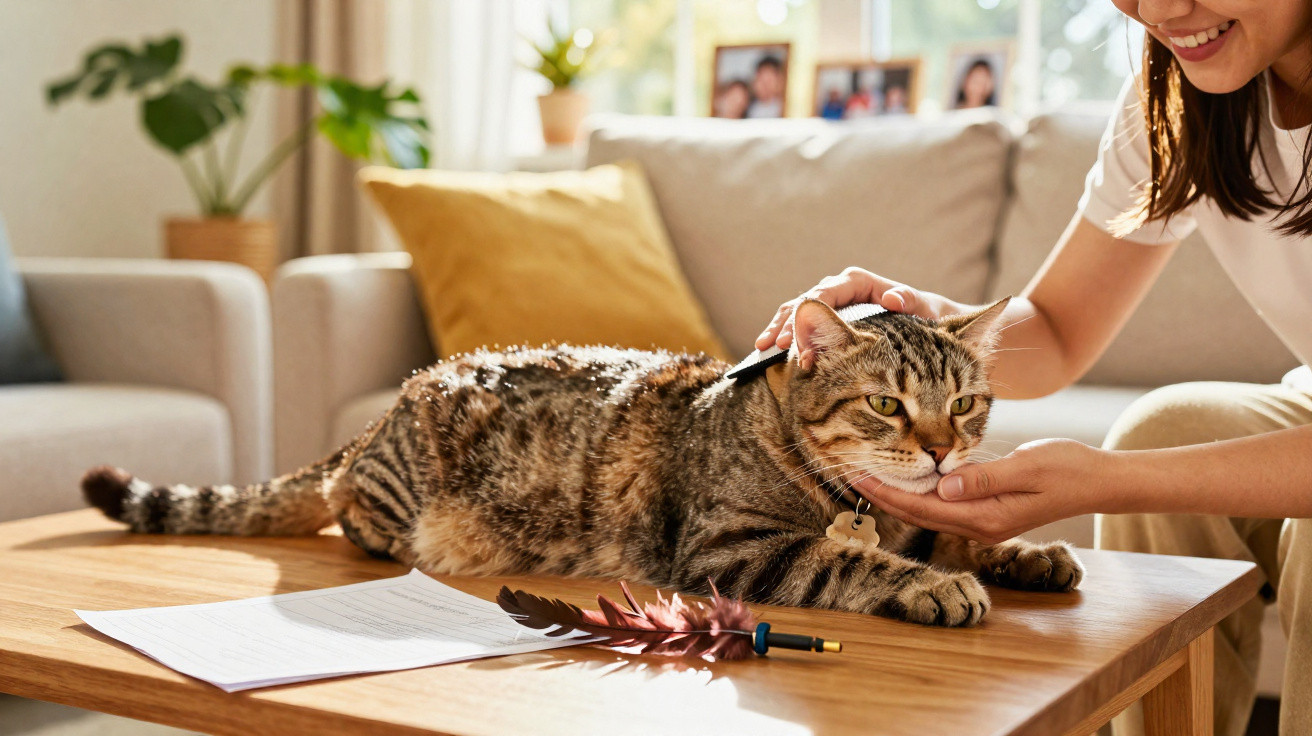
What the Millers witnessed was what can happen when an anxious older cat finally trusts that the ground will not vanish beneath them. Their peaceful home provided Mabel with dependable meals, regular routines and the privilege of not having to compete for attention. Rather than curling herself tightly, she began sleeping stretched out on her side: a subtle but meaningful indication that she felt safe.
There is also a practical explanation for this sort of transformation. Senior cats are often described as “difficult” or “depressed” in cages when they may actually be mourning a former home, living with painful joints or enduring ongoing stress. When those needs are carefully met - with soft bedding, pain relief and a peaceful corner - they may open up like a flower kept too long in shade.
Personality, especially in animals with a history, isn’t a fixed setting; it’s a response to how safe they feel.
How to help an elderly shelter cat show their true personality
The Millers did not work from a flawless handbook. They made mistakes, but they got one crucial thing right: they took their time. During the first week, Mabel had a “starter room” - the guest bedroom, with the door mostly shut and her litter tray, food and a cardboard hiding place in one corner. Nobody pulled her out in search of cuddles.
Whenever they entered, they spoke softly, sat on the floor at her height and allowed her to decide how close to come. The children were instructed to use their “library voice” and move as though they were sneaking biscuits, rather than charging around a playground.
When Mabel could explore the room with confidence, they began opening the door for brief periods. She could look into the hallway, then withdraw again if she wished. The home gradually grew around her according to her own timetable, not the family’s preferred one.
Many people bring home a senior cat and, when the animal is still hiding on day two, begin to panic. They fear they have made a mistake. Worse still, they may decide the cat “doesn’t like them” and emotionally give up before the relationship can develop. We have all known that moment: expecting an instant connection but finding instead… a valance and two blinking eyes.
This is when patience needs to become a daily practice rather than an abstract idea. Make short, quiet visits to the hiding place. Offer treats, then step back. Treat growls and hisses as communication rather than rejection. Honestly, no one manages this with perfect consistency every single day. Homes become noisy, children lose patience and work calls interrupt.
Still, even imperfect but steady kindness usually wins these old souls over. They pay closer attention to your habits than to your words.
One evening, around three weeks after she arrived, Dad fell asleep on the sofa while the television flickered quietly. At about 1 am, he woke to an unexpected weight on his chest. Mabel, who had never selected him before, was curled there, purring with such force that her whiskers trembled. In that moment, he understood that she had not merely changed; she had finally trusted him.
“People think adopting a kitten is the only way to build a close bond,” says Dr. Elaine Foster, a veterinarian who focuses on senior pets. “But elderly cats often come with a whole language of gratitude. Give them time, pain control, and predictability, and they’ll show you a depth of affection that feels almost… human in its intensity.”
- Give them a quiet landing zone
Set aside one room with gentle lighting and familiar scents from a worn T-shirt or blanket. - Begin with presence, not touch
Sit close by, read or look at your phone, and allow the cat to observe you without pressure. - Look for tiny signals
Notice a slower blink, a tail curled around their paws or a stretch beyond their hiding place. - Support their ageing body
Arrange a veterinary check, joint support, an easy-entry litter tray and a low-sided bed. - Accept uneven progress
Two steps forward and one step back still counts as progress.
What an elderly cat’s transformation quietly says about us
A few months after being adopted, Mabel barely resembles the hunched, silent cat from the shelter cage. She has designated “favourite sunbeam” times, protests when dinner is five minutes late and demands to inspect every shopping bag like a tiny furry customs officer. When visitors arrive, she observes them from afar before selecting the softest lap and settling down as though she has known them forever.
Stories such as Mabel’s spread quickly on social media for a reason. They touch something tender: the belief that a new beginning is still possible, even after one or two difficult chapters. When an elderly cat changes from silent to vocal, from overlooked to essential, it reminds us that personality is not fixed in time.
Some people will finish this story and continue with their day. Others may find themselves, weeks later, at the end of a shelter corridor, noticing the quiet cat that nobody else has seen. In that instant, the label “low energy senior” may feel less like a warning and more like a beginning.
| Key point | Detail | Value for the reader |
|---|---|---|
| Senior cats can change dramatically once outside the shelter | Stress, noise and grief frequently hide their true temperament in cages | Encourages readers to consider older cats they might otherwise pass over |
| Slow, respectful introductions build trust | A quiet room, gentle routines and cat-led contact help them come out of themselves | Provides a clear, manageable plan for the first weeks after adoption |
| Physical comfort encourages emotional blossoming | Veterinary care, soft bedding, an accessible litter tray and food reduce pain and anxiety | Demonstrates that small, practical changes can create a deeper bond |
FAQ:
Question 1 How long does it usually take for an elderly shelter cat to settle into a new home?
Many senior cats need anything from a few days to several weeks. The first week commonly involves hiding and quiet observation; weeks two to four can bring tentative exploration and brief flashes of personality. Some cats do not fully relax for two or three months.Question 2 Are older cats more difficult to care for than kittens?
They may have greater medical needs, but they are generally calmer, less destructive and already litter trained. Veterinary appointments and perhaps medication are part of the commitment, yet their routines can be easier to manage than those of a hyperactive kitten.Question 3 What if my senior rescue cat never becomes cuddly?
Every cat expresses affection differently. Some show love by sitting nearby, slow blinking or sleeping at the foot of the bed instead of on your lap. Honouring their boundaries often builds greater trust and, eventually, more closeness.Question 4 Can an elderly cat still play and learn new things?
Yes. Many senior cats enjoy gentle games with feather wands, food puzzles and soft toys. Brief sessions work best. They can also learn routines and even simple tricks, provided their body and energy levels are respected.Question 5 How can I tell whether an older cat suits my family?
Speak openly with shelter staff about the noise level in your home, children, other pets and your schedules. Ask for a cat whose temperament fits those circumstances, while remaining open to the possibility that the shy, quiet cat could surprise you most of all.













Comments
No comments yet. Be the first to comment!
Leave a Comment