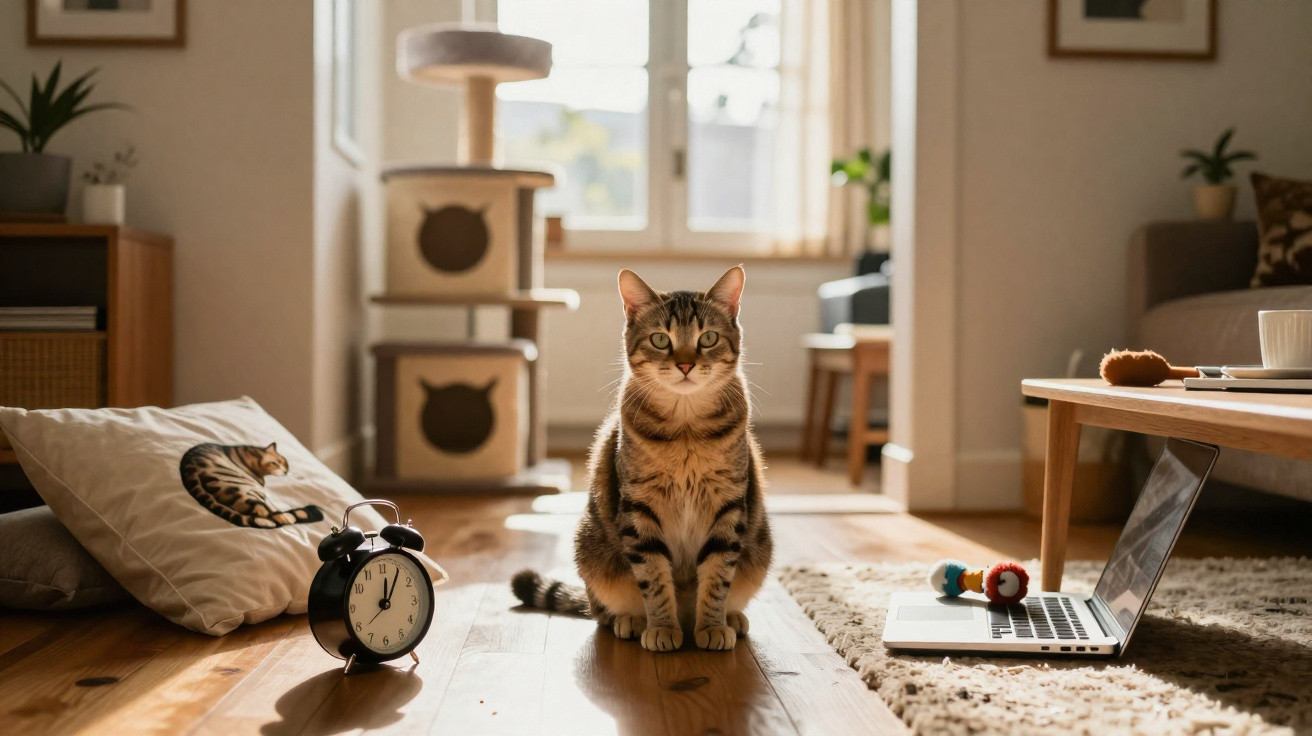
Many cat owners joke that their four-legged companion is “the boss of the house”. Yet there is a surprising amount of truth behind the joke. Cats make very deliberate choices about where they rest, when they are active and how they interact with us. Look more closely and it can seem like a quiet shift in power – with us cast as the household staff.
How cats systematically take over the home
Cats rarely pick a resting spot at random. Their choices reflect a strong need for security and control. In a cat’s mind, the home becomes a territory divided into areas of varying importance.
Elevated “watchtowers” rather than cosy corners
Many cats are drawn to high places: the tops of cupboards, windowsills, shelves and the upper edge of a sofa back. To people, these may look like dusty, awkward corners, but from a cat’s viewpoint they are ideal observation posts.
From above, a cat can keep an eye on everything while staying out of reach and feeling as safe as possible.
These “watchtowers” serve several purposes at once:
- A view of every movement in the room
- An escape route when there is sudden noise or visitors arrive
- Control over who approaches and when
- A retreat when children or other pets become too intrusive
Over time, these places become firmly embedded in the daily routine. Many owners know exactly: “That is his spot, so I’d better not touch it.” Eventually, people willingly move ornaments or books so the cat can lie there comfortably – a particularly elegant territorial victory.
Why cats lie right in the way
Another familiar pattern is a cat curling up precisely in a doorway, in the middle of the hallway or directly in front of the stairs. Of course, it may simply be comfortable, especially on warm tiles or carpets. But something else is happening at the same time:
Whoever lies in the passageway monitors every person entering or leaving the room.
Whenever you step over, around or almost onto the cat, it learns that this is where people pass through and that nothing escapes its notice. Along the way, it also exerts influence: you slow down, change direction, speak to it and adjust your pace. All of these are small signals that you are adapting to the cat.
When the cat replaces the alarm clock
Controlling territory is one thing; controlling time is another. Many owners know the moment when a paw in the face or loud meowing at the bedroom window brings the night to an end. This is not coincidence, but learned behaviour.
How giving in once becomes a fixed ritual
Cats are most active at dawn and dusk. Eating early in the morning fits perfectly with their natural rhythm. So, when your cat wakes you at five o’clock and you give in “just this once” so that you can get back to sleep, this is what happens:
The cat makes the connection: waking the human = getting food or attention. This greatly reinforces the behaviour.
The pattern repeats until it becomes established. The cat factors your start to the day into its plans because it has learned that you will respond. Many people see something similar in the kitchen: as soon as someone enters, a concert of meowing, rubbing against legs or jumping onto the worktop begins – all in expectation of food.
The balance of roles gradually shifts:
- The cat starts the behaviour by waking, meowing or scratching.
- The person responds by feeding it, opening a door or stroking it.
- The cat learns: “This is how I get my human to do what I need.”
How to take back control of your body clock
Anyone who does not want to get up at five every morning at their cat’s command needs consistency. Experts advise establishing clear routines:
- Ignore attempts to wake you as far as possible – no food and no talking.
- Feed the cat only after completing your own morning routine, such as showering, having coffee and getting dressed.
- Introduce set feeding times that vary as little as possible.
In time, the cat learns that waking you does not produce food; certain times of day and routines do. This lowers stress for both sides.
Is the cat really dominant, or simply protecting its survival?
At first glance, much of this resembles a furry miniature dictator: constant demands, blocked routes and enforced playtimes. A closer look at behavioural biology reveals a different picture.
What looks like a power game is often simply a clever survival plan in an environment the cat finds difficult to control.
Cats are creatures of habit, and changes can quickly frighten them. Food, sleeping spots and access to safe rooms should all be as predictable as possible. To create that predictability, a cat uses what is available to it: our behaviour.
| Cat behaviour | Human perception | Actual function |
|---|---|---|
| Waking people early in the morning | An annoying display of power | Ensuring food is provided regularly |
| Lying in a doorway | Provocation or laziness | Monitoring movement within its territory |
| Meowing when someone enters the kitchen | “Begging attack” | Testing whether resources are accessible |
| Preferring high places | A quirk or odd habit | Overview, safety and a means of escape |
A cat therefore “rules” less because it enjoys power than because this reduces uncertainty. People interpret the behaviour as dominance, but at its core it consists of highly adapted strategies for avoiding stress.
How to restore the balance of power
Nobody wants to run their own home as a cat dictatorship. At the same time, the four-legged resident should feel secure. The two aims can be combined effectively by adjusting a few key factors.
Clear routines rather than constant giving in
Immediately meeting every demand reinforces agitated behaviour. Fixed routines are more helpful:
- Regular feeding times, but not too frequently
- Planned play sessions, particularly in the late afternoon or evening
- Quiet retreat areas where nobody reaches in or follows the cat
- Clear rules: the bedroom stays closed at night, the table is off limits and the sofa has a limited cat area
Play involving prey-like toys, food puzzles or intelligence toys helps channel a cat’s hunting instinct and energy. Those who include an intensive play session in the evening will often find their cat is noticeably calmer in the morning.
Structuring the home for cats
Arranging the home so that a cat feels safe reduces its need to compensate through controlling behaviour. Useful provisions include:
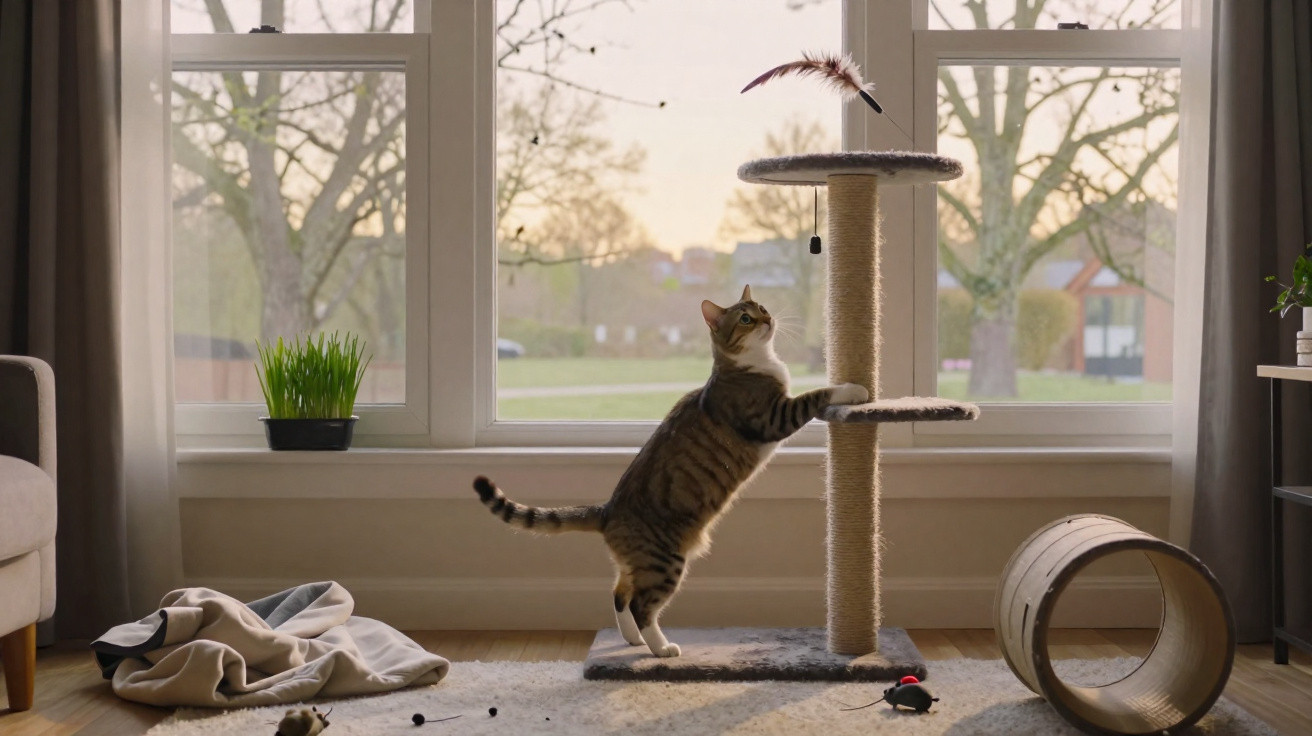
- Several raised resting areas in different places
- At least two retreats where the cat can remain undisturbed
- Sturdy scratching facilities in strategically important locations
- Separate areas for food, water and the litter tray
The better a cat’s basic needs are met, the less it needs to “correct” the situation through irritating actions.
Why we fall into the cat trap so easily
People react strongly to signals from animals, especially in enclosed spaces. A plaintive meow, paws scratching at the door or a reproachful look from the top of a cupboard can all trigger an immediate urge to help. The cat remembers this response and uses it deliberately.
There is another factor: many owners feel guilty when they work long hours or have little time available. They make up for this with extra treats or by instantly responding to every demand. For the cat, this creates an ideal learning environment: the more intensely it makes itself noticed, the more attention it receives.
Anyone who understands how carefully cats analyse our patterns can counter this consciously: do not respond verbally to everything, do not answer every meow with food, and clearly separate “playtime”, “rest time” and “mealtime”.
When control becomes a problem
Some signals should be taken seriously by owners. If a cat reacts aggressively when someone enters certain rooms, no longer allows other family members into the bedroom or appears highly stressed, a little training alone is not enough. Pain, fear or being overwhelmed may be behind the behaviour.
In such cases, a check-up with a vet is worthwhile, potentially supplemented by behavioural therapy advice. Physical causes such as arthritis, thyroid problems or chronic pain can alter behaviour dramatically. Targeted training should begin only once it is clear that everything is physically well.
This leaves a provocative question: do we live with a cat, or do we live in a cat’s home with a human connection? The answer lies somewhere in between. Those who recognise the subtle strategies of their house cat can organise daily life so that both sides benefit: the cat feels safe, and we no longer have to report for duty at five every morning just because a paw has decided so.














Comments
No comments yet. Be the first to comment!
Leave a Comment