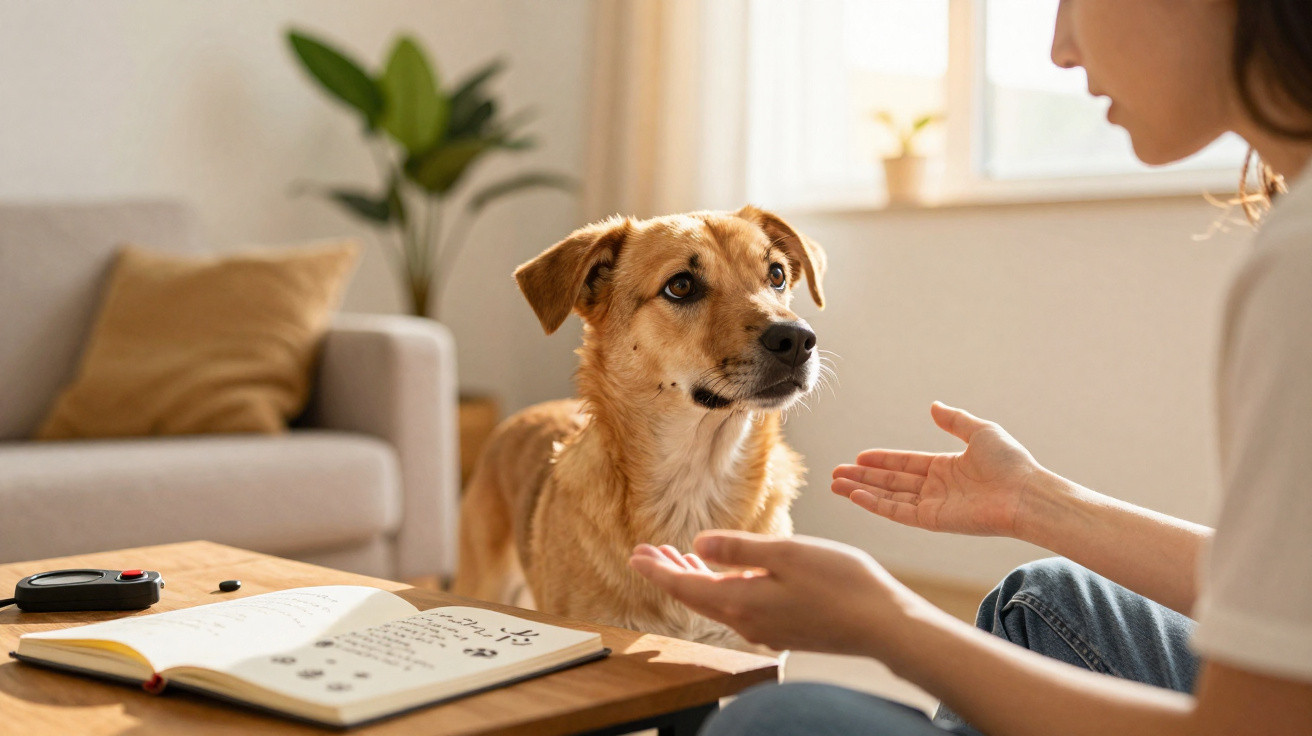
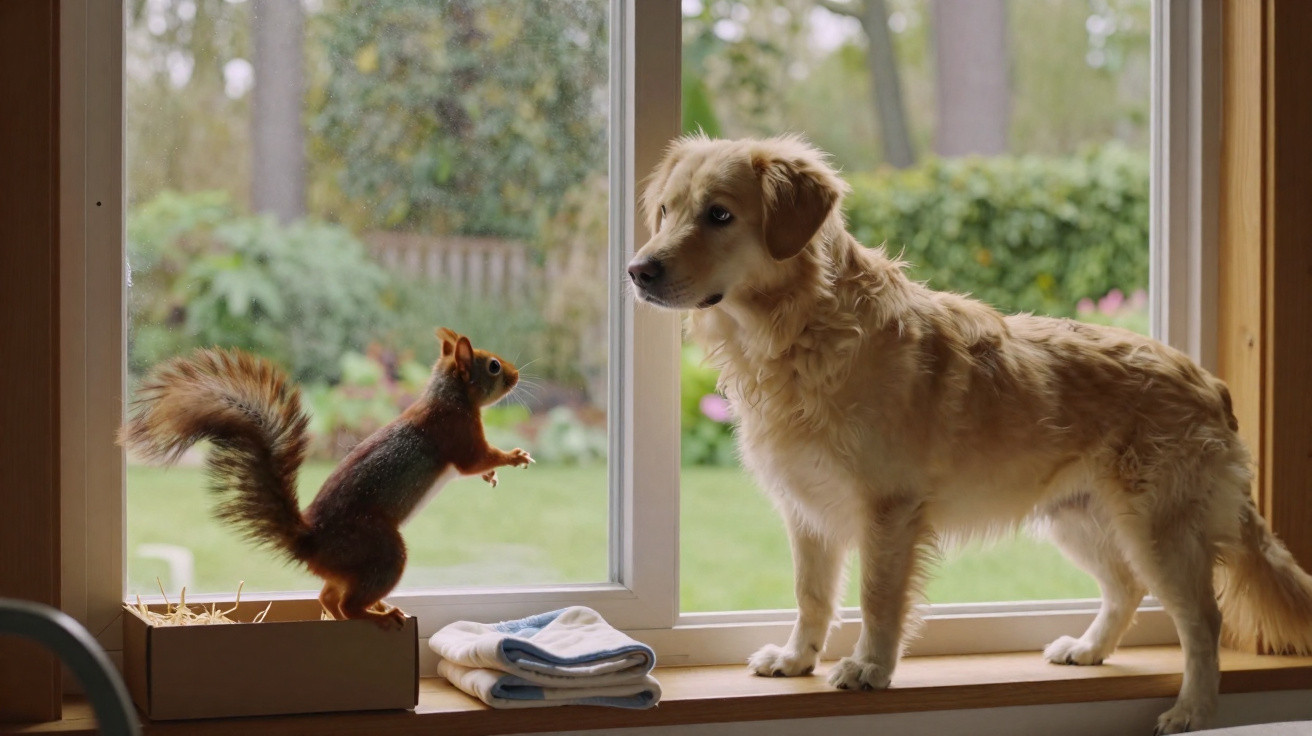
The living room buzzed with its usual cosy noise: the kettle whistling, the television murmuring in the background and shoes abandoned by the door. Distracted by her emails, Emma barely lifted her eyes as she muttered, “Ugh, I’ve had enough.” Her golden retriever, Milo, had appeared half-asleep moments earlier, but suddenly lifted his head. He stood, crossed the room and nudged his nose beneath her hand, his tail moving like a gentle metronome. There had been no command, treat word or name. Only the sigh in her voice.
For a moment, she went still, her fingers hovering above the keyboard. “Do you… get this?” she whispered. Milo looked back at her, calm and unwavering, as though the answer could not have been clearer.
New research is beginning to reach the same conclusion.
Dogs are hearing far more than we thought
Spend ten minutes with a dog owner and you are likely to hear something like, “He understands everything I say.” For years, many scientists were slightly dismissive of that claim. It was charming, certainly, but not especially evidence-based. Now, however, the divide between what owners sensed and what researchers could demonstrate is narrowing rapidly.
A growing body of research, involving brain scans and carefully designed sound tests, indicates that domestic dogs do more than respond to the tone of our voices. They can detect individual words, emotional nuance and even inconsistencies between our words and the way we deliver them.
Your dog is not merely responding to sound. They are listening.
One of the most prominent studies was carried out by a team using functional MRI scanners adapted for awake, unrestrained dogs. The dogs learned to remain still in the scanner while listening to recordings of their humans saying different words in varied tones: praise words spoken flatly, neutral words delivered happily, and combinations in between.
Two separate responses appeared in the dogs’ brains. One region reacted to the words themselves, while another responded to emotional tone. When those signals aligned – a positive word said in a cheerful voice – reward centres lit up like fireworks. If the tone conflicted with the word, the response shifted. The dogs were not simply hearing “blah blah blah.” They were registering the mismatch.
It is almost as though they are silently checking our mood against our words.
Researchers are also investigating the number of human words understood by typical pet dogs. It extends beyond their name and “sit” to everyday terms such as “ball”, “grandma”, “park”, “work” and “later”. Surveys and controlled experiments indicate that many family dogs recognise dozens of words, while some especially gifted dogs comfortably exceed 100 words.
Part of the explanation is that dogs have lived alongside us, sharing our homes, beds and leftovers, for thousands of years. During that time, the dogs most likely to thrive were those most attuned to human signals: our faces, voices and routines. Their survival literally depended on reading us well. Such pressure shapes more than behaviour; it also shapes brains.
So when your dog tilts their head at, “We’ll go out after I finish this call,” it is not accidental cuteness.
How to talk so your dog really understands
If dogs pay this much attention, how we speak to them matters far more than we may realise. One of the clearest findings is that dogs benefit from consistent sound patterns. In practice, that means using identical words, with the same tone, for the same things. “Walkies”, “outside” and “let’s go out” may all sound enjoyable to us, but to a dog attempting to decode your life, they are three separate entries in an already busy dictionary.
Choosing a small group of key words and using them consistently gives your dog mental anchors. Keep them short and simple, and always connect them to the action or object. Say “walk” just before picking up the lead. Use “bed” whenever you guide them to their sleeping place. With time, those sounds become more than random noise: they turn into clear, reliable clues about what will happen next.
You are creating a shared vocabulary through repetition, one word at a time.
Tone is the other essential ingredient, and it is where many of us go wrong. We call our dogs in a rising, uncertain voice that sounds more like a question than a cue. We say “It’s fine” in a strained, anxious tone moments before the vet enters, while the dog hears our tension more clearly than our words. Then we wonder why they hesitate or withdraw.
Most of us know the moment: you insist your dog is “being stubborn”, when they are actually overwhelmed by conflicting signals. The research is direct on this: dogs give considerable weight to emotional tone, particularly from the people they know best. Calm, warm and confident voices tend to produce better responses. Monotone or tense voices can confuse them, however clear the words might be.
Let’s be honest: nobody really talks like a perfectly patient trainer every single day.
That is where some self-forgiveness, alongside science-backed habits, can help. One researcher I spoke to put it simply.
“Dogs are listening for three things,” she said. “The sound of the word, the music of your voice, and whether your body matches what you’re saying. When those line up, they understand more than we ever gave them credit for.”
To improve that alignment, many behaviourists now recommend a small toolkit of habits:
- Use a limited set of core cue words and ensure everyone in the household uses them consistently.
- Match new words with clear body language, then gradually reduce the gestures.
- Practise “neutral talk” during stressful events, such as veterinary appointments or thunderstorms.
- Pay attention when your dog looks away or licks their lips – they may be confused rather than defiant.
- Keep your happiest tone for praise, rather than using baby-talk chatter all day.
The aim is not perfection, but enough clarity that your dog does not need to guess what sort of day you are having in order to feel safe.
The quiet revolution in how we see our dogs
Once you understand that dogs are quietly processing both our words and emotional tone, it is difficult to ignore. The “guilty look” you see on arriving home to a chewed shoe suddenly takes on a different meaning. They may not understand “rent” or “deadline”, but they certainly notice the fracture in your voice when you mutter about work, or the burst of excitement when you mention the weekend.
Some trainers believe the true turning point in a relationship with a dog is not the first time they sit on cue. It is the moment a person recognises that their dog has been carefully studying them all day, every day. That change – from “my dog reacts” to “my dog understands” – transforms the entire bond.
You begin speaking more slowly. You repeat yourself less. You listen in return.
| Key point | Detail | Value for the reader |
|---|---|---|
| Dogs process words and tone separately | Brain scans show distinct areas responding to meaning vs. emotion | Helps you choose clearer words and a calmer voice |
| Vocabulary grows through repetition | Consistent pairing of words with actions builds understanding | Makes training and daily life smoother and less frustrating |
| Emotional tone shapes behaviour | Dogs react strongly to stress, warmth, and confidence in your voice | Gives you a practical lever to reduce anxiety and build trust |









Comments
No comments yet. Be the first to comment!
Leave a Comment