Veterinarians nevertheless often advise against it, particularly in March.
Spring is widely seen as a pleasant season – for people, cats and the garden alike. Yet it is precisely at this time that a quiet conflict emerges: pet cats encounter one of nature’s most vulnerable periods. Veterinary professionals and wildlife experts have long been raising the alarm, advising owners to let cats out far less often, or not at all, during March and April.
Why March is so sensitive for cats and wildlife
Across central Europe, the main breeding season for wildlife begins between March and April. Many songbirds start nesting, while small mammals such as mice and young hedgehogs become active. Nests containing fledglings that cannot yet fly can be found in hedges, trees, gaps in walls and even flower boxes.
For cats, this creates ideal hunting conditions. Even a normally lethargic indoor cat can suddenly become highly alert outdoors when it hears rustling or sees something flutter. A full food bowl makes little difference: hunting instinct is innate and triggered by movement, sounds and scents.
Cats do not hunt because they are hungry, but largely through instinct – and in spring they encounter a generation of completely defenceless young animals.
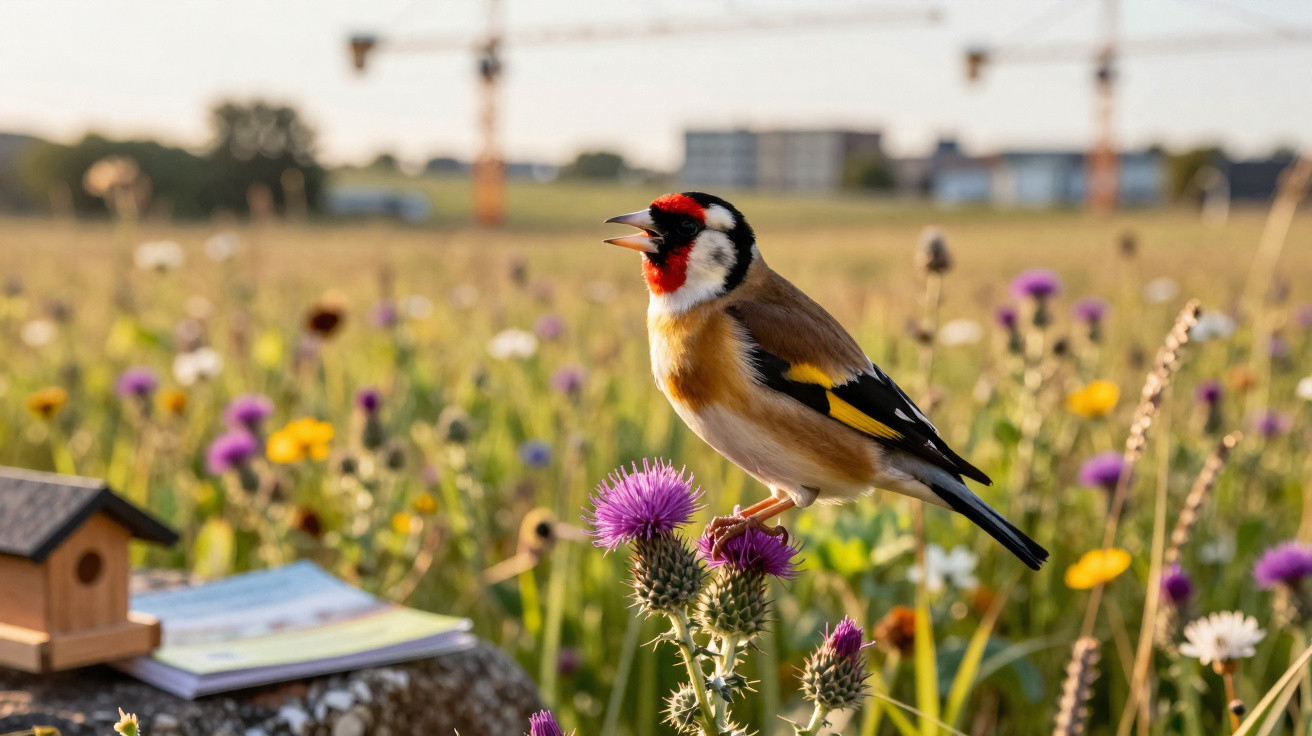
Research from France, the United Kingdom and Germany has shown the same pattern for years: populations of many bird species are steadily declining. Species associated with farmland, including the skylark and grey partridge, are especially affected. The causes range from pesticides and intensive farming to habitat loss – with cats adding a further source of pressure.
This “additional burden” alone can be decisive for populations that are already struggling. If part of each year’s brood is lost to domestic and farm cats, some bird species have little opportunity to recover.
The true scale of damage caused by cats in spring
Exact figures differ by region, but the overall direction is clear: free-roaming cats attack wildlife very frequently. Many do not bring prey home, instead leaving it outside or merely playing with it briefly. Statistics therefore capture only some of their actual hunting success.
- Birds close to the ground, such as blackbirds, robins and wrens, are particularly at risk.
- Young animals that have only just left the nest are often plainly visible in grass or on paths.
- Injured or weakened animals are noticed first and make easy targets for a cat.
For many owners, it may seem harmless when a beloved pet cat appears carrying a sparrow. One isolated incident does not appear catastrophic. However, when this is multiplied across millions of free-roaming cats in Europe, the scale looks very different.
Veterinary professionals refer to a “cumulative effect”: every individual free-roaming cat contributes a little to placing entire animal populations under pressure.
This effect carries particular weight in March and April, when whole generations of young birds and small mammals are outdoors at the same time. Experts therefore recommend a kind of voluntary “closed season”, comparable to a hunting close season but motivated by consideration for nature.
Why veterinarians consider more than birds in spring
Advice to keep cats indoors in spring is by no means aimed only at bird conservationists. Veterinarians also see the dangers faced by the cats themselves. As temperatures rise, traffic increases, people spend longer outdoors, gardens are being worked on and dogs are more often allowed off lead.
For cats, this creates several risks at once:
| Risk | What becomes more common in spring |
|---|---|
| Road traffic | More cars, more delivery vehicles and more distractions increase the accident risk for free-roaming cats. |
| Territorial fights | Tomcats mark their territory more intensely, leading to more bites and scratch injuries. |
| Infections | Bites can spread viruses such as FIV (feline AIDS) and FeLV, as well as bacterial infections. |
| Parasites | Ticks, fleas and worms become more active and transfer to passing cats. |
Poisoned bait and fertiliser are also more significant in spring. Many people treat their flower beds and lawns at this point in the year. Freshly scattered granules and puddles containing chemicals can attract curious cats – and may be life-threatening in the worst case.
“He only wants to go out!” – meeting hunting needs at home
Many owners feel guilty about not letting their cat outside in spring. They need not. With suitable approaches, a cat’s need for activity and hunting can be met effectively in a flat or house.
Play rather than catch prey
Cats need more stimulation during this period. Veterinarians and behaviour therapists advise several short play sessions each day rather than one long session every week.
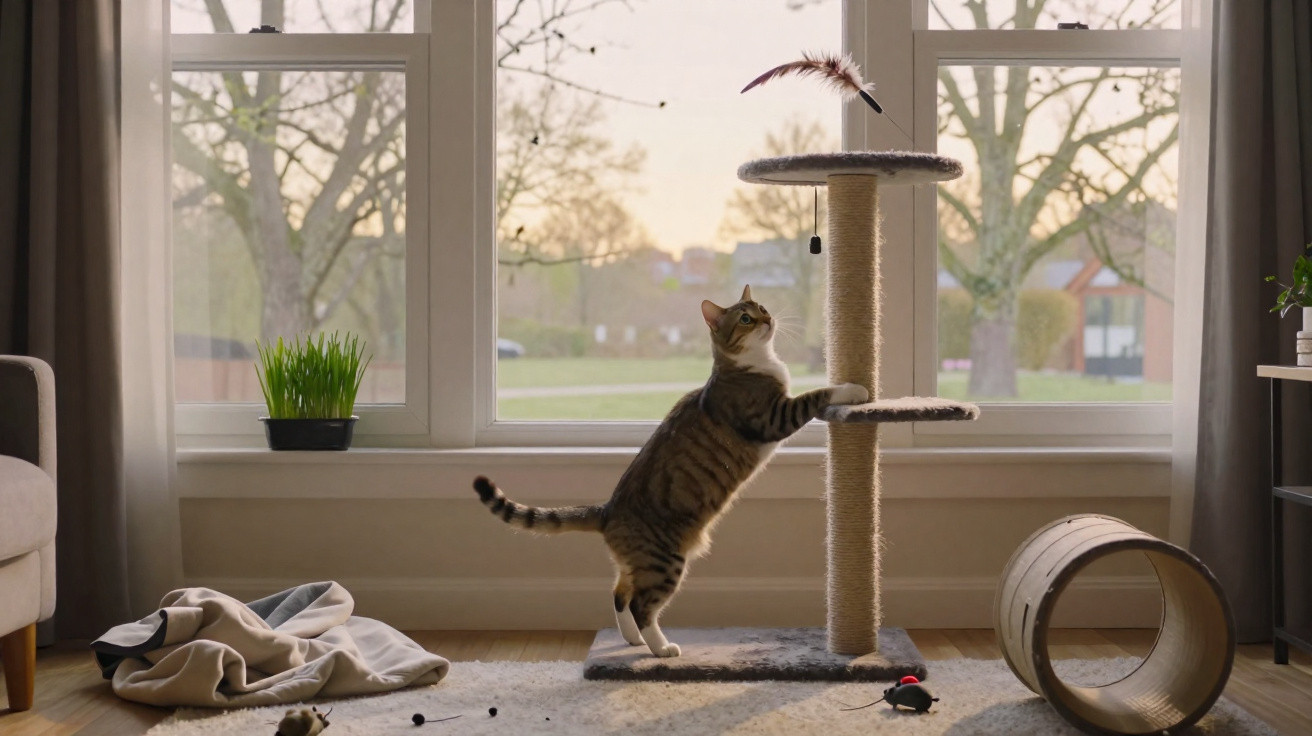
- Feather wands and toys with fluttering ribbons appeal to hunting instinct.
- Puzzle feeders and treat balls challenge both mind and paws at once.
- A cat tree near a window provides a view and added variety.
Owners can also hide some of the food instead of serving it in a bowl. The cat then has to search, work things out and jump – all of which reduces frustration and provides meaningful activity.
Making a flat and balcony suitable for hunting play
With a few changes, almost any flat can become a small adventure space for cats:
- Shelves or wall-mounted steps create raised routes.
- Cardboard boxes with holes cut into them become “prey dens” for toy mice.
- A secured balcony or cat net at the window provides fresh air without the risk of escape.
The more engaging the home, the less a cat will press to get through the garden door – especially during the critical spring period.
What owners can do specifically in March and April
Veterinarians do not necessarily call for a complete ban on outdoor access, but often suggest compromises. Those who do not wish to keep their cat entirely indoors can still reduce the risks considerably.
Choose times and places carefully
Birds are particularly active in the morning and evening. Cats should ideally not be outside at those times. Many owners therefore alter their cat’s outdoor routine:
- No outdoor access in the early morning.
- No outdoor access at dusk.
- Prefer supervised garden time in late morning or early afternoon.
A “supervised outdoor” approach is ideal: the cat may only enter the garden when people are present, much like a child playing in a courtyard. Although this limits freedom, it protects bird nests and reduces territorial disputes.
Practical measures: harnesses, cat runs and more
More and more owners use a lead and harness. With some training, many cats learn to accept short walks in the garden or park without having unlimited space to hunt. Others install an outdoor cat run or secure parts of the garden with high, inward-facing fences.
These solutions may initially appear demanding, but they pay off in the long term: the cat remains mentally and physically stimulated, while young birds and small mammals are substantially safer.
Why March in particular? A biological perspective
The strong emphasis on March and April has biological reasons. Many bird species lay their first eggs at this time. Their young are vulnerable in the nest and later in bushes or on the ground as they practise their first flights. During this window, they are virtually defenceless against cats.
As summer progresses, young birds have a better chance of survival. They fly more capably, recognise threats and escape more quickly. For wildlife biologists, it therefore makes a major difference whether a cat roams freely in April or August.
A few weeks of restricted outdoor access can make the difference for hundreds of young animals in the local area.
Common misunderstandings about free-roaming cats in spring
The same arguments regularly arise in discussions with owners. Many sound plausible, but stand up poorly to professional scrutiny.
- “My cat is too old to hunt now.” – Even senior cats often still play with young birds. A single swipe can be enough for the victim.
- “But there are predators in nature too.” – True, but domestic cats are not a natural part of most ecosystems and occur at far higher densities.
- “He never brings prey home.” – That does not mean he catches nothing. Many cats leave animals they have killed behind without presenting them.
Knowing these points helps owners make more informed decisions and assess their responsibility to both their pet and the environment more clearly.
A realistic example: what spring with an “indoor March” could look like
Imagine a typical family with two free-roaming cats. Until now, the cats have gone out after breakfast and returned at some point during the day. In March, the family switches to a new routine:
- The cats stay indoors in the morning and have a 15-minute play session with a feather wand.
- Around midday, they have access to a secure balcony and receive food in a puzzle tower.
- A short, supervised visit to the garden follows in the early afternoon.
- There is another play session in the evening, after which both cats remain indoors.
After a few days, the meowing at the door decreases. The cats learn the new routines, while blackbirds and tits can raise their young in the garden without constant attacks from neighbouring cats.
What lies ahead for owners in the long term
The debate surrounding free-roaming cats and species conservation is likely to grow over the coming years. Some countries are already considering seasonal rules requiring leads or restricting outdoor access, similar to those for dogs. Anyone who adjusts their behaviour now is one step ahead of that development – while also protecting their own cat from difficult springtime risks.
For many owners, this does not mean a strict “No outdoor access ever again”, but more deliberate management: greater indoor enrichment, more carefully planned outdoor trips and a few critical weeks each year with reduced freedom. This is exactly where veterinarians’ advice for March begins – as a compromise between feline wellbeing and consideration for nature, which in spring depends on every surviving generation of young animals.














Comments
No comments yet. Be the first to comment!
Leave a Comment