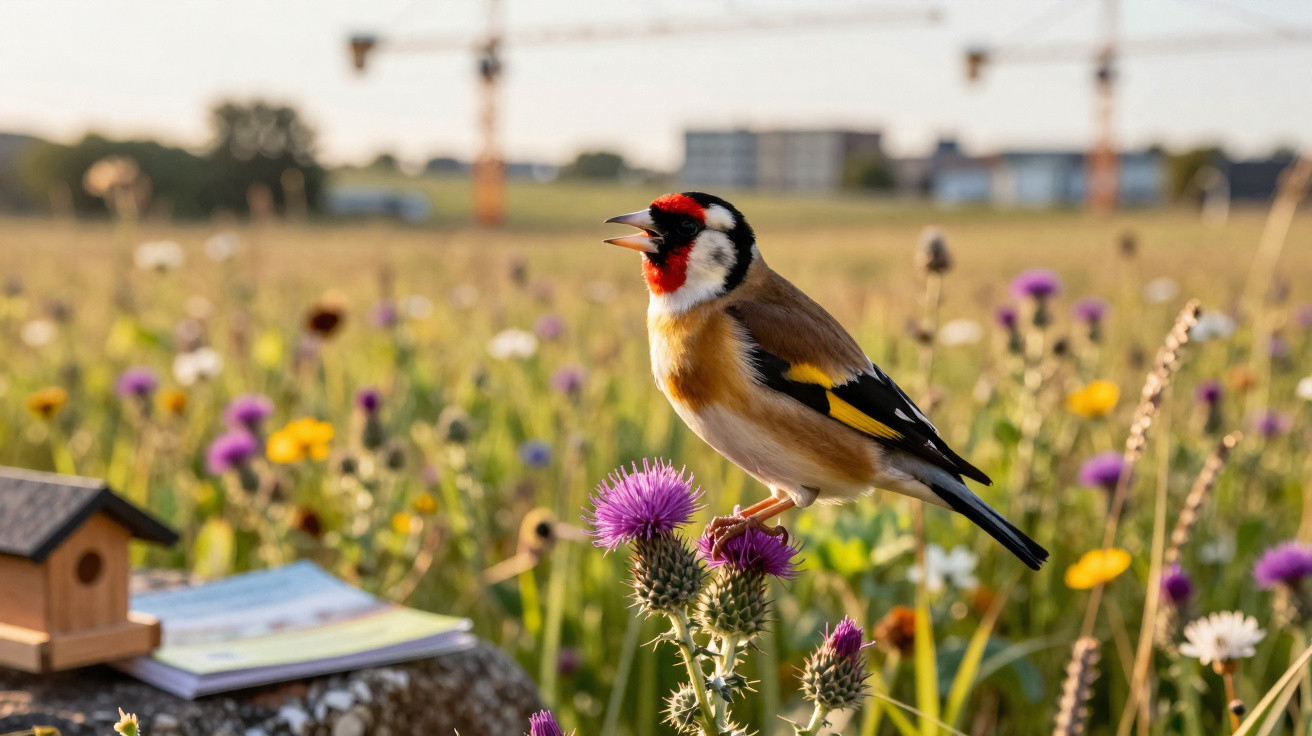
SEO/BirdLife, the conservation organisation, has named the European Goldfinch as its “Bird of the Year 2026”. The choice is about far more than affection for an attractive garden bird: it concerns pesticide-free farming, greener towns and cities, and how much nature Europe is still willing to accommodate.
A public favourite tops the vote
Since 1988, SEO/BirdLife has chosen its Bird of the Year through an annual public online vote. In 2026, the European Goldfinch (Carduelis carduelis) won following record participation.
- Votes cast: 11,515
- Votes for the Goldfinch: 6,519 (56.61%)
- Runner-up: Mediterranean Shag with 2,524 votes (21.92%)
- Third place: Eurasian Skylark with 2,472 votes (21.47%)
The colourful finch relative therefore received more than one vote in two. SEO/BirdLife sees this as a clear public message: people want to protect birds familiar from everyday life, rather than only rare species in remote nature reserves.
“In 2026, the Goldfinch symbolises vibrant fields and liveable, green cities – and the pressure that the way we manage our economy places on these habitats.”
A colourful songbird with millions of birds – and serious challenges
At first glance, the Goldfinch may appear to be a beneficiary of modern life. Spain alone is thought to hold 14 to 15 million individuals, making it a common species there; it occurs across almost the entire country, including the Canary and Balearic Islands. At European level, the Red List even classifies it merely as “not threatened”.
Anyone who has deliberately watched this bird will recognise it immediately thereafter. Its vivid red face mask, black wings marked by a striking yellow wing bar, and brownish back make it unmistakable. Its song is a rapid, trilling jumble that many associate with childhood, gardens and summer.
Yet that reassuring familiarity is misleading. The Goldfinch is now facing pressure from several directions at once.
Illegal trapping and poison in the countryside
SEO/BirdLife highlights two major threats:
- Illegal trapping nets and cage keeping: Goldfinches have long been sought-after cage birds because of their attractive song. Despite the ban, they are still caught, traded and privately kept in some areas. The organisation estimates that many thousands of birds are lost this way each season.
- Widespread use of pesticides and herbicides: The Goldfinch feeds chiefly on the seeds of wild herbs and arable plants. When pesticides “clear” large areas, its food supply disappears. Monocultures and tidily managed field margins impoverish landscapes that were once rich in colour.
This reveals a paradox: a species may be listed as “not threatened” nationally or across Europe, yet still suffer severe local declines when its habitat deteriorates or is systematically contaminated.
Bird of the Year 2026: a warning for farmland
Through its “Bird of the Year 2026” campaign, SEO/BirdLife is deliberately placing agricultural landscapes at the centre of attention. The Goldfinch spends much of its life in these places, which are often treated solely as production land.
Typical Goldfinch territories include:
- olive groves with herbs and wildflowers beneath the trees
- dehesas – semi-open oak grazing landscapes
- extensively managed pastures and meadows with trees
- field margins, banks and fallow land
Where farming is geared towards maximum output, these very features disappear. Field margins are cut or cultivated, hedgerows are removed, and every “weed” is chemically eliminated. What may make short-term sense for farm accounts gradually strips birds such as the Goldfinch of the resources they need.
“The Goldfinch represents the question of whether fields should be mere factories – or living landscapes in which production and life can coexist.”
Linking village squares and city parks
One of the Goldfinch’s strengths makes it an ideal ambassador: it occupies not only farmland, but urban spaces too. People walking attentively through parks, allotments or cemeteries in Spain will often spot groups feeding on thistles and other seed heads.
This small finch consequently connects two worlds:
| Habitat | Importance for the Goldfinch | Opportunity for conservation |
|---|---|---|
| Fields and open countryside | Nesting sites, food, refuge | Farming with fewer chemicals, more landscape features |
| Villages and cities | Additional food sources, year-round presence | Greener planning, fewer sterile spaces |
SEO/BirdLife intends to use this dual role to encourage citizens in both rural areas and densely populated places to support more urban greenery and different maintenance practices: less closely mown grass, more flowering corners, and more shrubs and mature trees.
Why legal protection is lagging behind
Despite its visibility, the Goldfinch currently receives special protection in only two Spanish regions: Aragón and La Rioja. This is what the organisation wants to change. It plans campaigns, educational initiatives and political discussions to strengthen the species’ status nationwide and enforce clear rules against trapping and trade.
Protection alone will not be enough, however, if its habitats continue to decline. Pressure must therefore also increase for agricultural policy and urban planning to give greater priority to biodiversity.
Projects to bring more life to olive groves and vineyards
SEO/BirdLife is not relying only on appeals, but on practical projects as well. The organisation particularly emphasises:
- Agroestepas Ibéricas: A programme improving steppe and agricultural landscapes on the Iberian Peninsula, for instance through more diverse crop rotations, additional fallow land and less intensive grazing.
- The “Campos Vivos” (Living Fields) model: This works with olive, cereal and wine producers, as well as hazelnut and chestnut growers. Its aim is to bring more nature into farming systems without making businesses financially unviable.
According to SEO/BirdLife, schemes of this kind deliver measurable benefits for farms. Products from biodiversity-friendly management can often be marketed more effectively, have stronger regional roots and stand apart from standard goods.
An ecological transition as an opportunity, not an obstacle
The NGO’s message is that farming and biodiversity are not mutually exclusive. On the contrary, stable ecosystems make businesses more resilient in the long term to climate stress, pest outbreaks and price fluctuations.
Measures that can benefit Goldfinches while also helping farms include:
- flower strips and fallow areas as refuges for beneficial species
- hedgerows rather than fences, to reduce wind and erosion
- varied crop rotations that place less strain on soils and water systems
- targeted, reduced use of plant protection products instead of blanket treatment
Practical action for fields and cities
For the Goldfinch itself, SEO/BirdLife proposes a range of highly practical steps that local authorities, farmers and even businesses responsible for green spaces can implement relatively easily:
- Mow less often: Cutting lawns and verges less frequently gives wild plants time to flower and set seed – the Goldfinch’s most important food source.
- Sow areas with native flowering seed mixes: Purpose-designed flowering areas support insects while also providing abundant food for Goldfinches in late summer and autumn.
- Make use of fallow plots and vacant sites: Unbuilt land, roadside verges and railway corridors can become valuable small habitats for finches and other species when managed thoughtfully.
- Reduce pesticides: The less poison applied in parks, on golf courses or on farmland, the more plants and insects remain to form the food base.
At the same time, the organisation is looking towards European policy. The currently debated weakening of environmental requirements in EU agricultural policy threatens to undo much of the progress already made. The European Green Deal’s “Farm to Fork” strategy would be particularly affected, as it calls for a substantial reduction in hazardous pesticides and more ecological farming.
What this bird has to do with our health
Protecting a small finch may initially seem like a purely heartfelt cause for nature enthusiasts. A closer look shows that much more is at stake. Where towns and cities allow more trees, shrubs and flowers, particulate pollution and heat stress decline; residents spend more time outdoors, and stress levels demonstrably fall.
In agricultural landscapes, varied features and fewer chemicals mean not only more birds, but healthier soils and waterways. Over time, this delivers benefits for drinking-water treatment, flood protection and, not least, the quality of our food.
The Goldfinch may be small, but as Bird of the Year 2026 it carries a major agenda: it shows that decisions about land, pesticides and urban planning are reflected directly in what sings outside our windows in the morning – or no longer does.




Comments
No comments yet. Be the first to comment!
Leave a Comment