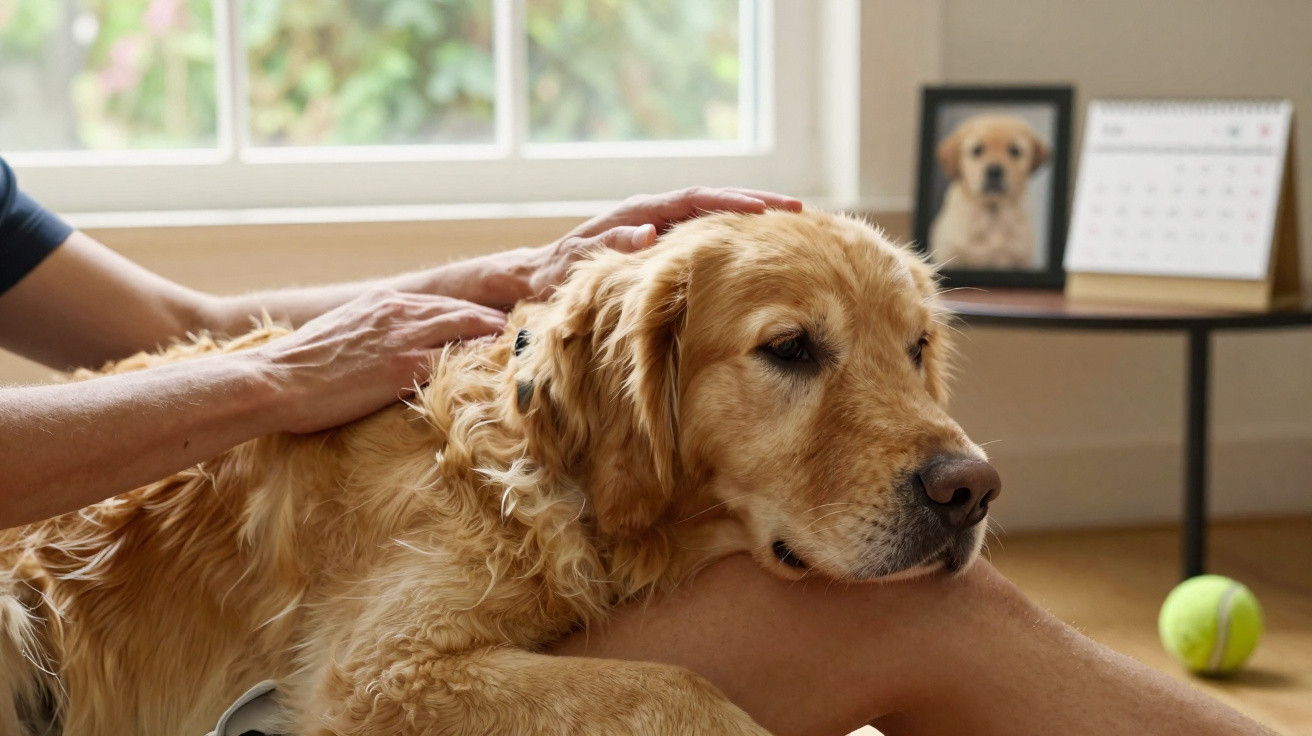
The vet uses that gentle, familiar tone reserved for rooms scented with disinfectant and anxiety. At your feet, your golden retriever lies stretched out, softly panting and wearing the smile goldens always seem to have, entirely oblivious to the discussion about his heart, hips and future. You nod and take it in, yet something inside you drops. Ten years, perhaps twelve, if you are fortunate.
On the drive home, he hangs his head out of the window, and for him the world is nothing but wind and happiness.
For you, it feels as though a clock has suddenly begun to tick.
Why golden retrievers often leave us sooner than we expect
Spend any time in a dog park and it becomes obvious. Golden retrievers seem to travel through life as though they are made from sunshine. They welcome strangers as if they have been anticipating them all day, roll on to their backs for the smallest scratch, and somehow retain a puppy-like appearance long after their muzzles have gone white.
That cheerful spirit is precisely why their comparatively short average lifespan can hurt so much. It is difficult to imagine a golden as elderly. Instead, you see them permanently mid-bounce, tail drumming, ball clenched in their mouth and eyes asking, “Again?”
Then, eventually, you encounter the more painful side of the figures. Golden retrievers are among the breeds with the highest cancer rates, particularly within some bloodlines. Certain studies indicate that over half will experience some type of cancer during their lifetime.
Speak to any vet who has worked for years, and they may quietly admit to seeing too many goldens in oncology wards: too many families on plastic chairs looking down at their shoes while their dog continues wagging at every passing nurse.
Genetics accounts for part of the picture. Generations of breeding for the familiar golden appearance - a soft expression, feathered coat, and calm, affectionate temperament - have also reduced the gene pool. This can increase the likelihood of inherited conditions such as lymphoma, haemangiosarcoma, hip dysplasia and heart disease.
There is also the reality of modern canine life: indoor living, processed diets, fewer opportunities to roam, and exposure to pollution and chemicals. These factors do not affect goldens alone, but every added pressure matters more when a breed already has a substantial health burden.
What you can do for your golden retriever while they are here
You cannot alter your golden’s DNA, but you can shift the odds slightly in their favour. Begin with the unglamorous essentials that can make a quiet but significant difference: body weight, diet, activity and routine health checks. A lean golden places less strain on their hips and joints and carries less inflammation throughout their body.
In practical terms, this means weighing meals rather than “just topping up the bowl”, keeping an eye on treats, and ensuring daily exercise gets them properly active - not merely a slow circuit of the block while you look at your phone.
Vet appointments become about more than vaccinations, too. A simple blood test, a thorough listen to the heart, or perhaps an ultrasound when something seems unusual can all matter. Finding a lump while it is pea-sized rather than golf-ball-sized can change everything.
Many owners admit they put off that first frightening test for months because they feared what it might reveal. Honestly, nobody manages this perfectly every day. Still, noting symptoms, photographing lumps and asking, “Is this normal for a golden?” at every appointment gives your vet useful information to act on.
Sometimes the bravest thing a golden owner does isn’t choosing treatment. It’s deciding when love means letting go before pain takes over everything.
Looking after a golden is about more than food and veterinary appointments. It means adapting to another rhythm: a shorter life with fuller days. This may require changes to expectations and everyday routines, even when that feels painful.
- Selecting a responsible breeder or rescue that screens for common golden health concerns
- Keeping your dog lean rather than “cute chubby” from puppyhood onwards
- Arranging annual wellness checks - or twice-yearly checks for seniors - and attending them
- Looking out for small changes in energy, appetite, breathing and behaviour
- Speaking honestly with your vet about quality of life, rather than only its length
Living with the countdown without being overwhelmed by it
At some stage, every golden owner sits on the floor with their dog’s head in their lap and understands that this chapter will not last as long as they wished. That knowledge can haunt every walk, or it can make each moment feel unexpectedly valuable.
A subtle change happens when you stop thinking, “We have years” and begin to think, “We have today.” Walks may become slower, but they also become sweeter. You agree to one more ball throw. You allow them to leap into the muddy puddle, because the later bath is a small cost for the happiness written across their face.
The truth nobody warns you about is that loving a golden retriever means accepting a love story written in bold, bright letters on slightly thinner paper.
You will not make that story longer by acting as though they are immortal. You make it richer by being truly present while they are here, respecting their needs and limits, and appreciating that distinctly golden gift for joy in the smallest things. There is no neat way to ready yourself for goodbye. You simply live the days before you in a way that ensures, when it arrives, gratitude speaks more loudly than regret.
| Key point | Detail | Value for the reader |
|---|---|---|
| Understand the risks | Golden retrievers have higher rates of cancer and joint problems than many breeds | Helps you spot warning signs sooner and select breeders or rescues carefully |
| Shape everyday life | Weight management, good-quality food, exercise and check-ups can extend healthy years | Provides practical habits that steadily safeguard your dog over time |
| Prioritise quality | Weighing up treatment, comfort and emotional presence | Helps you make better choices when caught between “one more month” and peace |










Comments
No comments yet. Be the first to comment!
Leave a Comment