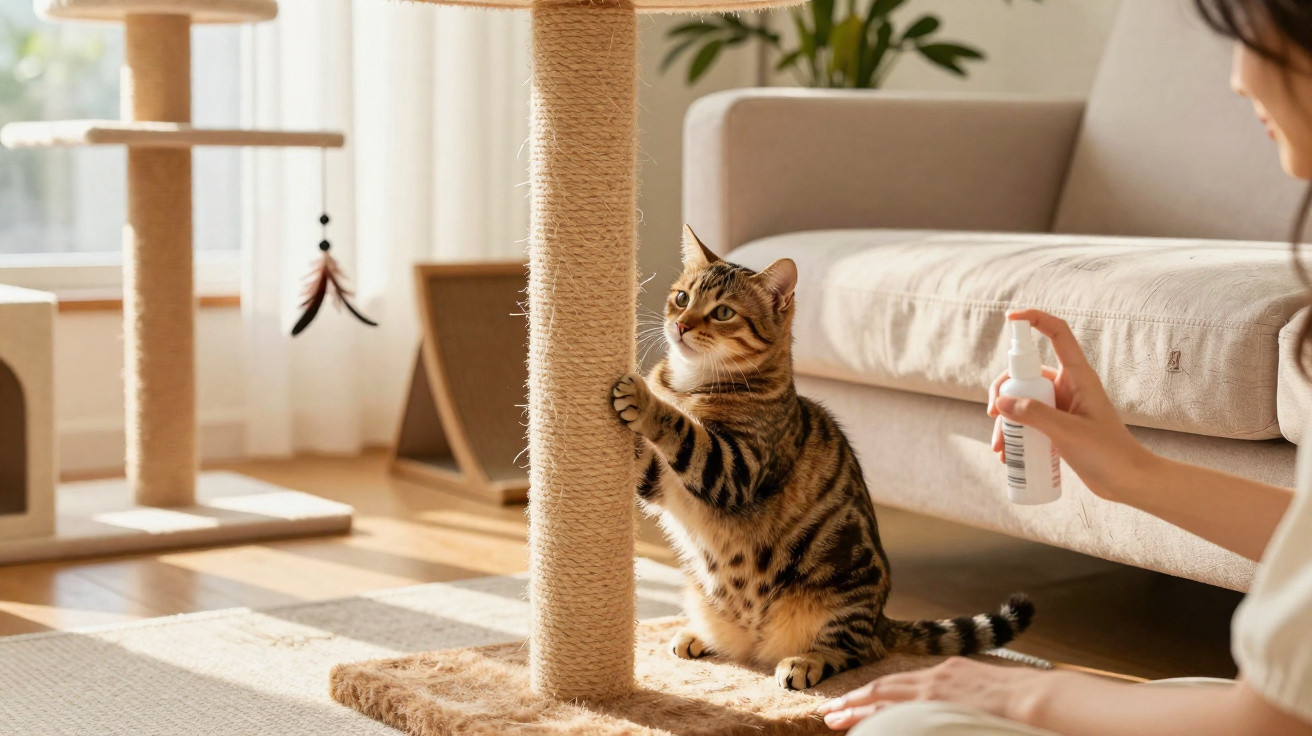
The brand-new sofa, the favourite armchair, the side of the bed: nothing seems safe from your cat’s claws.
Anyone who lives with cats will recognise the distinctive sound of claws scraping across fabric. At first, it can look like bad behaviour or sheer stubbornness. Yet every scratch is driven by instinct and has physical and emotional meaning for the animal.
Why your cat scratches the sofa so relentlessly
Scratching surfaces is not a bad habit: it is part of feline biology. In the wild, cats begin this behaviour as kittens, and it remains with them throughout their lives.
“The cat does not scratch ‘to provoke’. It does so to communicate, stretch, relieve tension and care for its own body.”
When your cat goes for the arm of the sofa, several things are happening at once:
- Visual marking: the trails of pulled threads become a visible message to any other animal.
- Chemical marking: glands in the paws release scents that humans cannot detect but other cats can clearly identify.
- Stretching: the body lengthens, muscles become active and joints move through their full range.
- Claw maintenance: scratching helps remove old outer layers of the claw, acting like a “natural nail file”.
- Emotional regulation: the repetitive action helps release pent-up energy and tension.
In other words, this single action combines self-care, communication and mental wellbeing.
Territorial marking: your cat is signing the home
Cats are territorial animals. They do more than defend spaces: they mentally organise their surroundings into safe, neutral and alert areas.
By scratching a particular piece of furniture, the cat is effectively signalling: “this is mine, I pass through here, I rest here”. This signature takes two forms.
A mark you can see
Pulled threads, scratched leather and scored wood all create visible lines. These marks work like a permanent warning sign for other animals, whether real or imagined.
A mark only cats can sense
The pads of a cat’s paws contain glands that release pheromones. Every scratch leaves behind a chemical trail. To another cat, it is like reading a message packed with information: sex, presence and how often that area is used.
“When a cat scratches, it is creating an emotional map of the home, with safe points where it feels secure and at ease.”
Stress, boredom and scratching: when furniture becomes an outlet
Not all scratching is equally intense. At certain times, the behaviour may become more pronounced, almost compulsive. Many owners notice this after a change in routine.
Common triggers include:
- Moving home or rearranging furniture.
- The arrival of another pet or a baby.
- More noise, building work or frequent visitors.
- A lack of toys, stimulation and places to climb.
In these situations, scratching becomes a way to release tension and regain some control over the environment.
Cat scratchers are not decoration: alternatives that actually work
Getting a cat to leave the sofa alone takes strategy, not scolding. The right scratching post in the right place can make all the difference.
Types of cat scratchers that cats often like
| Type of scratching post | Characteristics | Cats it tends to suit best |
|---|---|---|
| Vertical (post) | Tall and sturdy, allowing the cat to stand upright and stretch fully | Cats that love scratching sofa sides and doors |
| Horizontal (mat) | Sits on the floor and takes up little space | Cats that scratch rugs, mattresses and flooring |
| Angled | Positioned diagonally, combining the feel of the floor and a wall | Indecisive or older cats that do not like stretching as much |
| Scratcher with a hideaway | Combines a scratching area with a hiding space and shelves | Active cats that climb, jump and enjoy height |
Materials such as sisal, sturdy cardboard and firm carpet are often popular. The scratching post must be very stable: if it wobbles or falls over, the cat will lose confidence in it.
Placement: where you put it matters
Many owners make the mistake of hiding the scratching post in a little-used corner. Cats want to scratch where everyday life takes place.
“The ideal place for a scratching post is near the sofa, bed or door that is already being scratched - not behind a forgotten piece of furniture.”
It is also a good idea to position scratchers near windows, resting areas and routes through the home, such as hallways.
Training, positive reinforcement and what to avoid
Cats do not learn through shouting. Frightening them, spraying them with water or forcibly rubbing their paws against the scratching post tends to damage their relationship with both the owner and the object itself.
Helpful approaches include:
- Playing with wand toys and strings on top of the scratching post, encouraging the cat to grab and scratch.
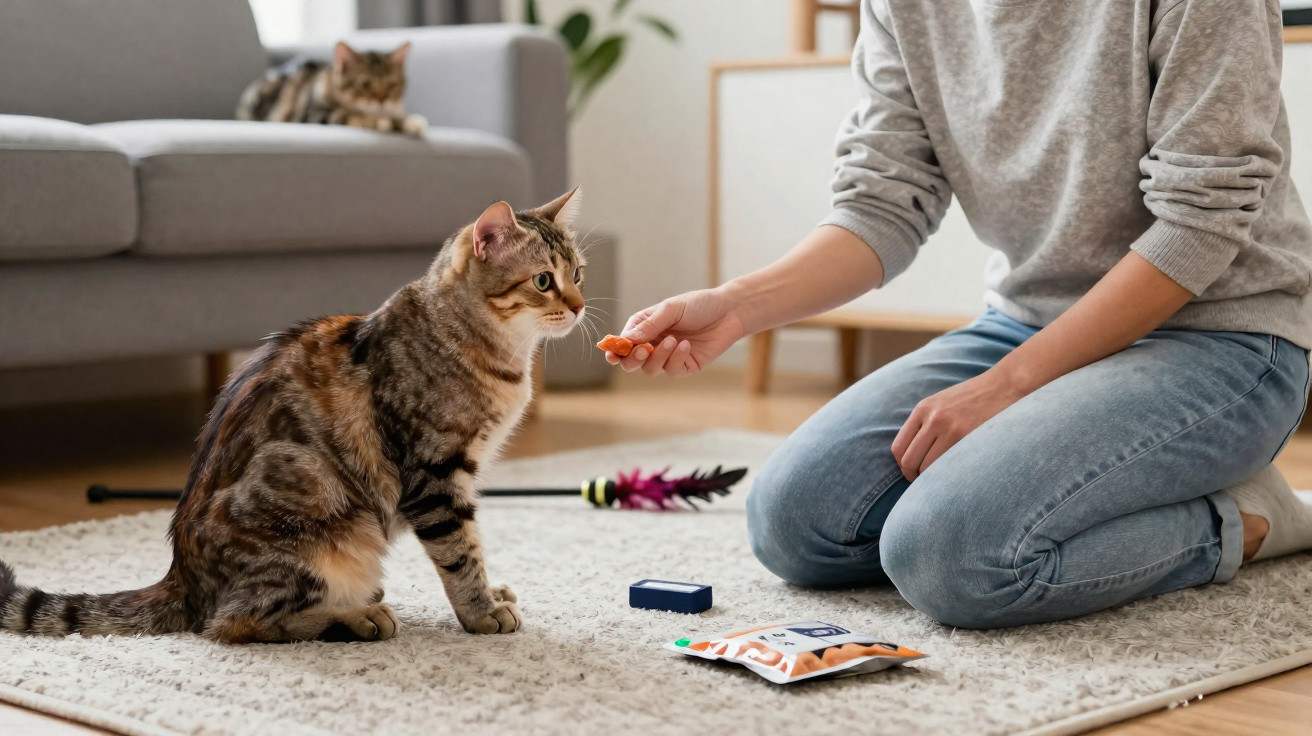
- Giving treats immediately after the cat uses the scratching post.
- Using attractive scents that cats enjoy, such as catnip, on some models.
- Temporarily protecting the sofa with thick covers or fabrics that make the surface less appealing.
Claws can also be trimmed carefully at regular intervals by a professional or a trained owner. This limits damage without removing the need to scratch.
When scratching may indicate another problem
Some signs need closer attention:
- The cat starts scratching far more after a fright or major change.
- Scratching is accompanied by persistent meowing, urine marking or appetite changes.
- A consistently tense face, crouched posture and little interest in play.
In these cases, scratching may form part of anxiety, pain or discomfort. A veterinary assessment can help rule out physical issues and, if needed, lead to a referral to a feline behaviour specialist.
Scratching as a healthy routine: how it benefits cats
When it is properly directed, scratching supports a cat’s health. It keeps muscles active, helps maintain the claws, allows the animal to use energy and makes it feel safer in its own territory.
A home with varied scratching posts, shelves, simulated hunting toys and secure windows is likely to have fewer conflicts over damaged furniture. The cat has several ways to express its instincts without turning the sofa into an enemy.
From the sofa to ethology: concepts that explain the behaviour
Two terms commonly arise in discussions of this subject: territorial behaviour and environmental enrichment.
Territorial behaviour covers every action linked to defining space. It includes scratching, sniffing, rubbing the face on furniture and even always choosing the same place to sleep. Environmental enrichment, meanwhile, covers actions and objects that make a home more interesting for a cat: boxes, shelves, toys, hiding places and scratching posts in strategic locations.
When these elements are missing, the cat concentrates its energy on only a few targets - often the most expensive sofa in the living room.
Practical scenarios: what small changes can achieve
Imagine a small flat with one sofa and no scratching post. The cat spends much of the day alone, with little active play. In this setting, the side of the sofa becomes a gym, noticeboard, stretching spa and emotional outlet, all in one place.
Now picture the same home with a tall scratching post beside the sofa, a cardboard mat near the window and daily 10-minute wand-play sessions. The furniture is then less likely to remain the only option available for expressing so many behaviours at once.















Comments
No comments yet. Be the first to comment!
Leave a Comment