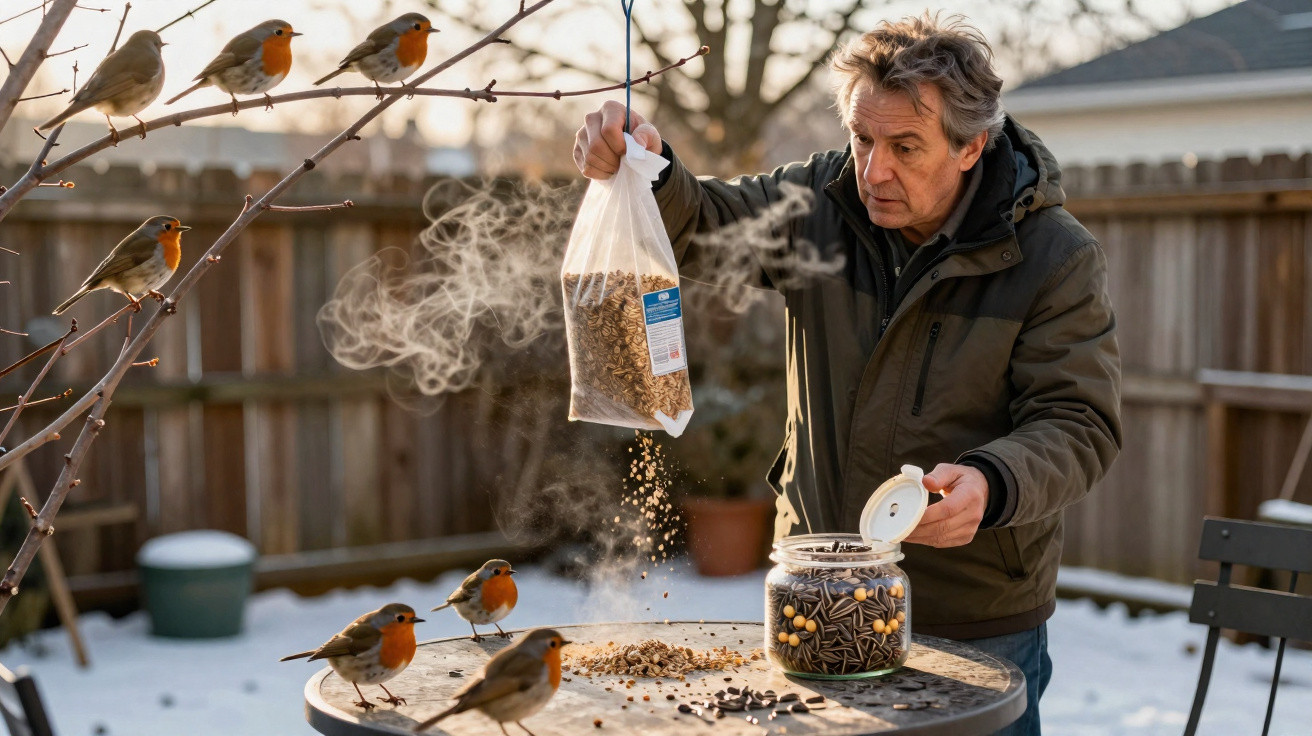
The feeder rocks gently in the chilly January breeze, standing out bright red against the washed-out sky. Sparrows grip its sides, flicking inexpensive grey seed on to the frozen surface of old snow. A robin darts in, pecks twice and quickly disappears, as though it understands something the other birds do not.
On the patio, a woman wearing a fleece smiles with a steaming mug of coffee between her hands. “They just love this stuff,” she says, gesturing towards the £4 bag she picked up from the supermarket’s reduced-price shelf.
What she cannot see is the damp, mouldy mass forming in the feeder’s bottom tray.
More importantly, she cannot see what that supposedly “bargain” bird food may be doing to the birds she believes she is helping.
Why cheap January bird seed is not the bargain you imagine
Each winter, as daylight hours shorten and household heating costs rise, demand for inexpensive bird food quietly surges. Supermarkets put out oversized plastic sacks of “wild bird mix”, decorated with cartoon bluebirds and emblazoned with “VALUE” in large print. Shoppers add them to their trolleys almost without thinking, just as they would milk or bread.
Seen from the kitchen window, it appears straightforward: put seed in the feeder, birds turn up and people feel uplifted. It looks wholesome, even virtuous. In the depths of winter, you have fed something small and vulnerable.
However, wildlife rehabilitators tell a rather different story in January.
Visit a wildlife clinic on a bitterly cold Tuesday and you may find a cardboard box on the counter, padded with an old towel. Inside, a finch or tit might sit blinking slowly, its feathers puffed out like an inadequate winter coat. A volunteer swiftly replaces the lid to preserve the warmth.
When you ask what happened, the same descriptions recur: “dirty feeders”, “spoiled seed”, “cheap mix full of filler”. Many birds arrive dehydrated and underweight, battling infections that can spread rapidly where food sources are poor.
One rehabilitator in upstate New York described January as “the season of bargain seed”, when kind-hearted people feeding garden birds can unintentionally turn their gardens into centres of disease.
The issue begins with the ingredients in those low-cost bags. Bird specialists note that many cheap mixes are bulked out with red millet, cracked maize and wheat, which most garden birds scarcely eat. The high-fat, nutrient-rich foods birds require in midwinter - including sunflower hearts and good-quality suet - are often included only in tiny quantities, if at all.
Birds therefore pick through the mixture and throw the cheap filler on to the ground. This discarded seed becomes wet, develops mould and draws in rats and bacteria. Meanwhile, birds that continue eating low-quality food gradually use up their energy reserves.
They may appear to be eating well, but they are not receiving the nutrition needed to survive January nights that fall far below freezing.
What experts want every garden bird lover to do instead
Ask an ornithologist or dedicated birdwatcher what should be offered during winter, and the recommended list is usually brief: black oil sunflower seeds, peanut pieces, high-quality suet without unusual additives, and clean water that has not frozen.
The approach is uncomplicated: provide fewer food varieties, make them better quality and replace them more frequently. A single feeder filled with pure black oil sunflower seeds and one suet cage can support a surprisingly large number of birds. There is no need to line the patio with five different bargain mixes.
That modest change - choosing a “smaller, richer seed” rather than a “big cheap bag” - can transform the nutritional outlook for birds that visit your garden.
Many people feel guilty when they learn this. They see the partly used sack in the shed and worry that they have made a mistake. In reality, most people who feed garden birds are trying to do something helpful while managing tight budgets and lengthy to-do lists.
The usual error is not a lack of care. It is the belief that all bird food is broadly identical, with only the packaging being different. People then look for the lowest price per pound, fill feeders to the top and leave them up for weeks.
Let’s be honest: nobody really scrubs their feeders every single day in January.
An urban wildlife biologist in Minnesota expressed it plainly:
“Cheap, stale seed in dirty feeders is like a crowded winter bar with no ventilation. Everyone’s sharing germs and nobody’s getting real nourishment.”
She suggests three manageable changes:
- Choose straight black oil sunflower rather than “wild bird mix” as the main food source.
- Purchase smaller bags you’ll finish in 2–3 weeks so seed does not turn rancid in a cold, damp shed.
- Wash feeders in hot, soapy water every week or fortnight, and discard any seed that smells “off”.
Birds will not send you a thank-you note. Still, you may begin to spot subtle differences: brighter plumage, a wider range of visitors and fewer sluggish, puffed-up birds gripping the perches.
Why some people will not change feeders - and what it reveals about us
Conversations with garden bird lovers who continue buying discount seed reveal an unexpected blend of affection and stubbornness. “They’re eating it, aren’t they?” “I’ve been buying this same bag for ten years.” “The birds don’t seem to mind.” The habit becomes woven into winter itself.
There is also a quiet emotional exchange involved. That inexpensive bag represents one small gift they can offer in a season that can feel bare and grey. As they stand at the window watching colour and movement outside, they feel less isolated.
Yet once you are aware of what many specialists quietly say about these mixes, it is difficult to forget it.
| Key point | Detail | Value for the reader |
|---|---|---|
| Seed quality beats quantity | Energy-rich foods such as black oil sunflower and quality suet support birds far more effectively than filler-heavy mixtures | It helps you spend less on bags birds discard and more on nutrition that genuinely keeps them alive |
| Cleanliness is non-negotiable | Old, damp seed and unclean feeders spread disease, particularly when winter feeding sites are crowded | It lowers the chance of finding ill or dying birds in your garden |
| Smaller, fresher bags are safer | Purchasing only the amount you will use within a few weeks prevents rancid oils and mould from developing | It keeps visiting birds healthier while making your money go further |
FAQ:
- Question 1 Is all cheap bird seed bad for birds?
- Question 2 Which ingredients should I avoid in winter mixes?
- Question 3 How often should I clean my bird feeders in January?
- Question 4 What is the single best food to provide if I can afford only one type?
- Question 5 What should I do with the bargain bag I have already bought?












Comments
No comments yet. Be the first to comment!
Leave a Comment