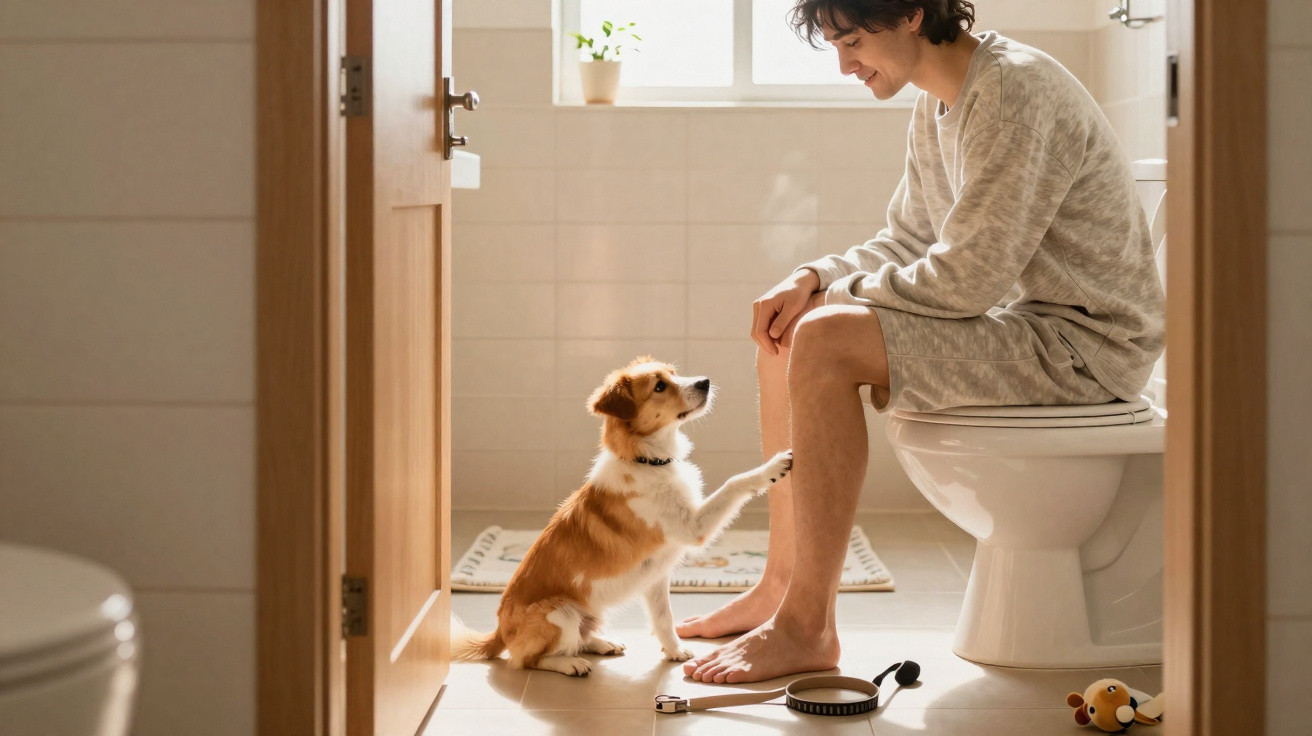
You shut the bathroom door - or attempt to. A furry paw jams itself into the gap like a miniature battering ram. Then come the nose, the whiskers and that unwavering look declaring, “You’re not going in there without me.”
Within seconds, your supposedly private break has acquired a live audience: a cat perched on the basin, a dog standing between your legs, perhaps both, with a tail sending the toilet roll flying across the room.
You might call it sweet, odd or a little unsettling. Perhaps you joke that your pet has “no boundaries”. Yet there is often a small lingering doubt in the back of your mind.
What is really driving this behaviour?
Why your pet is obsessed with the bathroom door
Strangely, the bathroom can be one of the most emotionally loaded spaces in your home.
You enter, shut the door, and your pet sees you vanish into a small, echoing room that carries a strong scent of you.
Dogs and cats do not interpret “I’ll be right back” as people do. Instead, they respond to patterns, noises and smells. The rustling toilet paper, the lock clicking shut and water splashing all signal that their primary attachment figure is temporarily inaccessible.
For an animal instinctively inclined to remain close to its social group, this can trigger a small internal alarm.
Imagine a rescue dog that spent months in kennels, falling asleep beside metal bars amid the footsteps of unfamiliar people.
He is adopted, cherished and eventually secure. Then his person heads towards a closed door. There is no eye contact or obvious reassurance - they simply disappear.
That dog is not thinking, “Ah yes, the bathroom, a place of solitude and porcelain fixtures.”
He is thinking that the person who feeds and protects him has gone behind a barrier. Previously, that kind of disappearance may have meant abandonment. So he presses himself against the gap, listens closely and may whine quietly.
You hear “clingy.” He experiences “vigilant.”
In behavioural terms, the habit of following someone to the bathroom is closely connected to attachment patterns.
Many pets display what researchers describe as “secure attachment”: they register that you have gone, might inspect the door, and then settle because they fundamentally expect you to return.
Other pets show more “anxious attachment”: they trail you around the home, become distressed by shut doors and treat a bathroom visit as a major emotional episode.
What makes entertaining TikTok content may sometimes indicate that a pet is coping with an underlying fear of separation, intensified by the straightforward act of being shut out.
What your pet’s bathroom habit says about your bond
To get a sense of your pet’s attachment style, observe their actions immediately before and after you use the bathroom.
Do they look up calmly before flopping back down on the sofa? That generally points to emotional security.
Or do they race to the door, scratch, meow or whine, then seem overwhelmingly relieved when you return? That response is more consistent with anxiety.
Neither pattern is morally “good” or “bad”. It is simply a behaviour pattern shaped by their history, your habits and how reliably comfort appears in their world.
A cat behaviourist recalls Mina, once a stray, who shadowed her person every time they got up.
It made no difference whether they went to the bathroom, bedroom or kitchen. Whenever a door shut, Mina pawed at it, howled and even chewed the doorframe until it opened.
Her guardian described her as “clingy” and laughed about having a “furry stalker.” Behind the humour was a young cat that had learnt on the streets that losing sight of food could lead to hunger.
The bathroom door came to represent a barrier between Mina and survival. When her guardian began linking brief separations to consistent returns and small treats, the distress gradually eased. The bathroom was no longer a battleground.
Psychologically, pets living in our homes can reflect attachment patterns similar to those seen in people.
A securely attached dog treats your bathroom trip as a brief rehearsal of “you’re gone but not gone”, before calming themselves on their bed. A pet with anxious attachment may be unable to settle while you are out of sight, even for 90 seconds.
The complication is that we can reinforce these behaviours without realising it. We laugh, speak to them through the door, open it when they scratch and occasionally invite them inside “just this once.”
When this happens often enough, the lesson becomes: “You’re right to worry when the door closes. Keep checking. Keep following.”
How to gently reset bathroom boundaries without breaking trust
One straightforward way to alter the pattern is to approach bathroom visits as tiny training exercises.
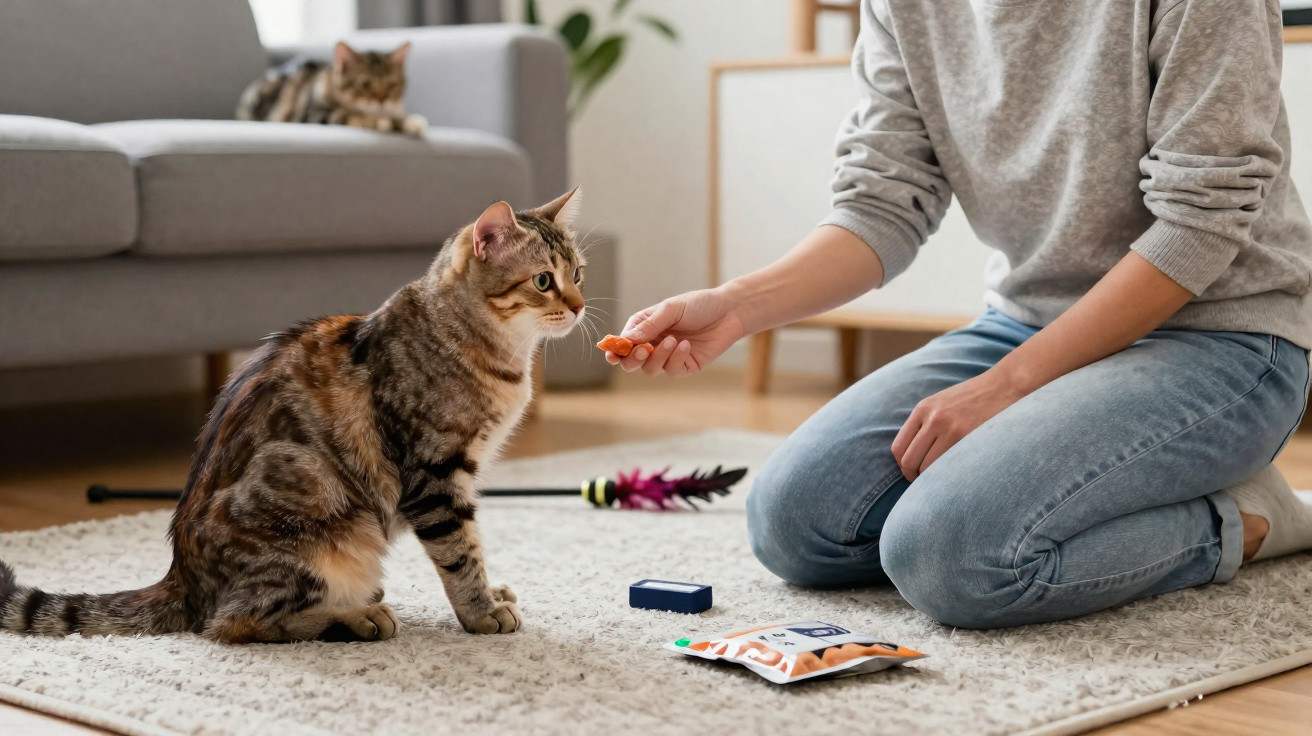
Before heading in, calmly lead your pet to a designated waiting place, such as a mat, bed or comfortable rug nearby.
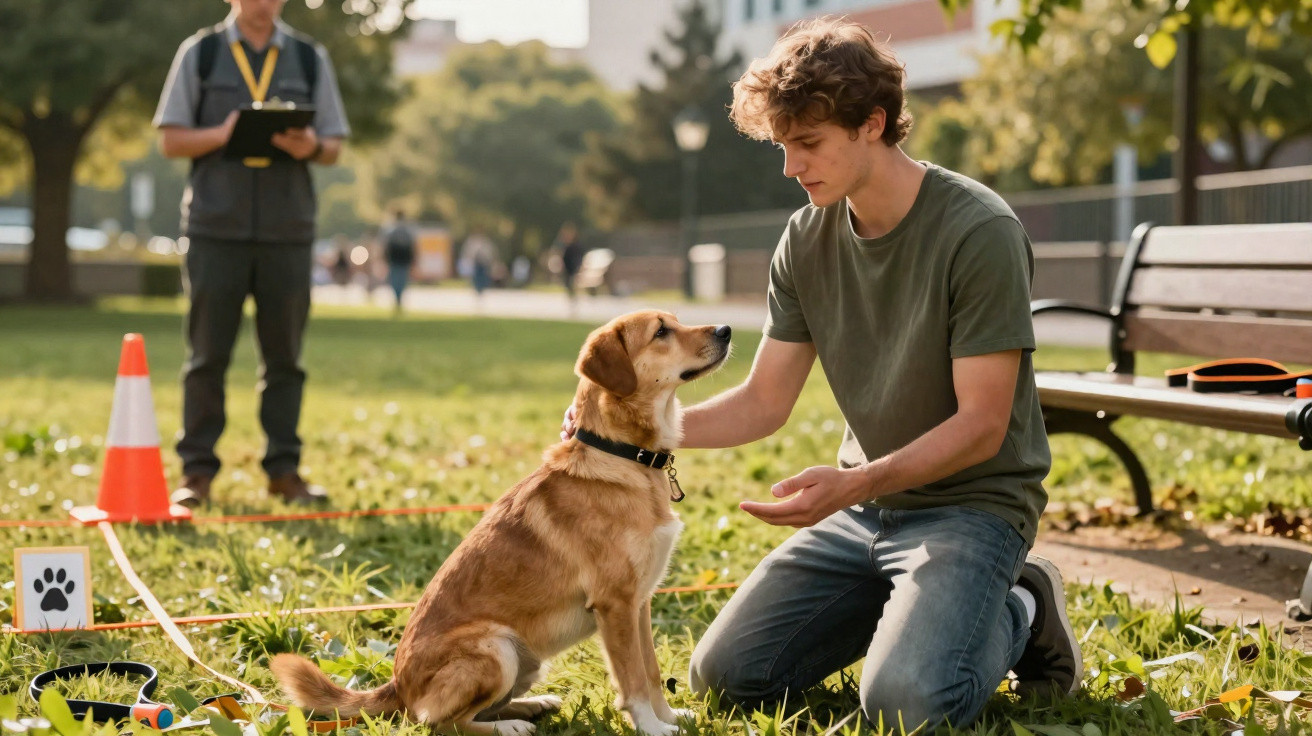
Give a simple cue they already understand, such as “sit” or “down”, and reward them with a small treat or quiet praise.
Go into the bathroom, initially leaving the door slightly open, then return after only a few seconds. The aim is not excitement but repetition. You are showing their nervous system that the door shuts, the human comes back and nothing dramatic happens.
Many of us accidentally make the situation bigger. We laugh, record them, chat through the door or let guilt persuade us to admit them every time.
Honestly, no one manages this flawlessly and consistently every single day.
It is more useful to focus on manageable adjustments rather than perfection. Fully shut the door once a day, even if you leave it ajar at other times.
Avoid anxious conversation through the door. When you emerge, remain neutral, then offer attention when they are calm rather than in the middle of a full-blown crisis.
Think of the bathroom door less as a boundary and more as a communication device: every closing is a tiny message about whether the world is safe when you’re not in sight.
- Create a “waiting zone”: Pick a comfortable place close to the bathroom and consistently direct your pet there with a cue before closing the door. Reliable rituals can calm anxious minds.
- Use micro-absences: Begin with bathroom visits lasting 5–10 seconds, ignoring scratching and returning calmly. Increase the duration gradually once your pet remains relaxed.
- Avoid reinforcing panic: Opening the door when they are yowling or scratching teaches them that intense behaviour “works.” Wait for one quiet second before touching the handle.
- Watch your own attachment: Wanting them beside you in every room can make boundaries unclear. Clinginess can sometimes work both ways.
- Know when to get help: If your pet trembles, drools or destroys objects whenever any door is shut, it may be genuine separation anxiety. A vet or behaviourist can offer guidance.
When following to the bathroom is cute… and when it’s a warning light
Once you pay attention to it, the bathroom can become a remarkably honest emotional gauge of the relationship between you and your pet.
Some days, their place by the door feels like a gentle message: “You’re my person, and I’d rather not lose sight of you, thanks.” At other times, it has a more urgent, panicked quality.
The very same behaviour may be affectionate or concerning depending on how intense and frequent it is, as well as what else is happening at home. A cat relaxing in the doorway while you brush your teeth is sharing your space. A dog scratching until his paws bleed is signalling distress.
There is another question that people rarely want to raise: what might this reveal about you?
If it feels lonely when the bathroom is the sole room your pet does not accompany you to, that is information too. If you notice that you depend on their continual presence nearly as much as they depend on yours, that is a different attachment story.
Pets do not merely react to us; they share an emotional environment with us. They take in tension, change, rows, house moves and break-ups.
At times, the bathroom is simply the only shut door in a home filled with unresolved emotions, and your pet may quietly be asking, “Are we still okay?”
The simple reality is that following you to the bathroom is seldom only about curiosity. It concerns routine, predictability and the unseen bonds of everyday life.
A securely attached pet can manage a closed door without spiralling. An anxious pet may spend those moments reliving every occasion when their sense of safety was lost.
Viewing this small ritual through attachment does not mean treating every paw under the door as a problem. It allows you to ask more useful questions.
What makes them feel safe? What is healthy for you? Where might each of you need slightly more room, or a little more reassurance?
The next time a quiet scratch comes from the other side of the door, you will understand that it is about more than the bathroom.
| Key point | Detail | Value for the reader |
|---|---|---|
| Bathroom-following reflects attachment patterns | Pets with secure attachment cope with short separations, whereas anxious pets react strongly to closed doors | Helps you understand your pet’s behaviour as emotional communication rather than mere “quirkiness” |
| Small rituals can reduce anxiety | A “waiting zone”, micro-absences and neutral returns reshape their expectations | Provides practical steps for reducing stress for both you and your pet |
| Your own behaviour shapes the bond | Your responses to scratching, speaking through the door and guilt-led decisions reinforce patterns | Identifies small routine changes that can build a calmer, more secure relationship |










Comments
No comments yet. Be the first to comment!
Leave a Comment