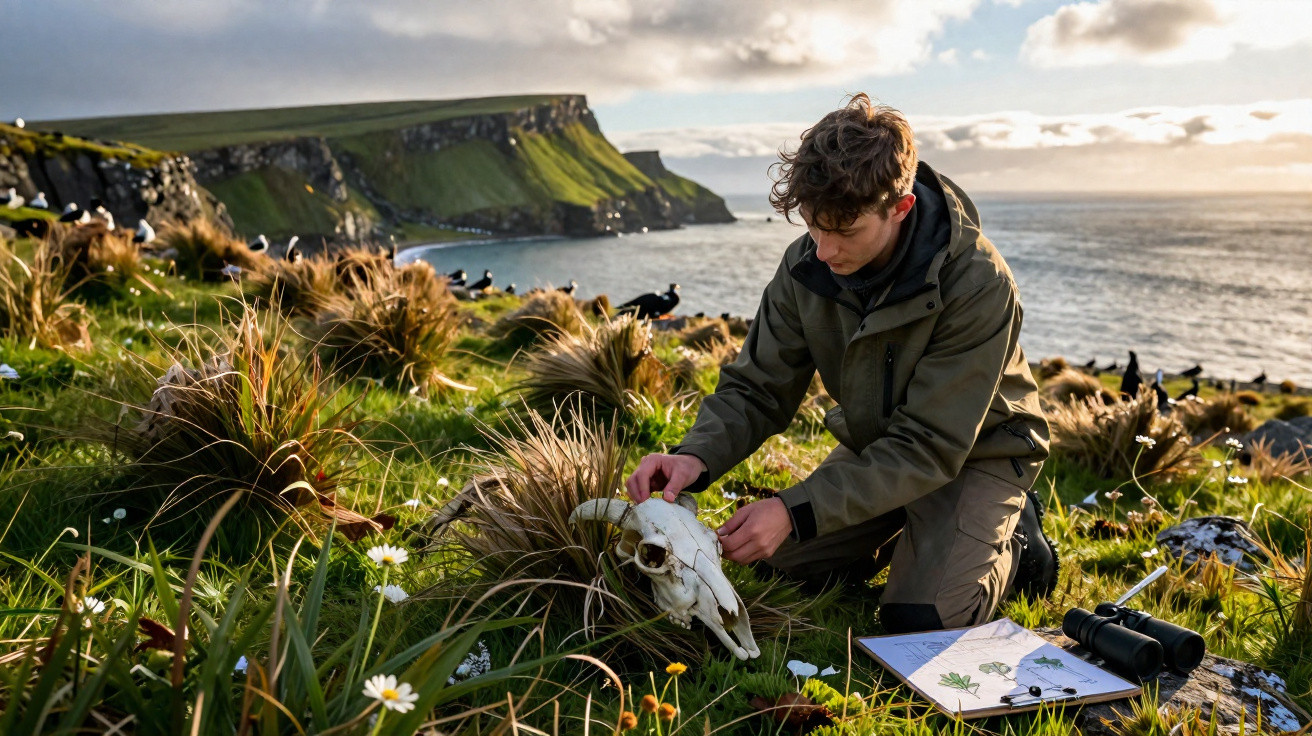
When a sheep farm failed on remote Campbell Island, New Zealand, around 4,000 sheep were left behind. The flock became feral, continuing to alter the subantarctic vegetation until a lengthy removal programme, completed roughly 60 years later, enabled a remarkable ecological recovery.
Why were thousands of sheep abandoned on the island?
Commercial sheep farming began in 1895, when Campbell Island was set aside for livestock production. Its cold, wet and exceptionally windy climate, combined with its distance from markets and falling wool and meat prices, made the enterprise unprofitable. The farm was deserted in 1931, leaving about 4,000 animals to live without management.
- The island lies in an isolated subantarctic region;
- Transporting people, supplies and wool was difficult;
- Weather conditions hindered farm work;
- Prices for sheep products declined;
- The flock was left to roam after the farm closed;
- The sheep began surviving and breeding in the wild.
How did sheep alter Campbell Island’s ecology?
With no fencing or management, the animals selectively grazed grasses, herbs and other more palatable species. The affected plants included the so-called megaherbs: subantarctic plants with large leaves and striking flowers that formed an important part of the landscape and habitat for native wildlife.
Decades of grazing reduced plant cover across several areas and encouraged species less favoured by the flock. Trampling also changed the soil and places used by wildlife. The story of abandoned sheep on Campbell Island shows how a domestic species can become a threat after being introduced to an isolated ecosystem.
The removal took place in three major stages
The work began in 1970, using robust fences to divide the island. This separation made it possible to remove sheep from one area and monitor the vegetation’s response while part of the flock remained in other sections. The recovery seen in the ungrazed area helped demonstrate that full eradication was necessary.
- In 1970, sheep were eliminated from the northern part of the island;
- A further fence was built in 1984;
- About 3,400 animals were removed that year;
- Teams searched valleys and slopes for concealed flocks;
- The final feral sheep were removed in 1990 and 1991;
- In total, approximately 7,000 animals were culled during the programme.
Were the sheep really rescued?
The term “rescue” can be misleading. Most animals were not moved elsewhere, but culled as part of a conservation programme. However, ten sheep were captured alive during an expedition in 1975 and 1976 to preserve the genetic characteristics developed by the isolated flock.
The removal of feral sheep ended around six decades after the farm was abandoned. Once the constant grazing pressure ceased, grasses, shrubs and megaherbs again spread into previously degraded areas, reshaping the habitat’s structure.
How did the island restore its biodiversity?
Removing the sheep solved only part of the problem. Rats introduced by ships were still preying on eggs, chicks and small animals. In 2001, an aerial operation distributed bait across the island, which was later declared free of these rodents. With invasive mammals gone, vegetation could recover and native species could return.
Today, Campbell Island is regarded as an example of ecological restoration. Its megaherbs and tussock formations have grown back, while birds such as the Campbell Island teal and Campbell Island snipe have benefited from the removal of predators. The case shows that severely altered ecosystems can recover, but only when the causes of degradation are removed and nature is given time to rebuild its relationships.









Comments
No comments yet. Be the first to comment!
Leave a Comment