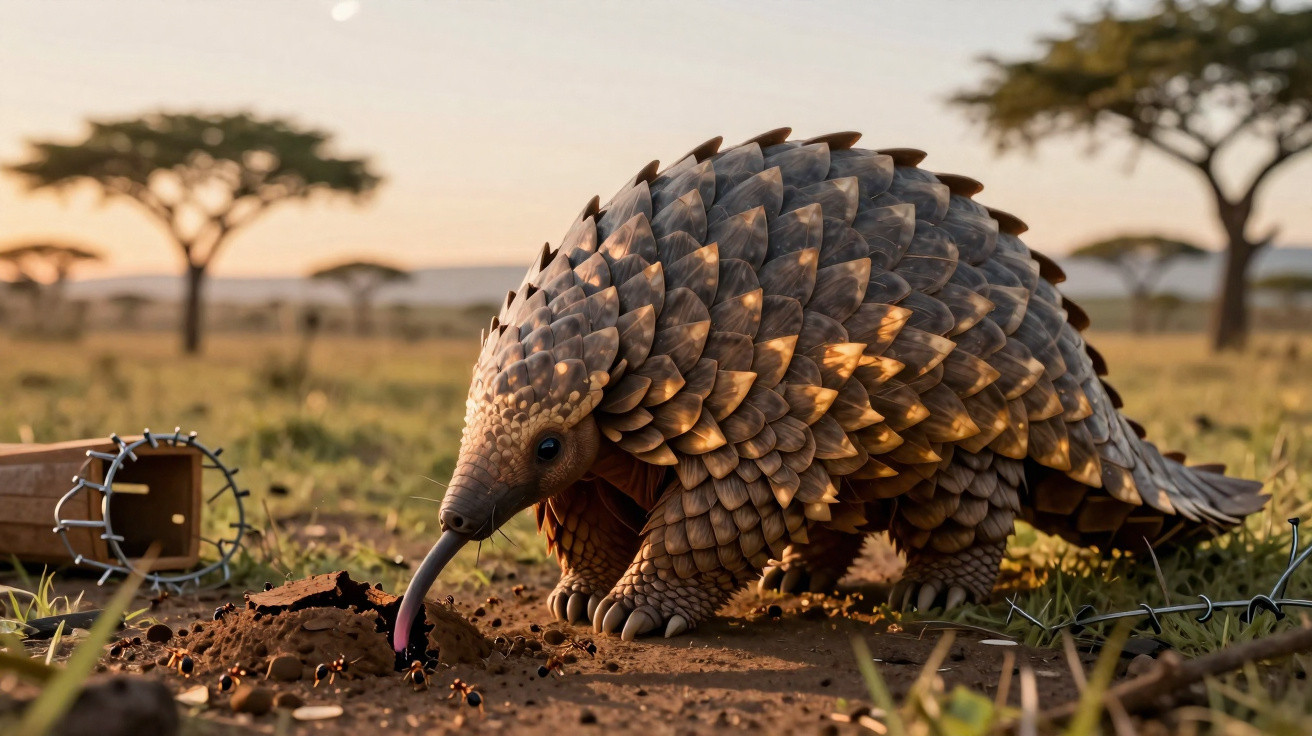
The pangolin is a mammal found in Africa and Asia that stands out because of its unusual appearance. Covered in large keratin scales-the same material found in human nails and hair-it can look like a reptile at first glance. However, it is a mammal with highly distinctive features, nocturnal habits and a very specialised diet.
Beyond its striking appearance, the pangolin interests researchers because of its role in maintaining nature’s balance and the serious threats to its survival. Regarded as one of the world’s most trafficked mammals, it has remarkable adaptations that protect it from predators and enable it to play an important part in the ecosystems it inhabits.
Discover some fascinating facts about this remarkable animal below.
1. The pangolin is the only mammal covered in scales
The pangolin’s defining feature is its body, which is covered in tough scales-a trait unique among mammals. Made of keratin, these scales act as genuine armour against predator attacks. They grow as the animal grows, continuing to shield its body throughout its life.
2. It curls up completely when it feels threatened
When it detects a predator nearby, the pangolin uses a highly effective defence: it rolls its entire body into a tight ball. In this position, its most vulnerable areas are protected by hard scales, making attacks by big cats and other animals more difficult. Some species can also move their tails to strike at anything trying to attack them.
3. Its diet consists almost entirely of ants and termites
The pangolin is a specialised insect-eating animal. Its diet consists chiefly of ants and termites, which it catches using an exceptionally long, sticky tongue. In a single night, an adult can eat thousands of insects.
4. Its tongue can be longer than its body
One of the most striking pangolin facts is the size of its tongue. In some species, it can exceed the animal’s body length when fully extended. Unlike in most mammals, the tongue is connected to structures near the chest, allowing it to stretch a considerable distance. Coated in sticky saliva, it reaches narrow tunnels inside ant and termite nests, collecting large numbers of insects in just a few movements.
5. The pangolin has no teeth
Although it consumes thousands of insects every day, the pangolin has no teeth. Rather than chewing, it swallows its prey whole. Digestion is carried out by its muscular stomach, which grinds up the insects with the help of small grains of sand and tiny stones swallowed while feeding.
6. Eight species are found across Africa and Asia
Pangolins do not live on just one continent. Eight species are currently known: four occur in Africa and four in Asia. Each differs in size, behaviour and preferred habitat. Some live mainly in forests, whereas others inhabit savannahs or open landscapes.
7. They are mainly nocturnal animals
For most of the day, pangolins stay concealed in burrows or among vegetation. After nightfall, they emerge to search for food, relying on their excellent sense of smell to find insect colonies. Their nocturnal behaviour helps them avoid predators and limits their exposure to heat in warmer climates.
8. The pangolin is among the mammals most threatened by illegal trafficking
Despite its impressive adaptations, the pangolin faces a worrying situation. All species are under pressure from illegal hunting and the illicit trade in their scales and meat, as well as from the destruction of natural habitats. Protecting this animal, however, means safeguarding the balance of the ecosystems it occupies and ensuring the survival of one of the planet’s most distinctive mammals.














Comments
No comments yet. Be the first to comment!
Leave a Comment