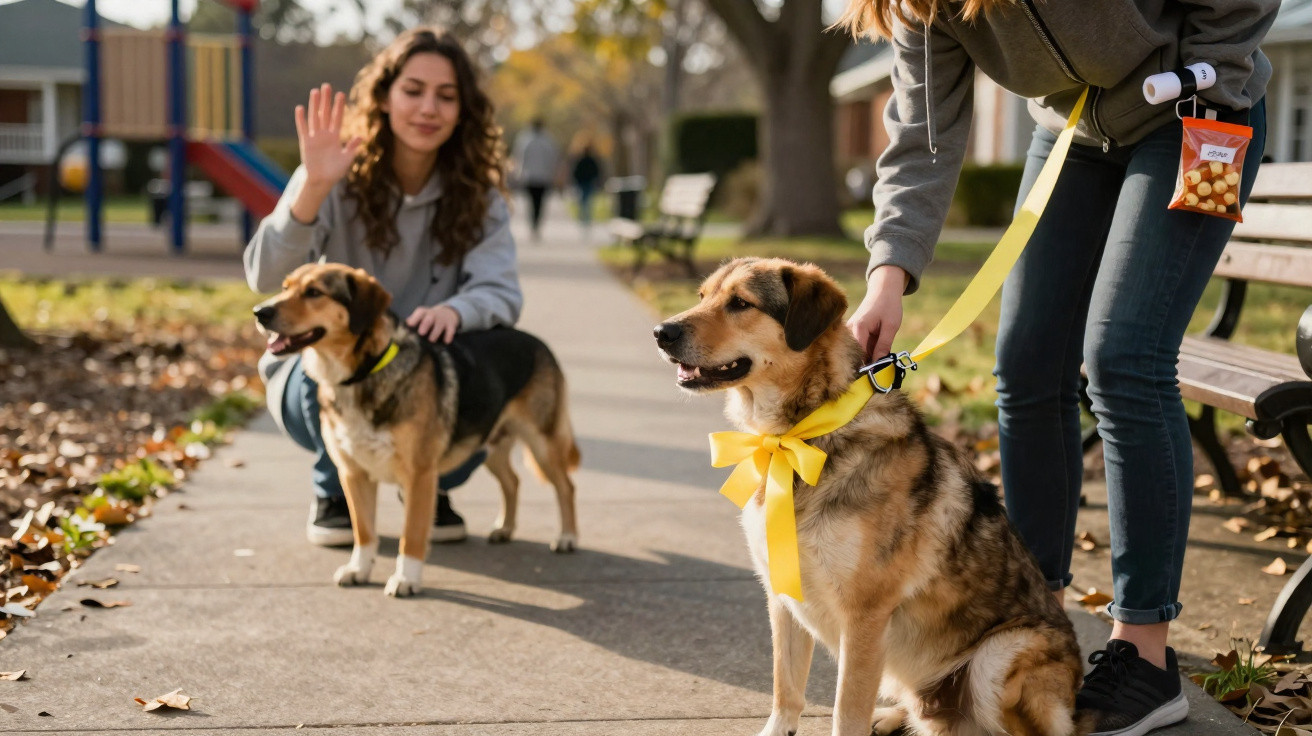
Many people still see it as an unusual fashion detail. In fact, that strip of yellow fabric is a warning signal that may avert stress, injuries and deeply uncomfortable encounters involving strangers, their children and their dogs.
More than a cute accessory: a quiet code for distance
The yellow ribbon forms part of an international visual code recognised by dog owners and trainers. Its purpose is straightforward: to show at a distance that a dog requires more personal space than most.
It is rather like an amber warning light for dogs. It does not say “this dog is bad”; it says “please don’t approach”.
The yellow ribbon means: do not touch the dog, do not let your dog rush up, and keep a respectful distance.
On busy streets and in packed parks, this quiet warning can make a major difference. It allows people to alter their route, helps families hold back enthusiastic children and reassures worried owners that they will not need to call across the path, “Please don’t pet him!” for the tenth time that day.
When people disregard it - by trying to stroke the dog, shrieking “Oh, he’s so cute!” or allowing their own dog to rush over - they are doing more than being overly friendly. They are ignoring an explicit safety message that has been intentionally displayed.
Why a dog might need space: illness, fear or serious work
A common assumption is that a dog in a yellow ribbon is aggressive. Usually, however, the explanation is far more complex and often concerns a dog in a vulnerable situation.
Health problems and pain
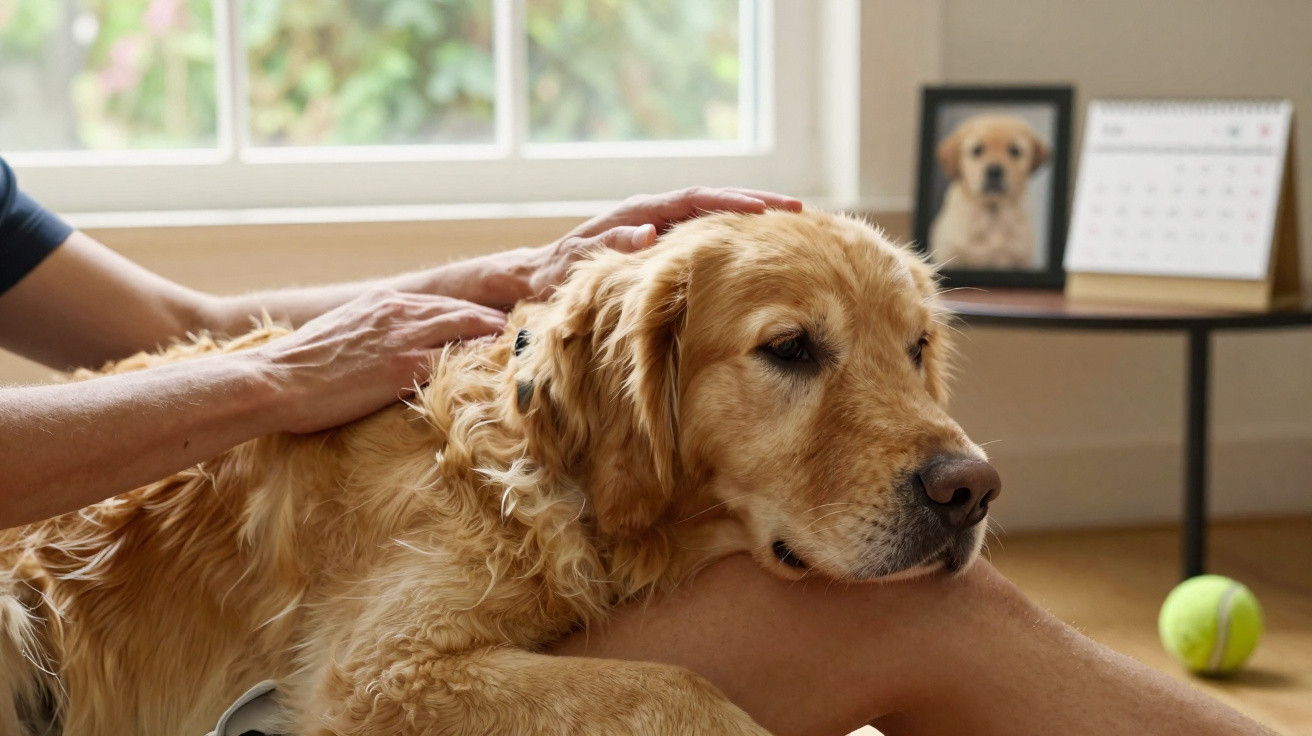
Dogs experiencing pain move and respond differently. What appears to be a harmless stroke on the back, or a knock from another dog, may provoke a sudden reaction.
- Chronic conditions: Arthritis, hip dysplasia and spinal problems can make particular movements intolerable.
- Post-surgery recovery: Dogs recovering from an operation need to avoid boisterous play and unexpected jolts.
- Age-related fragility: Older dogs may be easily unbalanced or alarmed by lively greetings.
For these animals, a yellow ribbon creates a protective buffer against contact that is well intended but potentially hazardous.
Anxiety, trauma and “reactive” dogs
Many dogs love meeting unfamiliar people and dogs, but not all do. Some have experienced mistreatment or attacks, while others did not receive adequate socialisation as puppies. Some are naturally anxious.
Trainers frequently use the phrase “reactive dog”. This does not mean that the dog is dangerous; rather, it means the dog responds strongly to triggers such as other dogs, people moving quickly or unexpected physical contact. A rapid approach may lead to barking, lunging or snapping.
The yellow ribbon aims to keep an anxious or reactive dog below its stress threshold, before it tips into panic or defensive behaviour.
To an observer, the dog may simply look as though it is walking calmly beside its owner. Internally, it might be making a considerable effort to manage its surroundings. More space gives it a better chance of coping successfully.
Training in progress
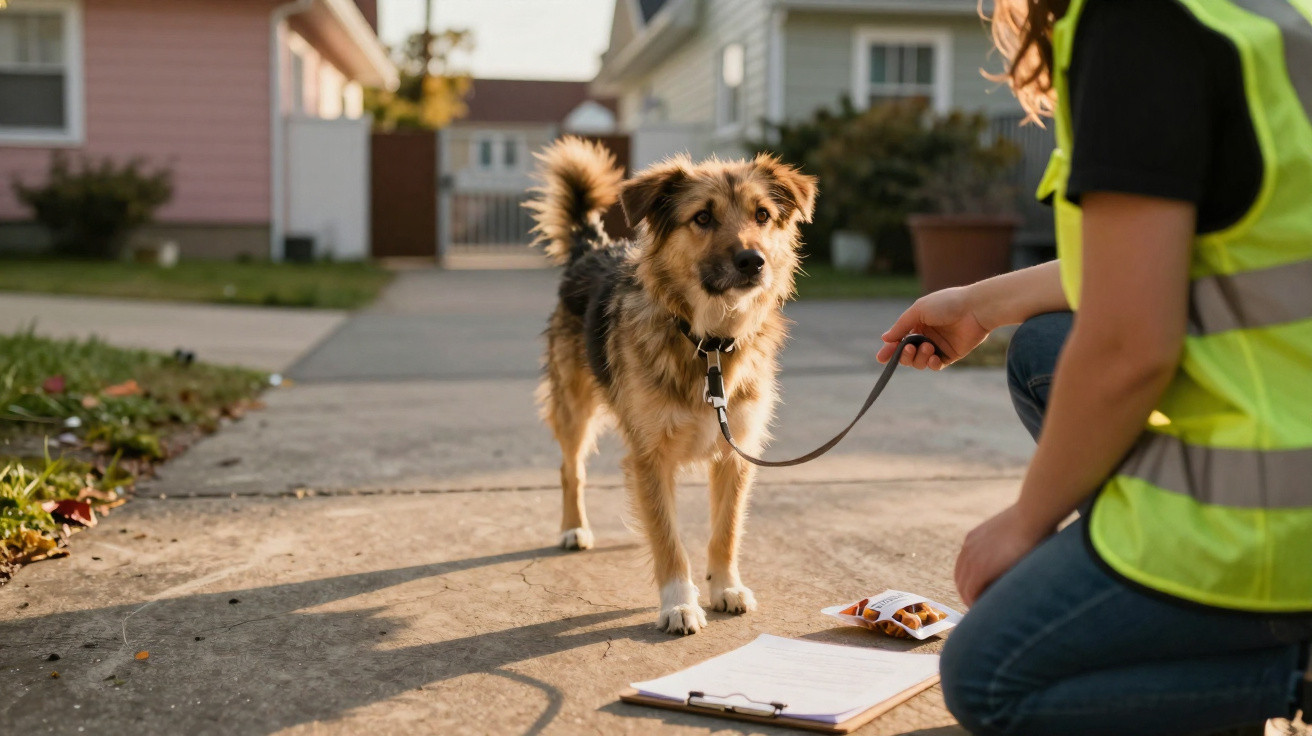
A further frequent use for the yellow signal is simply training. Owners may use it while a dog is learning new behaviours or undertaking behavioural rehabilitation.
Consider the difficulty of teaching a dog to walk quietly on the lead when three strangers stop to make a fuss of him every five minutes. Equally, imagine trying to desensitise a dog around other dogs when an off-lead Labrador charges directly into his face.
The ribbon communicates: “We’re in the middle of a lesson, please don’t interrupt.” Respecting that message helps to protect months of patient work that may not be visible to others.
Hormones and awkward encounters
For unspayed female dogs, a yellow marker may also indicate that they are in heat. During this period, chance encounters in the park can rapidly turn into mounting attempts, fights between male dogs or unintended pregnancies.
Maintaining distance helps avoid these difficult, and sometimes expensive, outcomes.
How you should react when you see a yellow ribbon
The right response is almost remarkably straightforward: behave as though the dog is not there.
Do not stare, do not speak to the dog, do not reach out, and do not allow your dog to make contact.
In practical terms, this generally involves:
- Walking onwards without edging closer to the dog.
- Crossing the pavement or allowing a wider gap where space is limited.
- Shortening your own dog’s lead and keeping it close beside you.
- Preventing children from running over “just to say hi”.
This can feel unusual, particularly for anyone who considers every dog a possible friend. For the owner holding the other end of the lead, though, your seeming lack of interest can be an enormous comfort.
Through your actions, you are communicating: “I see your signal. I respect it.” This calm and unspoken understanding can prevent bites, falls and stressful disputes between adults.
Where the yellow ribbon idea comes from
The idea has become known worldwide under several names, including “The Yellow Dog Project”. In every case, the principle remains identical: a bright yellow item on a dog’s collar, harness or lead indicates that it “needs space”.
It is neither a legal designation nor an official government programme. Instead, it is a grassroots convention adopted by trainers, behaviourists and owners because it proves useful in everyday situations.
| Yellow marker | Typical meaning |
|---|---|
| Ribbon or bow on the lead | General request for extra space |
| Yellow bandana | Dog is nervous, in training or recovering |
| Harness with yellow patch | Often combined with text like “Do not pet” |
Awareness is still inconsistent. In some areas, nearly every regular dog walker understands the signal; elsewhere, people continue to regard it as decoration. It is in that lack of understanding that accidents can begin.
Why ignoring the ribbon can end badly
A number of clear risks arise when somebody dismisses the yellow signal.
- Defensive bites: A dog forced beyond its comfort zone may snap, even if it has never previously done so.
- Falls and collisions: An older person walking a fragile dog may be pulled over amid the confusion.
- Setbacks in training: One unpleasant encounter can reverse weeks of careful behavioural progress.
- Legal and emotional fallout: A bite may result in veterinary costs, legal disagreements and a traumatised dog being labelled “dangerous”.
Many incidents that reach the headlines - “family dog bites child”, “dog fight in local park” - start because someone has misunderstood or ignored a warning. The yellow ribbon exists specifically to help prevent these situations.
How owners can use the yellow ribbon responsibly
For owners, a ribbon is only one measure among several. By itself, it is not a magical shield. It is most effective alongside sensible handling and direct communication.
Responsible practice includes:
- Keeping the lead sufficiently short to manage sudden lunges.
- Selecting quieter walking routes whenever possible.
- Using body language - moving aside or turning away - to make it clear that others should pass by.
- Preparing a simple phrase such as “He’s nervous, please don’t approach”.
Some owners combine the ribbon with a harness or collar patch stating “Nervous”, “In training” or “Do not pet”, which can assist people who are not yet familiar with the colour code.
Everyday scenarios: what to do instead of reaching out
Consider several familiar situations, and how you can respond differently once you understand the yellow ribbon’s meaning:
- You’re jogging: If you notice a yellow ribbon ahead, slow down slightly, give the dog a wide arc and avoid looking directly at it.
- You’re with young children: Draw attention to the ribbon, explain that it means “this dog needs quiet”, then continue walking. It offers a brief lesson in respecting boundaries.
- Your own dog is off-lead: Call your dog back, attach the lead and pass calmly, even when your dog is very keen to say hello.
These minor changes take only a few seconds. For the owner of a yellow-ribbon dog, they can transform a potentially fraught encounter into an ordinary, peaceful moment on a walk.
Key terms and related signals worth knowing
Several terms commonly appear in discussions about the yellow ribbon:
- Reactive dog: A dog that has a strong response to particular triggers, including other dogs, bicycles or abrupt movements. It is not automatically aggressive; it is overwhelmed.
- Threshold: The stage at which a dog’s stress is too intense for it to think clearly or respond to cues. The yellow ribbon helps keep the dog below this level.
- Trigger stacking: A build-up of several small stresses until the dog reacts. Preventing one more approach because of the ribbon can avoid that “last straw”.
Dogs may also use other visual signals. Assistance dogs commonly wear harnesses requesting that people do not distract them while they are working, while some countries use colour-coded leads or collars to show different friendliness levels. The yellow ribbon belongs to this wider group of informal signs that can make shared spaces safer when everyone recognises them.
Once you understand the true message behind that small yellow strip on a lead, it is difficult to overlook. The next time you see one on a crowded pavement or in a park, you will recognise that passing quietly without speaking is not unfriendly. It is a considerate, understated action that helps keep people and dogs safe.












Comments
No comments yet. Be the first to comment!
Leave a Comment