
Many owners reach for claw clippers when their house cat puts the sofa, skin and nerves to the test.
However, trimming is not automatically good for every cat.
A cat’s claws serve as tools, weapons and climbing aids all at once. Anyone living with an indoor cat may quickly consider simply shortening them. Veterinarians, however, caution against drastic procedures and recommend approaching the issue very carefully. What is permitted, what can harm the cat, and how should claws actually be trimmed?
Trimming or removing cats’ claws: a major difference
The terms are often confused: many people refer to “having claws pulled” when they only mean trimming them. In veterinary terms, these are entirely different procedures.
What happens when claws are removed?
During surgical claw removal, medically known as an onychectomy, the vet removes not merely the horny claw but also the final bone of each toe. This is a major surgical procedure.
Onychectomy is not a harmless cosmetic operation, but an amputation with long-term consequences for the cat.
Such procedures can cause serious issues, including:
- chronic pain while walking
- changes to the gait and joint wear
- toileting outside the litter tray because using it is painful
- stress and behavioural problems, as the cat feels defenceless
In many European countries, surgically removing claws for non-medical reasons is banned or permitted only in exceptional cases, such as serious injuries or tumours.
The harmless alternative: trimming only the tip
Simple trimming of the claw tip must be clearly distinguished from this radical procedure. It involves removing only a few millimetres of the transparent claw, without cutting into the blood-supplied area, known as the “quick”. This is more comparable to cutting a person’s fingernails.
When carried out correctly, it is painless and can help prevent torn claws, injuries and damage to furniture.
Is it acceptable to cut cats’ claws?
Many owners are unsure: am I interfering with my cat’s natural behaviour if I trim its claws? The answer depends on the circumstances.
When trimming claws is useful
The claws of exclusively indoor cats often wear down less than those of cats with outdoor access. Carpet, sofas and scratching posts simply do not have the effect of a tree trunk covered in bark. This may result in overly long claws.
Trimming can be appropriate when:
- the cat catches its claws in the carpet while walking
- you can clearly hear the claws “clicking” on the floor when the cat is sitting
- older or overweight cats can no longer scratch properly
- claws are growing towards the paw pads and may become ingrown
- people with very delicate skin, such as older people or babies, live in the household
Curled claws are a common issue in elderly cats. They can partly grow into the paw pads, causing painful wounds. Regular trimming can genuinely prevent suffering in these cases.
When it is better to avoid the clippers
A healthy cat with outdoor access that climbs, hunts and regularly scratches tree trunks will usually not need any intervention. Nature takes care of most of the work.
You should also avoid trimming if:
- you are very nervous or lack fine motor control and are afraid of cutting the “quick”
- the cat panics, hisses and bites
- there is an existing paw condition or severe pain
In these situations, a visit to the veterinary practice is helpful. Many veterinary practices or animal care professionals can demonstrate the technique and trim the claws themselves if necessary.
How to identify where the claw ends and the “quick” begins
A close look is useful: the claw consists of a transparent, curved horny outer section and a reddish-pink core containing blood vessels. Only the clear section may be trimmed.
Never cut into the pink section – this is where the blood vessels and nerves are located.
The distinction is easy to see on light-coloured claws. With dark claws, proceed in tiny stages and remove a small amount several times rather than cutting too much at once.
Step by step: trimming your house cat’s claws
With calm handling, routine and the right method, claw trimming can become a brief and tolerable ritual for many cats.
Preparation: setting and equipment
You will need:
- dedicated cat claw clippers or a claw trimmer
- good lighting, possibly a small lamp
- treats as a reward
- for anxious animals, a second person to hold the cat
Ordinary human nail clippers are unsuitable because they can crush the claw. Purpose-made claw clippers make a clean, straight cut.
Holding the cat correctly
Many cats feel more secure when sitting on a lap or wrapped in a blanket. Some tolerate claw trimming better from behind, with their back towards the person and their body gently supported against them.
Hold the paw carefully but securely. Applying light pressure to the toe pads extends the claw, making it easier to see.
Making the cut
- Aim only for the tip – at most two millimetres.
- Position the clippers at a right angle to the claw, rather than diagonally.
- Close them slowly instead of squeezing abruptly.
- Pause briefly and offer a reward after each claw.
For a first attempt, it is best to begin with just one claw per day. This prevents the cat from immediately associating the ritual with a long, stressful procedure.
What to do if it starts bleeding
Even with care, you may accidentally cut into the blood-supplied section. The claw will start bleeding and the cat may react with alarm.
Remaining calm is vital:
- Hold the paw gently and securely.
- Press a clean cloth or gauze pad against it briefly.
- Do not punish the cat for a defensive reaction.
If the bleeding does not stop after a few minutes, or if the cat does not put normal weight on the paw afterwards, visit a vet.
Claw care without clippers: helpful alternatives
Anyone reluctant to use clippers can encourage natural claw wear instead. Indoor cats in particular benefit from this.
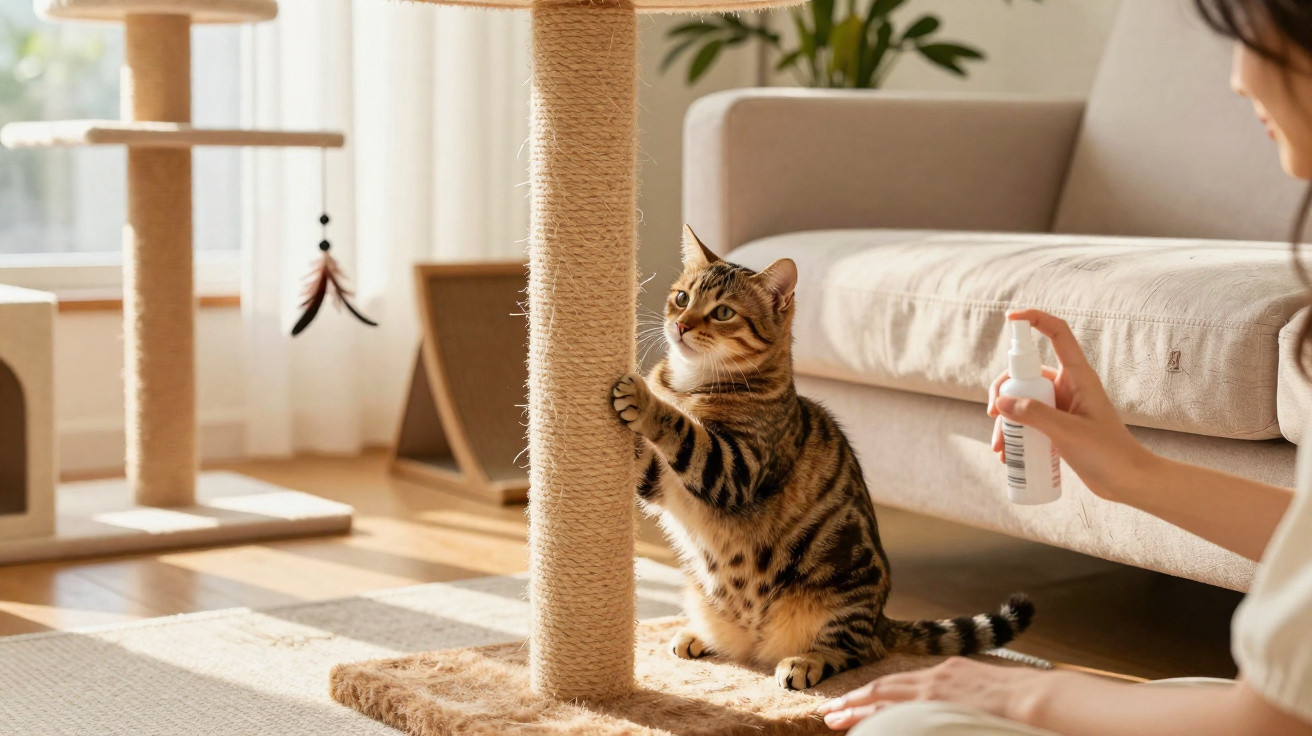
Provide scratching opportunities thoughtfully
One unstable scratching post in the middle of the room is usually not enough. A small “scratching landscape” is better:
- several scratching boards in different rooms
- varied materials, such as sisal, cardboard and carpet
- sturdy, tall scratching posts that allow the cat to stretch
Catnip or treats can make new scratching areas more appealing. To protect furniture, always provide an attractive alternative nearby.
Movement as a natural claw sharpener
Fishing-rod toys, treat balls and climbing shelves encourage cats to jump and climb. This wears their claws down more intensively, reducing the need for frequent trimming.
Common misconceptions about cats’ claws
Myths surrounding the subject have caused confusion for years.
- “The home is safer without claws.” – A cat without claws feels unprotected and often responds by biting, which is considerably more dangerous for people.
- “The shorter, the better.” – Claws trimmed too short hurt when the cat walks. Cats need these “tools” for climbing, playing and grooming.
- “Trimming claws is animal cruelty.” – Carefully shortening a claw that is one millimetre too long can save some cats from serious injuries.
How often should claws be checked?
A regular schedule is useful: many vets recommend checking the paws roughly once a month. For senior cats or very inactive indoor cats, it is better to inspect them every two weeks.
Also check for:
- cracks or splits in the claw material
- redness, swelling or odour between the toes
- hair, litter or foreign objects caught there
Signs such as limping, persistent licking of one particular toe or sudden defensive behaviour when the paws are touched can indicate pain and should be assessed at a veterinary practice.
Why claws matter so much to a cat’s wellbeing
Understanding the role claws play in feline life changes how claw trimming should be viewed. Claws are not only for scratching the sofa.
- They provide grip when jumping and landing.
- They offer security when climbing upwards.
- They are involved in communication, as scratch marks define territories.
- They are an important part of play and hunting behaviour.
Permanently preventing a cat from using its claws normally interferes deeply with its natural behaviour. The principle is therefore clear: radical procedures are unacceptable, while controlled claw care is permitted and often beneficial.
Practical example: the timid indoor cat
A 12-year-old indoor cat is reluctant to leave its cushion, hardly plays any more and has mild arthritis. Its claws are already curling towards the paw pads. In this situation, a scratching post alone is no longer enough. Targeted trimming helps prevent inflammation and keeps the paws usable, even if the cat is no longer actively climbing.
By contrast, a young, healthy tomcat with a secure balcony, several scratching posts and hours of play with a fishing-rod toy will often need only regular checks. His claws should be trimmed only if they become noticeably long.













Comments
No comments yet. Be the first to comment!
Leave a Comment