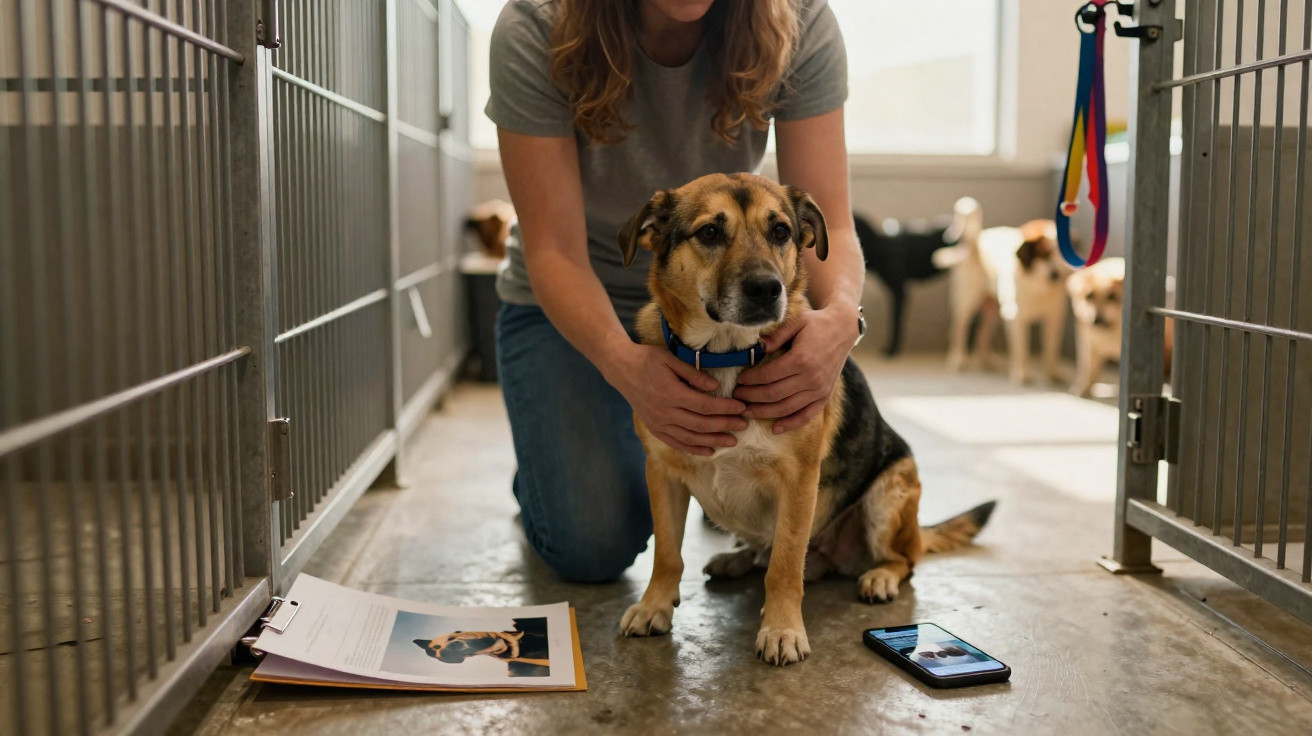
On Tuesdays, the shelter feels unnaturally still. The weekend stream of visitors has passed, the dogs doze for a little longer, and the coffee in the cramped staff kitchen tastes even more stale than it did the day before. It is then that this dog’s story hurts most.
He wore a blue collar, wagged anxiously and had the sort of hopeful eyes that followed people along the entire corridor. The couple who brought him in were in tears. “Just a few days,” they said. “We’ll come back, we promise.” With trembling hands, they completed the paperwork, kissed him on the head and stepped into the late-afternoon light.
Weeks on, his collar remains on the kennel door. Yet the names on the form have come to mean something else entirely.
When a promise to a shelter dog slowly fades into silence
Staff recall his arrival because it seemed like an interruption rather than a final goodbye. The dog - let’s call him Milo - strained towards the car park while they took him inside, glancing back with his ears alert, as though the car might reappear at any moment. The woman said they had lost their flat, that a friend was “working on a solution” and that they would collect him “as soon as we can.” Her explanation was quick, hurried and almost frightened.
They added a telephone number to the intake form and marked a date for a “temporary hold”. On his first night, Milo settled beside the kennel door, watching the entrance and flinching whenever it opened.
Initially, the team did what shelter workers are best at: they trusted them. They verified the number, entered it into the system and told one another, “They seemed genuine, they’ll be back.” During the first week, a volunteer gave Milo longer walks, believing he should remain fit “for when his family arrives.” In the second week, a staff member wrote on his record: “Still waiting for his people.”
Then the calls began. The phone rang repeatedly, then went to voicemail and finally delivered an impersonal recorded message: “This line has been disconnected.” The promise no longer felt like a bridge; it felt like a widening crack. By the third week, nobody voiced what everyone already knew.
What followed was the kind of understated disaster shelters encounter more frequently than they discuss. Modern abandonment does not always mean leaving a dog by the roadside. It can mean forms, courteous assurances and a signature beneath “temporary boarding” that eventually expires without fuss. People arrive overwhelmed by redundancy, relationship breakdowns or eviction. They insist they will return because they need to believe it themselves.
Then circumstances become even harder: bills, distance and humiliation. There is also the shame of calling to admit, “We can’t do it.” Instead, they make no call at all. Silence becomes the easiest way to walk away. To the dog and the shelter team, that silence is the loudest thing of all.
Behind the scenes: what shelters really discover weeks later
When Milo’s “hold” formally expired, the kennel co-ordinator printed his file once more. It was a minor, almost administrative act, yet the strain in the room was clear. There would be no further special note and no more “they’ll be back.” There was only a countdown for a dog who now required a new home. The shelter director called the number one final time, looking at the wall while it led directly to nowhere. She then did what shelters discreetly do every week: changed Milo’s status from “temporary” to “owner surrender – no reclaim”.
That one click is the devastating news that people outside a shelter rarely witness.
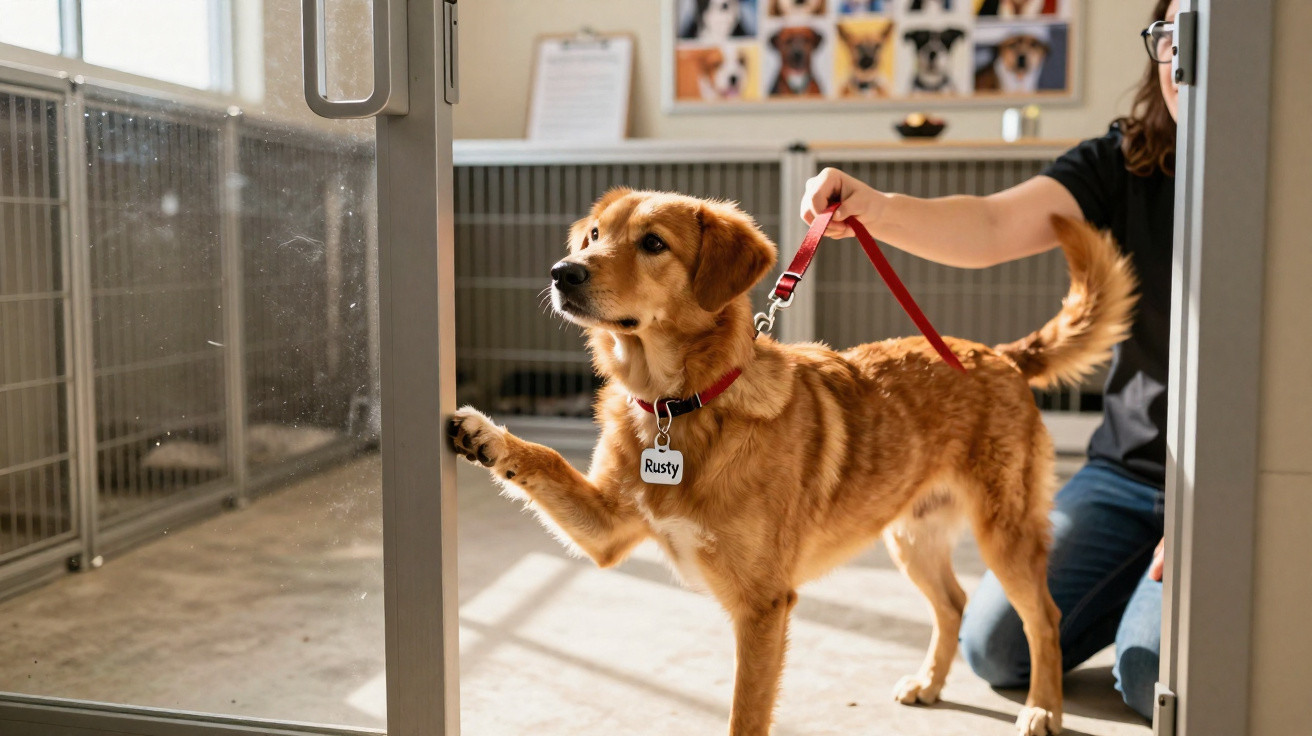
For Milo, the effects were instant, though unseen. He was transferred from the holding area to the standard adoption row, placed between an elderly Labrador and a distressed husky. His whiteboard description changed as well. “Family coming back” was removed and replaced with the neutral wording: “Friendly, house-trained, loves tennis balls.” Staff no longer watched the car park quite so intently. Volunteers stopped saying, “Maybe today.”
One afternoon, when the sun was low and the corridors were mostly empty, a prospective family passed his kennel. Milo offered his finest routine: gentle eyes, a quiet wag of his tail and a soft lean against the gate. They asked, “What’s his story?” The response came in the measured voice shelter workers use when they are trying to be compassionate and truthful at once.
The truth is that few people expect this sort of heartbreak when imagining adoption or surrendering a pet. We prefer tidy narratives with obvious villains and flawless heroes. Life is less orderly. People do not always abandon animals through cruelty; sometimes chaos, pride and fear are responsible. That is the most difficult part for staff. They must carry both the broken commitment and the dog still listening for footsteps that will never come back.
The simple reality is that each dog who is not collected makes shelters slightly more rigorous. Holds become shorter, rules clearer and questions more searching. Beneath those questions is an unspoken request: “Please don’t leave us to clean up what you can’t say out loud.”
How to never put a shelter-and a dog-in this position
This story can unfold differently, and that begins well before the reception desk or intake paperwork. The greatest protection you can give your dog is complete honesty with yourself. Before telling a shelter you will return, consider the worst possible outcome: a new landlord who will not accept pets, a job offer in another city or a family emergency that does not simply resolve itself. If the likelihood is against you, say so plainly.
Shelters can achieve extraordinary things when they know the facts. They may link you to affordable boarding, foster networks, short-term accommodation or even pet food banks that prevent animals entering the system in the first place. A precarious period need not always end with goodbye.
If you are already standing at the shelter counter, with your heart racing and your dog shaking by your feet, this is when courage matters most. Tell the team, “I want to come back, but I’m not sure I can.” It may sound like an admission of failure, but it is a major act of responsibility. It lets staff regard your dog as an animal needing a genuine plan rather than an uncertain possibility.
The greatest error is making promises based on emotion instead of reality. Afraid of being judged, people hold on to “temporary” as though it were protection. Shelter staff witness this every week and are not there to reprimand anyone. They simply want to prevent another Milo.
“Give us the hard truth, not the pretty version,” a veteran shelter worker told me. “We can work with the hard truth. We can’t work with disappearing acts.”
- Be transparent from day one: Explain your housing, employment and family pressures. This enables the shelter to explore realistic options rather than reassuring fiction.
- Ask directly about alternatives: Short-term fostering, behaviour support, temporary boarding and community assistance are available, but you need to ask, “What else can be done?”
- Commit to communication: Provide several ways to contact you and call even if your circumstances fall apart. A difficult update is kinder than disappearing without a word.
What this story says about us-and about the dogs still waiting
Milo’s experience is not an isolated viral tale; it is a reflection. Every shelter has its own dog whose family promised to return before gradually vanishing into voicemail and disconnected numbers. Some find another home quickly, while others wait for months. A small number never receive a second chance. Yet staff are affected not only by the dog, but by the way the promise disappeared.
We live at a time when circumstances can change rapidly: rents rise sharply, jobs disappear and couples separate overnight. Animals often slip through the gaps these upheavals create. When somebody enters a shelter saying, “We’ll be back,” they are attempting to seal those gaps with hope. The difficult, adult response is to say, “We might not be.”
Across the adoption area, prospective families pass rows of kennels and read fragments of lives on cardboard signs. Behind phrases such as “owner sick”, “moving” and “no time” sit quieter lines that were never written: “We tried”, “We panicked” or “We didn’t know how to ask for help.” If you are reading this while a dog snores beside you, you already belong to this story. The next time you see a post about a “left-behind” shelter dog, you will understand that there may be more than a cruel headline suggests. You may even be the person who changes the ending for the next Milo.
| Key point | Detail | Value for the reader |
|---|---|---|
| Be honest about your situation | Tell shelter staff about genuine risks, including eviction, travel or instability | It can unlock support that may prevent your dog from entering long-term shelter care |
| Stay in contact | Provide several phone numbers and an email address, and notify the shelter if circumstances change | This stops your pet being classed as permanently surrendered without your knowledge |
| Consider alternatives before surrender | Enquire about foster networks, financial support, training or temporary boarding | It offers a chance to maintain your bond with your animal, even during a crisis |
FAQ:
- Question 1: Can shelters really hold my dog “temporarily” while I sort things out?
- Question 2: What happens if I don’t contact the shelter by the agreed date?
- Question 3: Are there programmes that help people keep their pets during a crisis?
- Question 4: What should I tell my children if we can’t get our dog back?
- Question 5: How can I support dogs like Milo if I can’t adopt right now?






Comments
No comments yet. Be the first to comment!
Leave a Comment