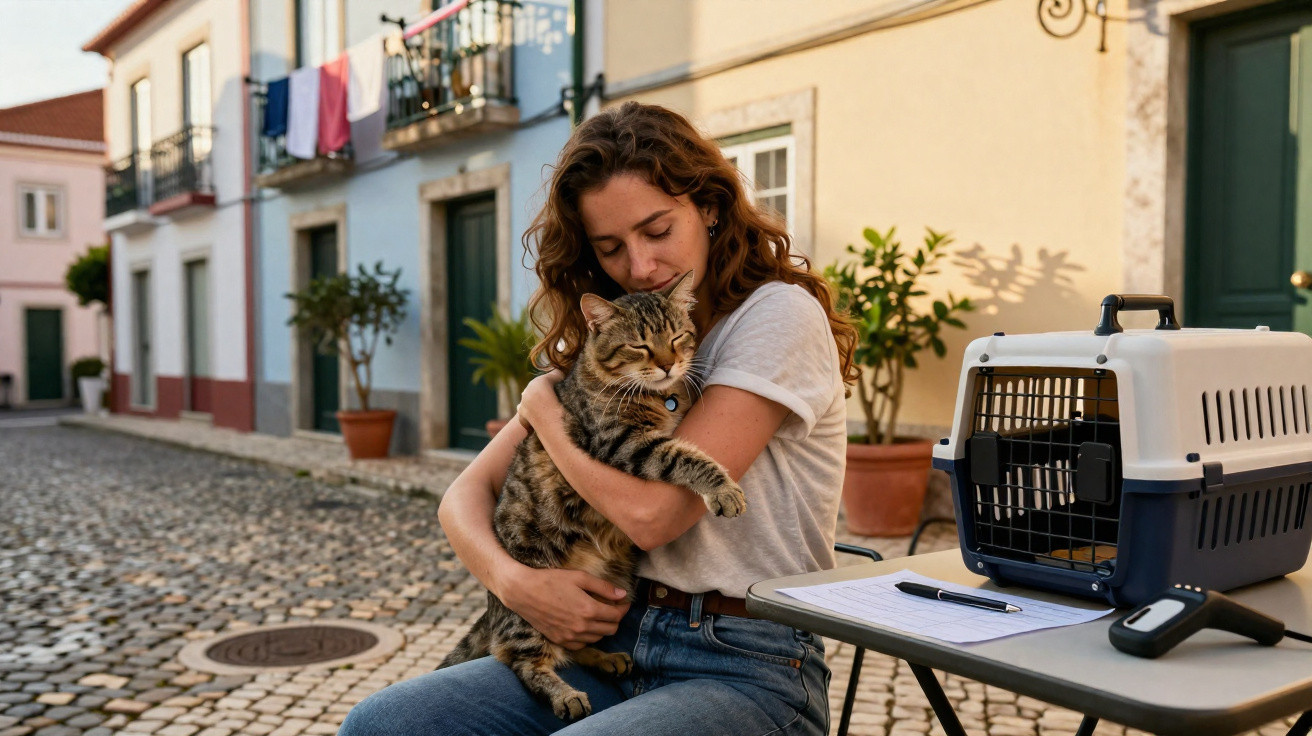
For ten years, Jess passed through familiar streets believing that her adventurous tabby had disappeared completely.
When her telephone rang a decade later, she never imagined the caller would say that her missing cat had been discovered only a short distance from her former home.
A kitten determined to explore
In July 2014, Jess took home two very small kittens named Ned and Ted. Although the brothers were raised together, their characters soon proved entirely different. Ted was a true stay-at-home cat, happiest on the sofa, in a warm lap and with the dependable comfort of life indoors. Ned, meanwhile, was quite the reverse.
He tested every possible door and window. Once he was old enough to go outside, Ned saw the garden fence not as a boundary but as the beginning of an expedition. He would wander, climb and disappear into alleyways, then return around supper time with burrs caught in his coat and the pleased expression of a cat who had been somewhere interesting.
Jess lived in a peaceful neighbourhood and, like many people with cats that spend time both inside and outside, she tried to weigh his urge to explore against her own concerns. Initially, the arrangement worked well: Ned left and returned, always making his way back.
Two homes, one wandering cat
Things changed when Jess moved a short distance from her original house. Her new home was nearby, but Ned clearly did not accept the change of address. Once he had worked out how to travel back, he began revisiting his old patch.
At first, Jess would walk to her previous street, call for him and carry him home. Her former neighbours became accustomed to seeing a young woman gently negotiating with a cat who plainly believed that he knew best.
Then an unforeseen development occurred. The people who had moved into Jess’s old house spotted Ned regularly nearby and began looking after him. They gave him food, welcomed him indoors and came to regard him as part of their household.
Ned became the rare cat who had, in effect, two homes and two sets of humans who thought of him as theirs.
For a time, the arrangement appeared to work for Ned. Jess remained in contact with the family living at her former address, and together they attempted to monitor his movements. However, the intervals between his visits started getting longer. Days became weeks, followed by more extended and increasingly worrying disappearances.
When a missing cat becomes a memory
Then, one day, Ned stopped turning up altogether. Neither Jess nor the residents of her old home saw him again. They looked for him, contacted nearby vets and checked with animal shelters, but found nothing.
Weeks turned into months, and the months gradually turned into years. In time, Ned became a painful “what if” for Jess, bringing guilt and sadness alongside a small hope that somebody, somewhere, had taken him in.
Life continued. Jess moved on, but never forgot him. Crucially, his microchip registration was unchanged. Her telephone number was still linked to his name in a database she had scarcely considered for years.
The call, ten years later
In late January 2026, a local animal shelter phoned Jess. Its staff asked one straightforward question: was she the owner of a cat called Ned?
The shelter had scanned a tabby’s microchip and pulled up her details. Her cat, gone for a decade, was alive at 12 years old.
Jess was stunned as the circumstances gradually became clear. Around three years earlier, a woman from the area had taken Ned in. Believing him to be a stray, she had cared for him as though he were her own cat. When her health worsened and she needed to move into residential care, she made the hard choice to hand him over to a shelter, so that he could have a secure new home.
As part of the standard intake process, shelter staff scanned his microchip. The tiny implant, roughly the size of a grain of rice, quietly fulfilled its purpose: Jess’s telephone number appeared on their screen.
Nobody knows what Ned did in the seven years before that. He may have been fed by several neighbours, slept in sheds or attached himself to another family altogether. For Jess, those unexplained years bring both sorrow and relief: whatever occurred, he survived long enough to be found.
Reunion with an older, cautious Ned
Jess hurried to the shelter to meet him. After such a long absence, she had no idea what to expect, including whether Ned would remember her voice or scent.
By then a senior cat, Ned responded with understandable wariness. He was anxious, observant and somewhat tense in unfamiliar surroundings. The bold kitten who once jumped over fences without hesitation had become a slower, more cautious tom.
Jess took him home once again, this time to a life very unlike the one they shared in 2014. During his first week back, his anxiety began to ease. He chose favourite places, became familiar with the layout and started revealing glimpses of his old affectionate nature.
Within days, Ned was settling in and showing the same gentle affection Jess remembered, only with fewer wild escapades and a preference for quiet naps.
Time, and perhaps difficult years outside, appear to have made him calmer. His adventures are now briefer and more closely supervised, often ending at a sunny windowsill.
Why the microchip saved Ned’s story
Since Ned’s return, Jess has spoken openly about the value of microchipping and ensuring registered contact information remains current. She acknowledges that she had given his chip little thought in recent years, yet she had never altered the telephone number held on the record.
That single, small detail changed everything.
- Microchips offer permanent identification that cannot come off as a collar can.
- Vets, shelters and many rescue organisations routinely scan animals for chips.
- An old telephone number or address can prevent reunions for years.
- Amending microchip details generally takes only a few minutes online or by telephone.
For owners who relocate often, or adopt animals from different parts of the country, keeping those details current may be the sole connection between a lost pet and its previous home.
How microchipping works in practice
A microchip is a small electronic device implanted beneath an animal’s skin, typically between the shoulder blades. It is a quick procedure, often carried out during an ordinary veterinary appointment or at the same time as vaccinations or neutering.
When someone finds a lost animal, they pass a handheld scanner over the chip. It reads a unique identification number, which is checked against one or more databases to retrieve the registered owner’s contact details.
Many people do not realise that microchip companies are not automatically informed if you move home, switch telephone providers or even if your pet dies. You must notify them yourself.
What other owners can learn from Ned’s decade away
Cases like Ned’s are unusual, but they do happen. Cats, particularly those allowed outdoors, may disappear for weeks or months before returning as though nothing has happened. Ten years is an exceptional period, but Ned’s experience demonstrates how resilient and adaptable cats can be.
For owners, it prompts several practical questions. How long should you maintain hope after a cat has gone missing? And which actions can still make a genuine difference once the initial frantic search has passed?
| Step | Why it helps |
|---|---|
| Contact local vets and shelters | These are the first places a finder is likely to call or visit. |
| Check and update microchip details | Ensures any scan reaches you, even months or years later. |
| Talk to neighbours | Cats often stay within a small radius and may be fed nearby. |
| Use recent photos | Essential for posters and online alerts so people recognise your pet. |
Owners may assume the worst after only a few weeks. Although that feeling is understandable, Ned’s story illustrates that a cat can lead an entirely separate life just streets away, supported by another household that does not realise the animal already has a registered family.
When a “stray” might have another home
There is a further lesson for those who take in cats they assume are strays. Many truly are abandoned or have been lost for long periods. Others are simply pets that wander widely and expand their social circle.
Before adopting a friendly cat that appears homeless, several checks can help prevent distressing circumstances later:
- Ask neighbours whether they know the cat or recognise its usual routine.
- Bring the cat to a vet or shelter to have its microchip scanned.
- Watch for quiet signs that it is cared for, including clipped claws or a healthy weight.
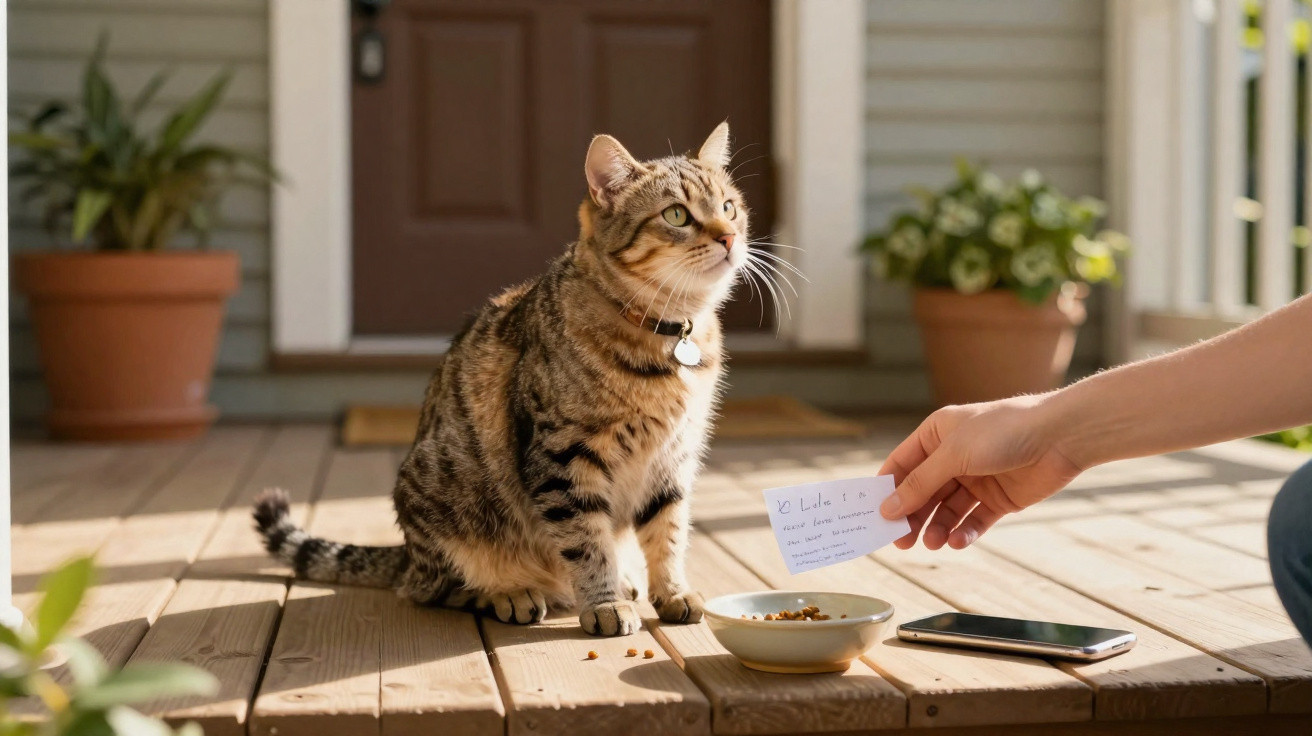
- Consider fitting a paper collar with a note asking, “Does this cat belong to you?”
Such simple measures can stop the unintentional “theft” of somebody’s pet and may reunite long-missing animals with their original families, who may still be looking or quietly holding on to hope.
Understanding the risks and choices for outdoor cats
Ned’s experience also brings back a familiar discussion: should cats roam freely or remain entirely indoors? Cats with free outdoor access benefit from stimulation, exercise and natural activities such as hunting. However, they also encounter dangers including traffic, fights, illness, becoming lost and being taken in by other people.
Some owners opt for supervised outdoor access through secure gardens, cat-proof fencing or walks using a harness. Others accept the risks of unrestricted roaming, while reducing them through neutering, microchipping, vaccinations and reflective collars. Every option involves a balance between safety and quality of life.
For Jess, having Ned back at 12 has meant reconsidering how much freedom he should have. His age, together with the long and unexplained chapter of his life away from her, has led her towards a quieter and safer routine. Yet his story is already changing how many of her followers and fellow pet owners view tiny chips, old telephone numbers and cats that move between homes, living much closer than anyone might suspect.










Comments
No comments yet. Be the first to comment!
Leave a Comment