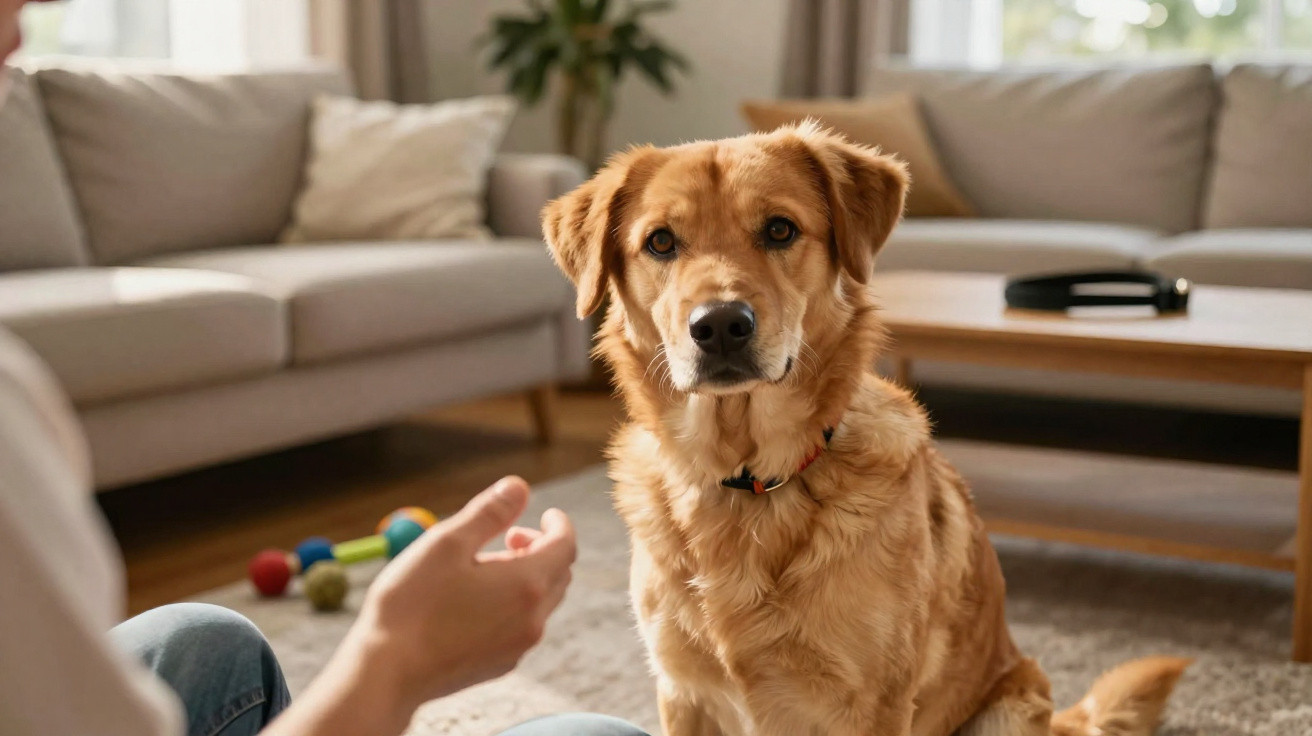
Say your dog’s name and you may see it immediately. That small, irresistibly adorable head tilt. One ear lifts while the other droops; their eyes settle on you as though you have suddenly become the most compelling programme on television. Keep talking and the head tips again, slightly farther this time, as if they are attempting to pick up a frequency only they can detect.
In that instant, most of us tell ourselves the same thing: “He understands me. He loves hearing my voice.”
Yet the well-known head tilt is not simply a furry version of “I love you”. There is something far more precise behind it.
What is really happening when your dog tilts its head
When a dog tips its head, it is not merely performing an adorable random gesture. It is working. Changing the angle of its head alters how sound reaches its ears, allowing its brain to identify where your voice is coming from and which words are important. In effect, the tilt is a small acoustic test carried out in real time.
Researchers who recorded hundreds of exchanges between dogs and people found an unexpected pattern. Dogs did not tilt most often while being stroked or cuddled. They did it when they heard words they appeared to know: toy names, “walk”, “outside”, and that enchanting opening, “Do you want to…?”
Imagine you are in the kitchen, standing between the fridge and the back door. You ask, “Where’s your ball?” Your dog stops, then gradually tips his head to the left. He is not creating an Instagram pose. He is trying to bring his ears, eyes and brain into alignment.
A Hungarian study involving “gifted word learners” – dogs that recognised dozens of toy names – found that these dogs tilted their heads much more frequently than other dogs when they heard familiar words. The more significant the word, the more obvious and frequent the tilt became. It was as though a mental highlighter had appeared over their heads: “This matters.”
That is not sentimentality. It is cognition at work.
So, what is the straightforward answer? Your dog is processing information. Tilting seems to help dogs separate meaningful sounds from background noise, connect a word with a mental image and interpret your facial expression at the same time.
A dog’s muzzle can obscure a small portion of what it sees directly ahead. Tilting its head changes the view, helping it see your mouth, eyes and hands more clearly while also detecting subtle differences in sound. Think of it as an inbuilt radar system that is constantly readjusting.
They’re not melting for your words, they’re calibrating to them. That does not make the moment any less magical. It simply makes it more genuine.
How to “talk” to your dog so the tilt has real meaning
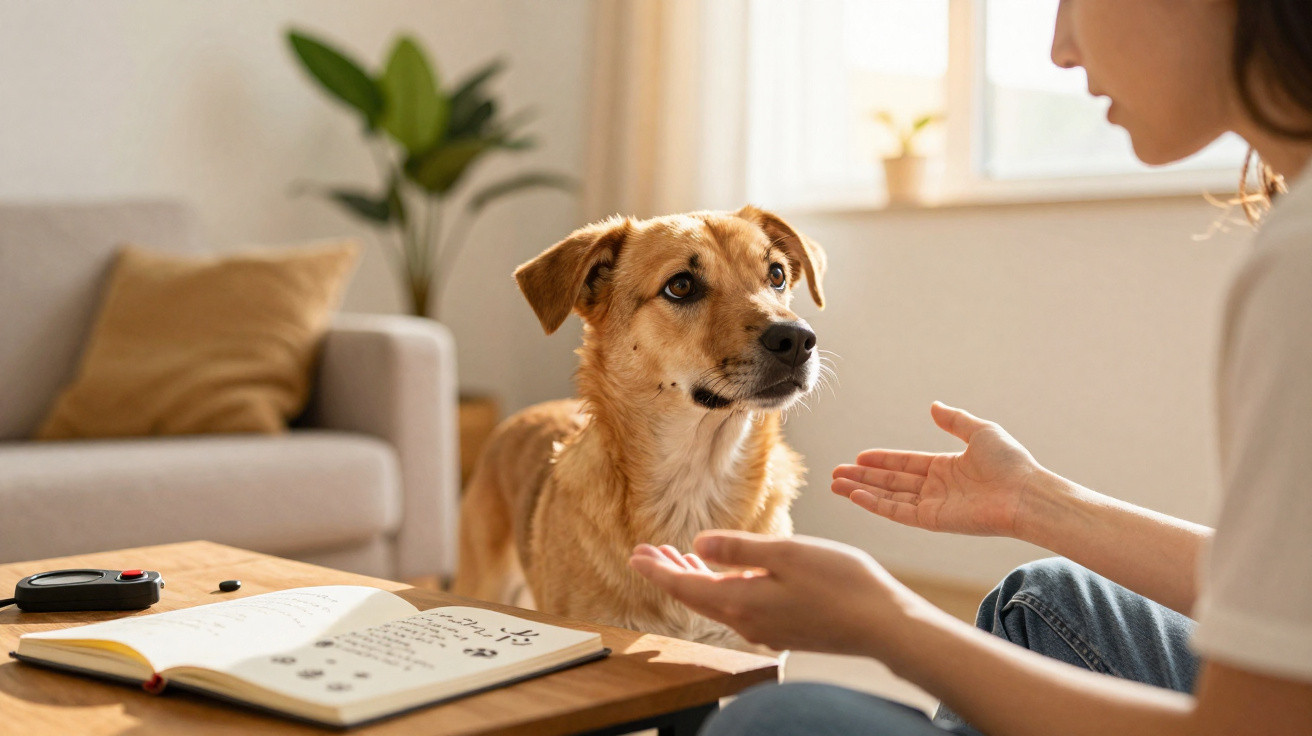
If you would like to spot those familiar head tilts more often, there is a straightforward approach. Use clear, consistent words for real objects or actions, and repeat them in the same setting each time.
Only say “ball” when the ball is present. Say “walk” when you are holding the lead. Repeat the words calmly rather than making them part of the background noise. Over time, your dog’s brain begins creating a small dictionary, one word at a time. The tilt can then show that they are searching their internal library, rather than simply responding to the sound of your voice.
Many owners unknowingly do the complete opposite. They launch into lengthy speeches: “Do you want to maybe go outside or play or something?” The dog picks up the tone and perhaps one word, becomes partly excited, but little is truly retained. The tilt vanishes because the message is unclear.
There is also the familiar mistake of using magic words all the time. Saying “walk” ten times a day as a joke, or using “treat” for absolutely everything. Eventually, the brain learns to disregard them. Realistically, nobody maintains a perfectly disciplined vocabulary with their dog every day.
Even so, reducing the verbal clutter slightly can make the occasional tilt much more meaningful.
“When dogs tilt their heads, they’re not acting cute for us. They’re optimizing the way they hear and see us. It’s a small move with a big cognitive function,” says a veterinarian behaviorist who studies dog–human communication.
- Use brief, consistent words for important things: “ball”, “walk”, “bed”, “water”. One word should have one meaning.
- Match every word to an obvious action or object for several consecutive days before altering anything.
- Pay attention to when the tilt occurs: does it happen at “walk”, “grandma”, “park” or “chicken”? Those are officially “real” words to your dog.
- Do not let those words become background chatter, otherwise your dog’s internal radar will stop tuning in.
- Look for patterns: some dogs tilt more often with one ear angled forwards than the other, which may suggest a “preferred side” for processing sound.
The quiet connection behind your dog’s head tilt
Once you understand that the tilt is not only a fluffy “I love you”, it can change how you interpret it. The movement becomes a glimpse into your dog’s mind. You are seeing them make a small mental effort to connect unfamiliar human sounds with something tangible.
We have all experienced that moment: you say a word such as “park”, your dog goes still, tilts their head, then races for the door with nails clicking across the floor. The magic lies in that brief pause before the dash. The head tilt is the visible mark of an invisible bridge: your language entering their world, their instincts adapting to your habits, face and routines.
You may see it more often in young, inquisitive dogs or those that are passionate about toys and games. Older dogs, and dogs with hearing difficulties, may tilt less and depend more heavily on your gestures. Some dogs hardly ever tilt their heads but still understand a great deal.
There is no universally “good” head tilt. There is only your dog, your words and the shared code between you.
When their head tips to one side and their eyes focus on you, you are witnessing more than affection. Across two or three centimetres of movement, you are watching effort, memory and learned trust unfold.
| Key point | Detail | Value for the reader |
|---|---|---|
| Head tilt = processing | Dogs tilt their heads to locate sounds and connect words with meaning, not merely to look cute. | Helps you recognise your dog’s mental effort rather than romanticising it. |
| Words need clarity | Short, consistent words in stable situations produce more meaningful tilts. | Offers a simple way to develop your dog’s “vocabulary”. |
| Every dog tilts differently | The frequency and form of head tilts differ according to personality, age and hearing. | Encourages you to observe your own dog rather than compare them with others. |








Comments
No comments yet. Be the first to comment!
Leave a Comment