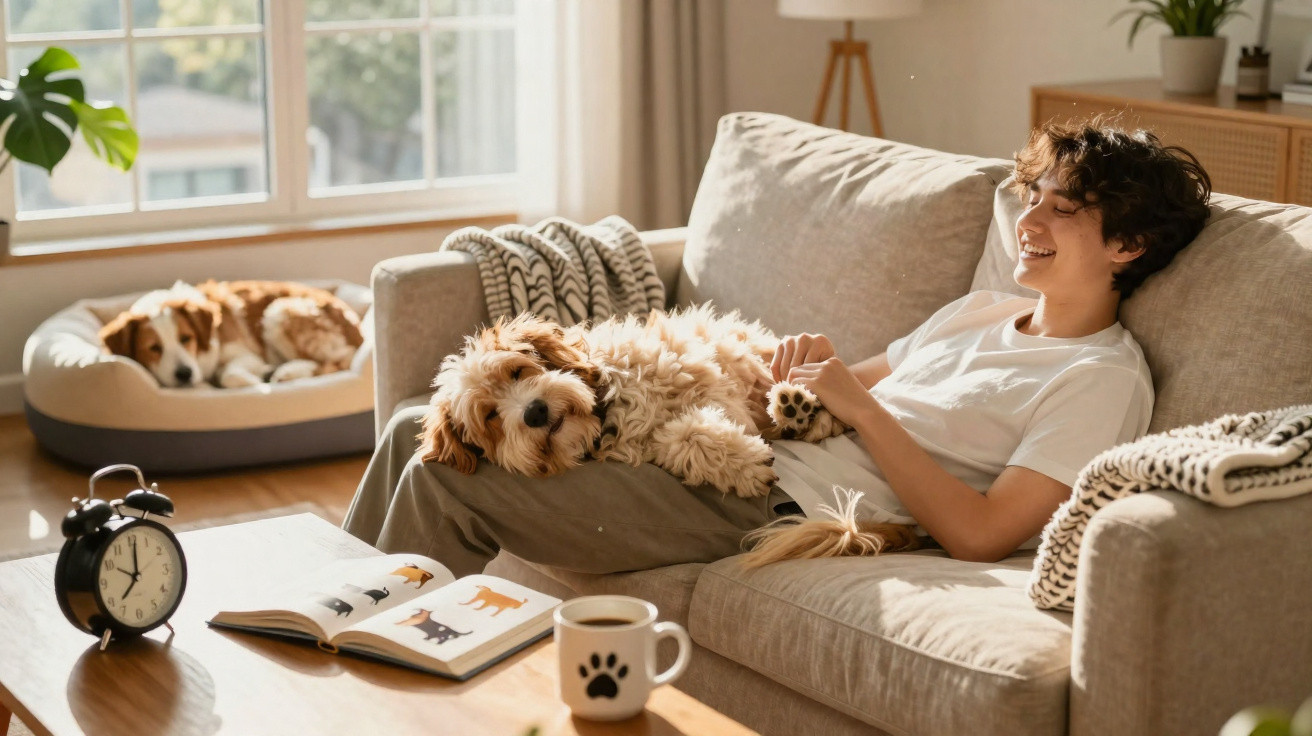
The first time you spot your dog snoring at 11 a.m., paws in the air, you will probably grin and take a picture. By the fifth time you pass them, several hours later, without so much as a twitch, a small concern can set in. Are they bored? Unwell? Or are they simply an elite napper, ready to run a masterclass in absolutely nothing?
Dog owners ask vets these things every day. “Is it normal that she sleeps this much?” “Should I wake him up for a walk?” Certain breeds appear to come with a built-in snooze function, while others seem to ricochet around the house after only six hours of sleep.
Then there are the breeds professionals repeatedly identify as the clear champions of canine sleep.
Why some dogs are furry professional nappers
Spend one afternoon watching a Greyhound at home and the term “couch potato athlete” makes perfect sense. They are a streak of speed on a race track, but in the sitting room they can resemble a loudly breathing cushion. One second they are draped across the sofa like melted butter; the next, they crack open an eye, sigh, and drift back into the dream they had been following.
Veterinarians and sleep specialists say this is not laziness, but biology. Some breeds are designed for brief spells of high-intensity activity followed by long, entirely guilt-free recovery periods. Their bodies do not merely like rest: they require it.
When vets are asked which dogs sleep most, the same breeds are often mentioned: Basset Hounds, Newfoundlands, Saint Bernards, Mastiffs, Great Danes, Bulldogs, Shih Tzus and Greyhounds. Over 24 hours, these dogs can readily spend 14 to 18 hours asleep or lightly dozing. That is more than some teenagers manage during the holidays.
One London vet described a Mastiff patient whose daily routine was wonderfully refined. He would get up for breakfast, take a brief walk, enjoy a quick cuddle, and then return to bed until late afternoon. His owners feared he might be depressed, yet his blood tests were completely normal. He was simply… enjoying the finest possible nap life.
Experts highlight three main reasons why these breeds dominate the sleep rankings. The first is size: giant breeds, including Newfoundlands and Great Danes, tire more quickly and need longer periods to recover. The second is anatomy: Bulldogs and other brachycephalic dogs may sleep more because breathing is less efficient for them, particularly in warm weather. The third is temperament: Basset Hounds and Shih Tzus tend to be calm, low-energy dogs, so they can fall asleep whenever their surroundings are quiet.
In reality, hardly anyone tracks each hour their dog spends napping. The patterns, however, are easy to notice. High-sleep breeds are usually snoring in the corner while the Labrador is still searching for somebody to throw a ball.
The 8 dog breeds experts say sleep the most and how to live with them
If you share your home with one of these eight breeds, the first piece of advice is remarkably straightforward: let them nap. This does not mean allowing a dog to sleep for 20 hours a day without any stimulation. It means arranging the day around their natural rhythm rather than trying to work against it.
For a Saint Bernard or Newfoundland, this may mean one longer, gentle walk during cooler parts of the day, alongside several quick toilet breaks and plenty of peaceful time indoors. For a Shih Tzu, it could mean short play sessions broken up by long periods on the sofa. The aim is not to keep waking them, but to make their awake hours meaningful.
Many Bulldog and Mastiff owners worry that they are “doing something wrong” because their dog makes so few demands. That concern can lead to a major error: overstimulating a sleepy breed out of guilt. They may take the dog on lengthy runs, book too many activities, or become alarmed whenever the dog picks its bed rather than a toy.
Vets see the consequences: sore joints, overheating and even behavioural difficulties caused by pure exhaustion. A kinder approach is available. Choose short, regular walks, simple brain games at home, a comfortable and supportive bed in a peaceful spot, and routine veterinary checks to exclude medical causes if sleep patterns suddenly change.
“People think a sleepy dog is always a lazy dog,” explains Dr. Amelia Roth, a small‑animal veterinarian. “But for breeds like Basset Hounds or Great Danes, long naps are simply part of their healthy baseline. What matters is the quality of their awake time: are they eating, moving, engaging with you? That tells us far more than the number of naps.”
- Basset Hound – Long, weighty ears and even weightier naps. They are known for lengthy dozes between slow walks full of sniffing.
- Newfoundland & Saint Bernard – Big, gentle dogs that take their time getting started. These mountain breeds save their energy when they are not “on duty.”
- Mastiff & Great Dane – Their enormous bodies make every movement more costly in energy terms. Rest acts as their natural reset button.
- Bulldog – Compact, solidly built and frequently snoring. Keep an eye on breathing and weight, but lengthy daily sleep totals should not be a surprise.
- Shih Tzu & similar companion breeds – Bred as lap dogs, their preferred pastime is staying close to their people while drifting in and out of naps.
- Greyhound – The original “45-mph couch potato.” They produce explosive bursts of speed, then spend hours in loose, tranquil sleep.
Living with a high-sleep dog changes your view of rest
After spending several months with a genuinely sleepy breed, your own attitude towards rest can gradually change. A Basset Hound that yawns and heads back to bed after breakfast becomes a small, floppy reminder that constant productivity is not the only way to exist. You begin timing walks to suit their body rather than simply fitting them into your diary. You also see how quickly they sink into sleep as soon as the house becomes peaceful.
On some days, you may worry that they are missing out. More often, you will recognise that they are entirely content: short flashes of happiness followed by long periods of deep, uncomplicated rest. It is strangely infectious.
| Key point | Detail | Value for the reader |
|---|---|---|
| Normal sleep ranges | High-sleep breeds often rest 14–18 hours per day, including light dozing | Helps you tell natural napping apart from potential signs of illness |
| Breed-specific needs | Giant and brachycephalic breeds tire more quickly and need exercise tailored to them | Prevents overexertion and lowers the risk of joint and breathing problems |
| Quality over quantity | Pay attention to appetite, engagement and movement while they are awake | Provides a straightforward daily checklist for recognising genuine problems early |





Comments
No comments yet. Be the first to comment!
Leave a Comment