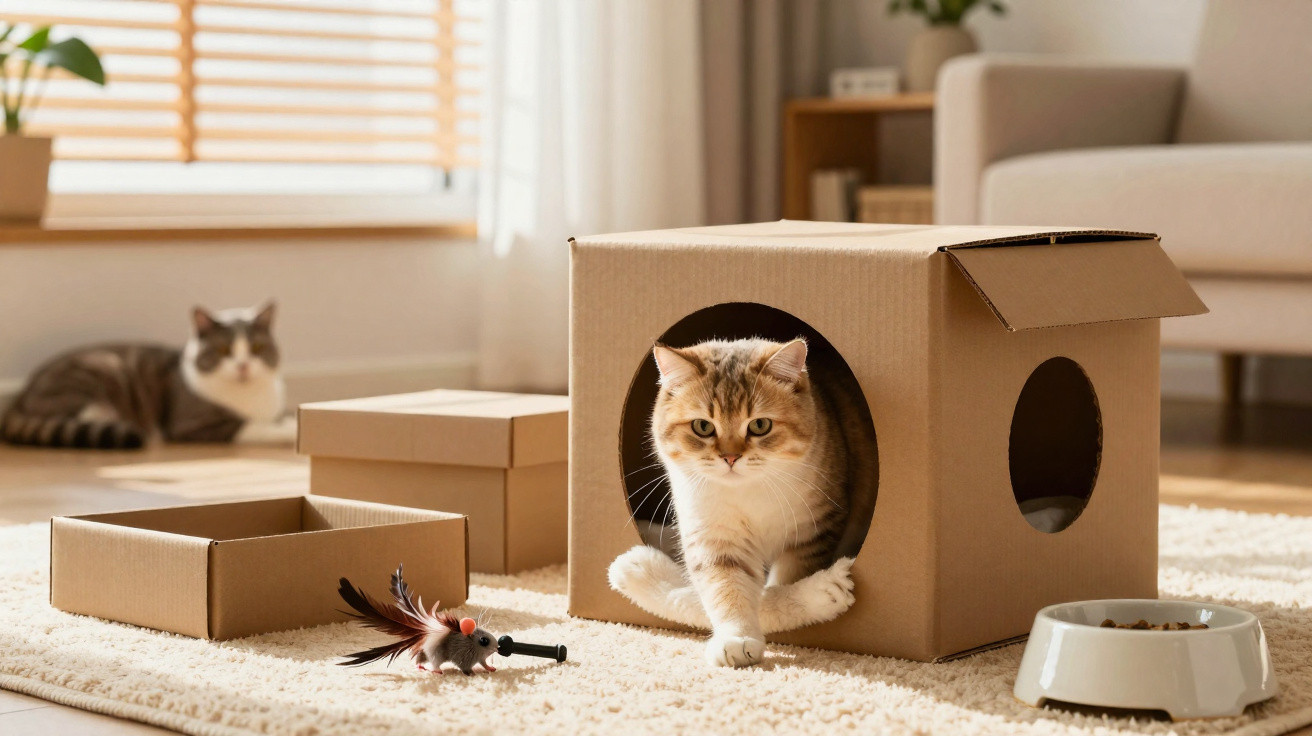
Still, a taped-up delivery box-or even a square marked on the floor-wins every time.
That swift leap into corrugated cardboard is far from accidental. A combination of instinct, physics and reassuring sensory signals kicks in as soon as your cat spots an edge. Recent research, shelter routines and simple at-home experiments all help explain why boxes hold such power over feline minds.
Why boxes attract cats
Stress relief and secure spaces
When stress levels rise, cats look for enclosed, clearly bordered areas. A box becomes an immediate den: it shields them from unexpected approaches, restricts what they can see and allows them to watch entrances while remaining covered. In animal shelters, basic hiding boxes can help newly arrived cats settle more quickly in their first few days. Care teams observe calmer body language and improved appetites when a box is provided.
A box works like a pause button: it lowers arousal, offers choice and gives a shy cat a place to say “not now.”
At home, this can be especially noticeable after guests, fireworks or journeys to the vet. Rather than racing beneath the bed, a cat may opt for a box positioned against a wall, preferably with an entrance cut into it. This minor adjustment can promote resting rather than continual alertness.
Warmth, smell and noise
Cardboard is naturally snug. Its corrugated layers hold air and reduce heat loss, helping a loafing cat keep warm. During winter, a box in a sunny spot can turn into an effortless little heat island. The material absorbs a degree of sound too, with that gentle muffling softening startle responses to clattering, television noise or the washing machine.
Smell is important as well. Cardboard takes on a cat’s scent almost immediately, and that familiar aroma labels the space as safe. Cats often return to one box repeatedly because it smells of them rather than of the surrounding room.
Cats like more than cardboard
The shapes cats select
Cats are drawn to imitation boxes too. In citizen-science experiments, they frequently settled in squares taped onto floors and in “illusory boxes” created with corner-shaped markings. Their brains complete the outline, and their bodies respond. This demonstrates that boundaries and corners matter as much as physical depth.
Edges are invitations. Corners say “sit here,” and cats listen.
This also explains why cats curl up on tabletops outlined by a laptop and a book. The attraction is identical: a defined area that suggests security and control.
Preferred size, depth and lids
Most adult cats favour a box around the length of their body plus a paw’s length. An oversized box can feel too exposed, while one that is too small prevents them from turning comfortably. Many prefer one entrance that they can defend; more confident cats may choose open trays that provide broader sightlines. Lids make boxes more appealing to timid cats, particularly when you add a viewing hole at eye height.
Texture creates another consideration. Smoother cardboard is good for loafing and sleeping, whereas rougher, shredded cardboard encourages nesting and scratching. Test both options, then rotate them to keep things interesting.
What it means when your cat sits in a box
- “I’m clocking out.” Look for slow blinks, paws tucked underneath and relaxed ears.
- “This is my outpost.” Their head may sit above the rim, with ears forward and a wrapped tail that remains alert.
- “I’m still nervous.” Notice a crouched body, dilated pupils and motionless whiskers. Provide more cover or relocate the box somewhere quieter.
- “Game on.” Batting from within means the box is acting as ambush cover. Present a wand toy at the entrance.
Creating the ideal box area
There is no need for expensive furniture. A clean delivery box, scissors and 10 minutes are enough. Put boxes in two kinds of spot: one sociable location, such as the edge of the living room, and one peaceful place, such as a bedroom corner. This gives your cat a choice between being with the household and taking time out.
| Box type | Best use | Watch-outs |
|---|---|---|
| Open tray (short walls) | Resting with a view; sunny patches | May feel too exposed for timid cats |
| Covered box (lid with doorway) | Recovery after stress; naps | Add an extra hole to provide airflow |
| Side-entry shoe box | Fast hiding place on busy days | Take out staples; secure tape edges flat |
| Taped floor square | Play prompts; photo-friendly moments | Choose low-tack tape for safe surfaces |
Always put safety first
Inspect boxes for staples, loose tape and plastic wrapping. Take off any string handles. Where a cat chews cardboard, restrict access to small pieces and provide safe chews and wet food to meet that urge. Keep boxes dry to avoid mould, and replace any that become saggy or develop a musty smell.
Consider heat too. A box placed near a radiator can hold excessive warmth. Put your hand beneath the lid for one minute to check it. If it feels hot to you, it is too hot for a nap.
Making boxes into lasting enrichment
Small changes are better than large purchases
Change boxes around each week and move them to different positions. Create fresh doorway styles: a circle one week, then a low arch the next. In winter, add a piece of fleece; in summer, use a breathable mat. If your cat enjoys botanical scents, add a pinch of dried valerian or silver vine once a month.
Combine boxes with play and feeding
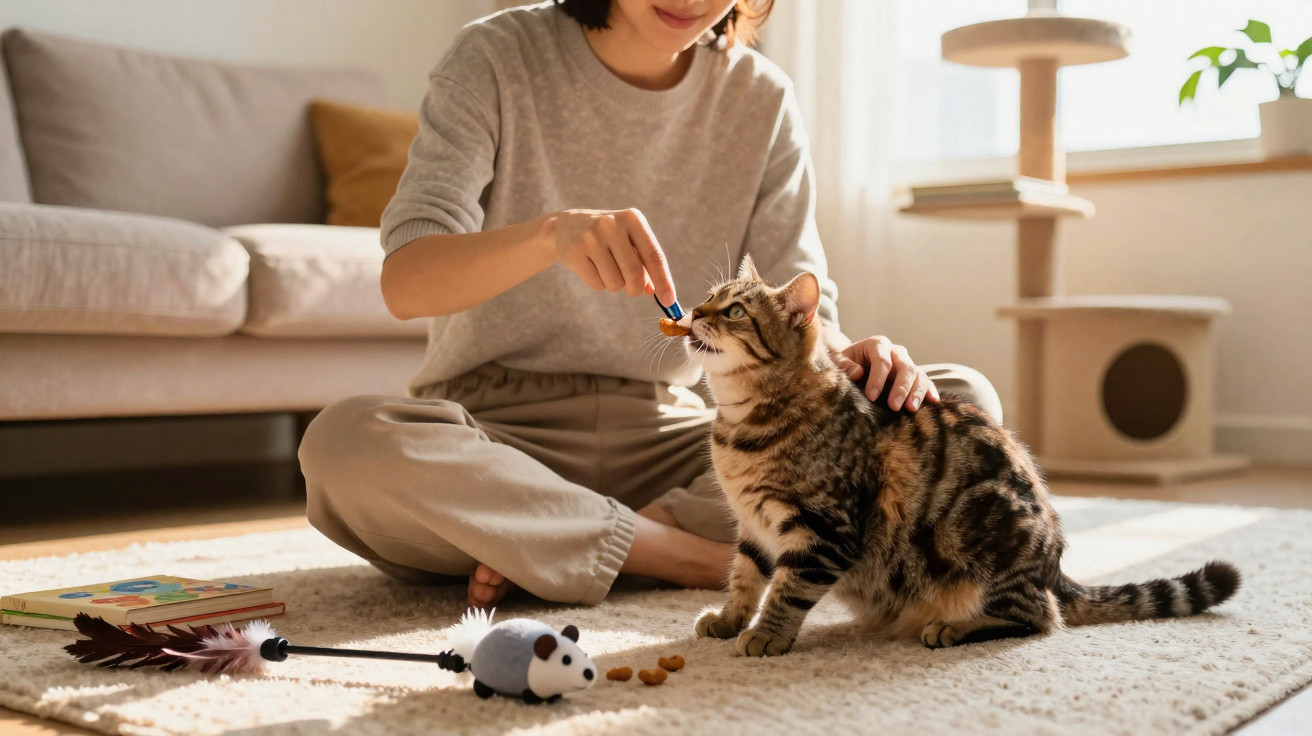
Pass a wand toy by the doorway to encourage chasing without demanding full-body sprints. Place a few crunchy treats inside to invite foraging. For cats that wolf down their meals, divide dinner into three small portions and put each portion in a separate box. This slows eating while adding a search activity.
Think of boxes as stages: rest stage, watch stage, play stage. Switch the set and you refresh the script.
Multi-cat homes: minimise friction
When too few are available, boxes can lead to resource guarding. Follow a straightforward rule: number of cats plus one. For two cats, supply three box choices across separate areas and at varying heights. Do not position entrances directly facing one another. Should tension increase, create visual screens by draping a folded towel over one side.
Seasonal changes that help
In winter, line one box with a reflective emergency blanket beneath a thin towel to retain warmth without adding bulk. In summer, cut cross-ventilation holes and set the box on a cooling mat. If pollen season brings sneezing, replace boxes with fresh, dust-free ones more often.
What the trend reveals-and how to apply it
Short clips showing cats seated in taped floor squares are more than simply cute. They demonstrate an easy experiment you can repeat. Mark three floor shapes-a square, a circle and an open U-then record which one your cat chooses first over three sessions. Their selection indicates their preferred edge density. Use that signal when planning the next box.
Additional ideas for curious owners
One afternoon, try a “choice buffet”. Set out an open tray by the window, a covered box near a hallway and a taped square beside the sofa. Record the first choice, duration of use and activity inside-resting, watching or playing. Repeat the exercise next week after swapping the locations. Clear patterns should emerge, allowing you to personalise the arrangement confidently.
It also helps to weigh up the risks and benefits. The risks are limited: sharp fixings, heat build-up and chewing. The benefits are numerous: stress reduction, peaceful naps, managed play, affordable enrichment and improved use of vertical and corner space. If your cat has joint pain, cut a low opening at the front to reduce the effort of hopping in. In a small flat, slide a flattened box behind a bookcase and open it up when visitors arrive. Small alterations can deliver significant comfort.










Comments
No comments yet. Be the first to comment!
Leave a Comment