A brief hiss, a lightning-fast bite – and we instinctively recoil.
That very human reflex is precisely what really gets many cats going.
Anyone who lives with a cat will recognise the situation: one moment you are calmly cuddling, and the next its claws or teeth are in your hand. Most people cry out, push the cat away or tell it off loudly. That may seem reasonable, but it makes the problem worse. Modern behavioural research shows that this reaction makes the attack more exciting for the cat – and increases the likelihood that it will happen again.
When your hand becomes “prey”
The usual sequence is remarkably familiar: the cat appears relaxed, rolls on to its back and may even stretch out a paw. Everything seems to invite a stroke. Then, without warning, it grips with its claws or bites.
Our immediate response is pain, a loud exclamation and pulling our hand back sharply. This is exactly where the misunderstanding between human and animal begins.
What feels like a defensive reaction to us looks like the ideal prey game to a cat: wriggling, noisy and frantic – therefore highly interesting.
In nature, prey that twists, jerks or “squeaks” triggers a strong hunting instinct. Quiet, motionless prey is uninteresting; lively prey is a jackpot. When we move abruptly and make noise, we turn our hand into precisely this thrilling “toy”.
Telling it off makes matters worse in the living room
Many owners also respond in a raised voice: “No!”, “Stop that!”, or an irritated shout. From a human perspective, this is discipline; from the cat’s point of view, it is simply stress and noise.
A cat does not understand a moral lecture. It merely notices that the mood has changed, someone is loud and the tension is rising – which drives up its adrenaline even further. An animal that is already excited becomes more nervous, insecure and defensive. Some cats escalate because they feel threatened or interpret the situation as rough play.
This creates a cycle: attack – human cries out and flinches – cat becomes increasingly excited – the next attack comes sooner and more intensely. Anyone who would prefer their forearms without scratch marks needs to break this pattern.
The paradoxical solution: do nothing
From a behavioural therapy perspective, the key is a response that feels entirely unnatural to us: complete stillness. No flinching, no “Ow!”, no pushing the cat away. Rather than joining the struggle, deny it the performance.
For the cat, the “game” immediately loses its appeal when the supposed prey turns into a silent, motionless object.
Ideally, the situation unfolds like this:
- The cat grabs your hand or arm with its teeth or claws.
- Stay completely still, continue breathing calmly, and move neither your fingers nor your arm.
- Make no sound, do not push it away and do not jerk – offer total “boredom”.
- After a short while, the cat lets go in frustration because nothing interesting is happening.
This can take real self-control, particularly at first. Your body will urge you to get free. Those who manage that impulse often notice a clear improvement after only a few days.
If the cat does not let go by itself
Some cats are more persistent or extremely overexcited. For them, remaining still may not be enough straight away. In that case, use a second step, calmly but consistently:
- Wait until its grip eases even slightly.
- Then stand up extremely slowly, avoiding any sudden movement.
- Leave the room without speaking, looking at the cat or gesturing.
- Close the door and leave the animal alone for a few minutes.
This “radio silence” is far more frustrating for many cats than being told off. They wanted attention, interaction and action – and receive the exact opposite. The message is unmistakable: claws and teeth end contact immediately.
Why ignoring works better than punishment
Out of desperation, many owners resort to firmer measures: hissing at the cat, spraying water or giving it a light tap. All of these approaches have two major drawbacks: they damage trust and make the cat associate people with fear.
Cats do not learn in a moral sense; they respond to consequences: if a behaviour pays off, it is repeated. If it does not, it fades away.
When you answer attacks with excitement, you unintentionally “reward” the cat by giving it interaction. When you quietly leave every time after an attack, you take away exactly what it was hoping for.
Ignoring is therefore not indifference, but a deliberately used training method. It is quieter, yet more reliable in the long term than threatening gestures. It does require patience and consistency, though: react frantically, flinch or take part in a wild tussle even once, and the learning effect becomes weaker again.
Reward calm instead of encouraging rough play
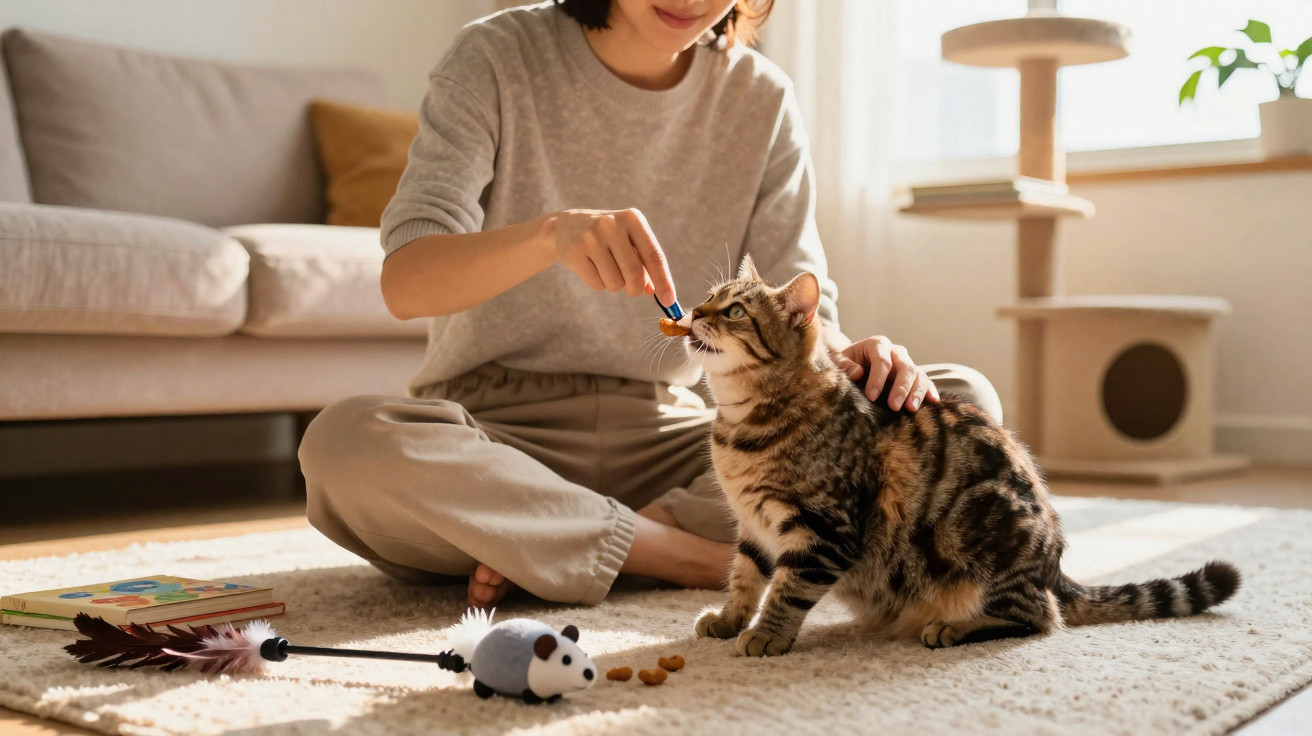
It is not enough simply to let attacks lead nowhere. The other side of training matters just as much: consistently rewarding calm, socially acceptable behaviour. Cats are practical creatures. They respond to what is worthwhile.
Practical strategies for everyday life
These straightforward measures can help guide your cat’s behaviour in a calmer direction:
- Reward relaxed resting: If your cat lies peacefully beside you without using its paws, give it 2–3 small treats. Keep them small and purposeful; do not give more.
- Use considered strokes: Many cats enjoy gentle touch on the lower back or at the base of the ears. Watch its body language: relaxed ears, loose muscles and slow blinking indicate comfort.
- End play in good time: As soon as the tail starts swishing faster, the pupils become very large or the ears turn sideways, end the game yourself. Put the toy away calmly rather than stopping abruptly.
In this way, the cat gradually learns that calmness brings food, closeness and attention. Becoming overexcited and attacking leads to emptiness, silence and distance.
Common triggers – and how to defuse them
Many bites and scratches do not happen “out of nowhere”. There are often clear reasons behind them:
- Insufficient stimulation: Indoor cats can become bored quickly. A cat that sleeps a great deal during the day and has too little stimulation may start attacking hands or feet in the evening.
- Overstimulation: Stroking sensitive areas for too long can tip the balance. Some cats have a very low threshold for stimulation.
- Previous negative experiences: Animals from difficult backgrounds can sometimes respond with mistrust or defensiveness.
- Pain: Sudden aggression, especially when particular parts of the body are touched, may point to a medical issue.
Once you know the cause, you can respond more directly: schedule more structured play sessions with a teaser wand or ball, keep petting sessions shorter, and seek veterinary advice if you suspect pain.
Read the signals rather than following your reflexes
Many attacks give advance warning. Common signals include a twitching tail, tense muscles, a fixed stare, suddenly dilated pupils and ears held to the side. Taking these signs seriously and pausing in time can often prevent the bite itself.
It is also useful to follow one general rule: hands are for stroking, not for rough play. Energetic games should always involve toys, never bare fingers or feet. Otherwise, the cat will not learn to distinguish between “play prey” and a human hand in the first place.
What matters when children live in the household
This issue needs even more attention in homes with children. Children move more abruptly, squeal and run about – all of which can strongly trigger a cat’s hunting instinct. Add clumsy handling, and the next scratch mark is almost inevitable.
Parents should therefore teach children a few simple rules:
- Do not pick up the cat when it wants to leave.
- Never chase it or corner it.
- If it bites or scratches, keep still, leave your hand where it is, stand up and walk away without a word.
- Play only with toys, never with hands.
This keeps life together more relaxed, while teaching the cat that people are not prey but dependable companions.
Long-term effects on trust and living together
Controlling your own reflexes is an investment not only in scratch-free arms, but also in your relationship with your cat. An animal that does not constantly have to expect loud outbursts or physical punishment feels safer. Safety lowers stress, and less stress usually means less aggression.
Interestingly, many cats whose people follow this calm, consistent approach become more affectionate and relaxed over time. They learn that boundaries are clear without being threatening. Sensitive animals in particular can truly flourish in this sort of environment.
The crucial change starts with the human: suppress the urge to react wildly, and deliberately choose stillness and withdrawal instead. This apparently small behavioural shift removes the appeal of the cat bite, channels energy into more useful directions and finally restores peace to many living-room sofas.











Comments
No comments yet. Be the first to comment!
Leave a Comment