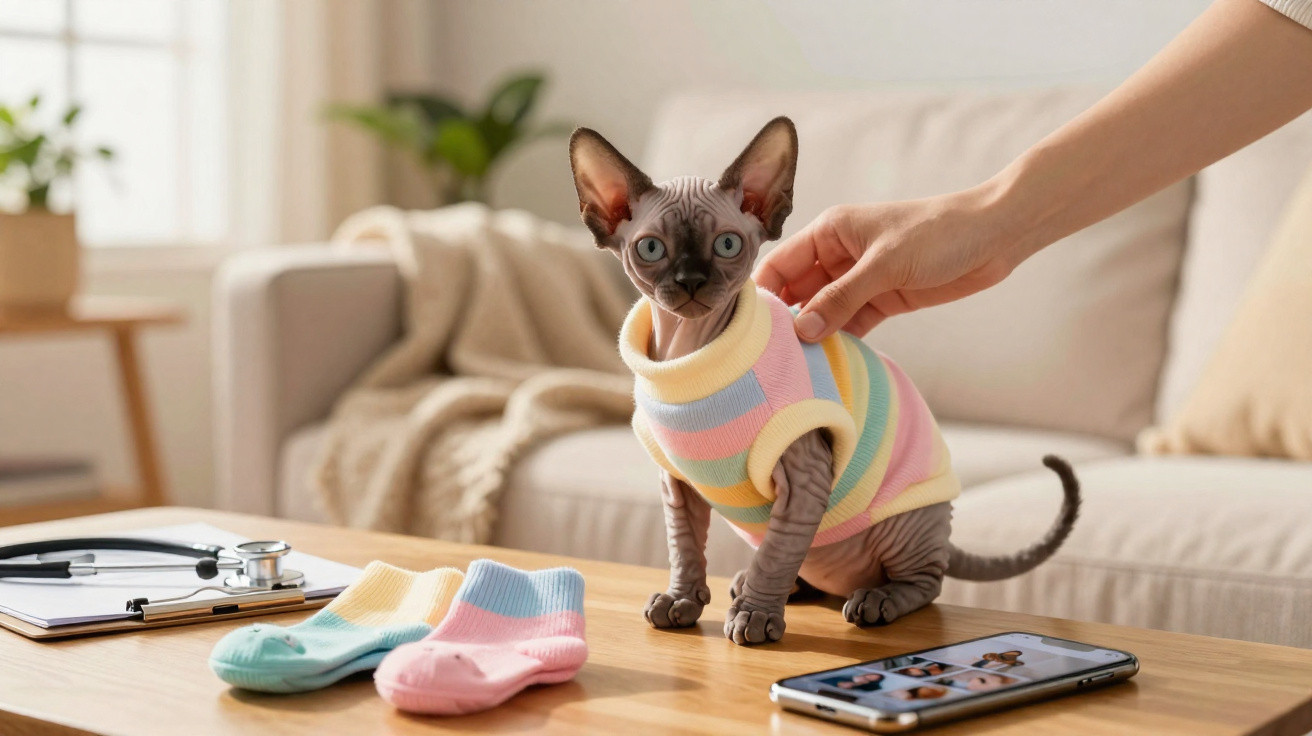
In an animal shelter in California, a Sphynx kitten barely two weeks old arrives literally freezing to the bone. His body is weak, his breathing is rattling and one eye is severely damaged. His prospects are dreadful. Yet the carers refuse to give up – ultimately using a solution that is as simple as it is heart-warming.
A hairless kitten fighting for his life
The tiny tomcat, later named “Sammie”, arrives at SPCA Merced at around 14 days old. As a Sphynx cat, he naturally has no fur. While this is already challenging for healthy cats of the breed, it is life-threatening for a sick newborn.
Sammie has a severe respiratory infection. His nose is blocked and he struggles to breathe. The inflammation has even affected his head: tissue around his left eye is noticeably protruding, a condition known as proptosis. It is apparent at once that this little kitten needs intensive help immediately.
The vets do not expect the tiny hairless tomcat to survive the coming days – but they fight for every gram of weight and every hour of warmth nonetheless.
The diagnosis is grim and his condition is critical. Many facilities might have stopped treatment for such a frail animal with such an uncertain outlook. At SPCA Merced, however, things are different. The team consciously chooses the difficult path.
Foster care rather than a cage: Sammie’s long road to recovery
To give him any chance at all, Sammie moves to an experienced foster home. There, he can be monitored and cared for around the clock. He receives medication for the infection, eye ointment, specialist food and plenty of physical contact.
With kittens this young, every hour truly matters. They can barely maintain their body temperature, especially when they are ill and have no fur. For Sammie, this is doubly true. He shivers and seems rigid with cold despite the hot-water bottles prepared for him.
His foster mum and the shelter staff face a problem: how can they keep this miniature tomcat reliably warm without overheating or restricting him?
The brilliant idea: baby socks as jumpers
The crucial moment comes when they look through a box of donations. Inside are several soft, tiny socks. Then an idea emerges that sounds almost too simple: why not turn the socks into miniature jumpers for the hairless kitten?
They put the idea into practice. The carers cut one hole for his head and two small holes for his front paws, then carefully slip the improvised “outfit” over Sammie.
A simple sock becomes a tailored miniature jumper – and precisely the thermal protection this tiny hairless kitten needs.
The result is immediately clear: Sammie stops shivering, curls up and, for the first time in a long while, falls into a deep, peaceful sleep. The even pressure of the fabric and the retained warmth appear to make him feel secure.
How the sock outfit supported his health
The warm sock “outfits” are not merely used for a humorous photo. They become a permanent part of his care routine. Every day, Sammie is given a fresh, clean sock, carefully fitted to him.
- His body loses far less heat
- He uses less energy trying to stay warm
- More energy is available for growth and recovery
- His foster home can keep his temperature more stable
Within a week, something happens that hardly anyone had expected at first: Sammie finally begins to gain weight. It is only a few grams, but for a newborn kitten, it represents a huge step forward.
Eye surgery and an unexpected turn
Despite his progress, Sammie’s left eye remains a major concern. The infection has caused too much damage there. The vets decide to operate to ease his pain and prevent complications.
For such a tiny animal, any anaesthetic carries a risk. Once again, everything hangs by a thread. But Sammie demonstrates just how much fight he has in him. He survives the operation and slowly wakes up – wearing his now familiar sock clothing.
After the operation, Sammie seems completely transformed: he eats better, sleeps more peacefully and even starts batting playfully at his fabric.
His energy grows day by day. He explores his surroundings, attempts unsteady climbs and responds curiously to human voices. Missing one eye does not prevent him from finding his way around. Cats generally adapt remarkably well to having one eye, as they rely heavily on their sense of smell, hearing and touch.
From emergency case to Instagram favourite
His foster home shares photos and short clips of Sammie online in his colourful socks. The tiny hairless tomcat, with one eye and a “babygrow”, touches thousands of people. Under the username “sammieinjammies”, more and more images of his everyday life appear.
What began solely as a medical emergency measure almost unintentionally becomes his trademark: Sammie in striped, polka-dot or plain socks, sometimes asleep, sometimes playing and sometimes being held by his people. This attention also increases interest in shelter animals and foster animals more broadly.
For the staff on site, the response is a blessing. It shows that stories like Sammie’s encourage others to adopt, donate or get involved themselves.
Finally home: a special tomcat finds his family
After several weeks, it is clear that Sammie has passed the critical stage. He weighs considerably more, breathes freely and appears stable. His personality emerges more strongly too – affectionate, headstrong and occasionally a little clumsy, as befits a young tomcat.
The animal shelter looks for a suitable family with experience of special-needs cats and a willingness to accommodate his particular traits. Sphynx cats have different day-to-day needs from “ordinary” house cats:
- They need more warmth and cosy resting places
- Their skin must be checked and cared for regularly
- They should not live outdoors alone on a permanent basis
- Veterinary costs may be higher, for example because of eye or skin problems
Eventually, a family comes forward that feels fully able to take this on. After introductory visits, it is decided: Sammie can stay. The freezing foster kitten becomes a permanent member of the family – with his own bed, plenty of blankets and, naturally, a small collection of sock outfits.
Today, Sammie lies warmly snuggled up on the sofa instead of shivering for his life in a cold animal-shelter cage.
What other owners can learn from Sammie’s story
The little tomcat’s fate shows how strongly warmth, closeness and clever improvisation can support recovery. Many of these points also apply to other animals, particularly those that are ill or very young.
Tips for caring for cats that feel the cold
Anyone with a cat that gets cold easily – such as an older, very thin or ill animal – can follow a few basic rules:
- Provide warm sleeping spots: blankets, baskets, and safe hot-water bottles or heat mats.
- Avoid draughts: do not position cat beds directly beside doors or cold windows.
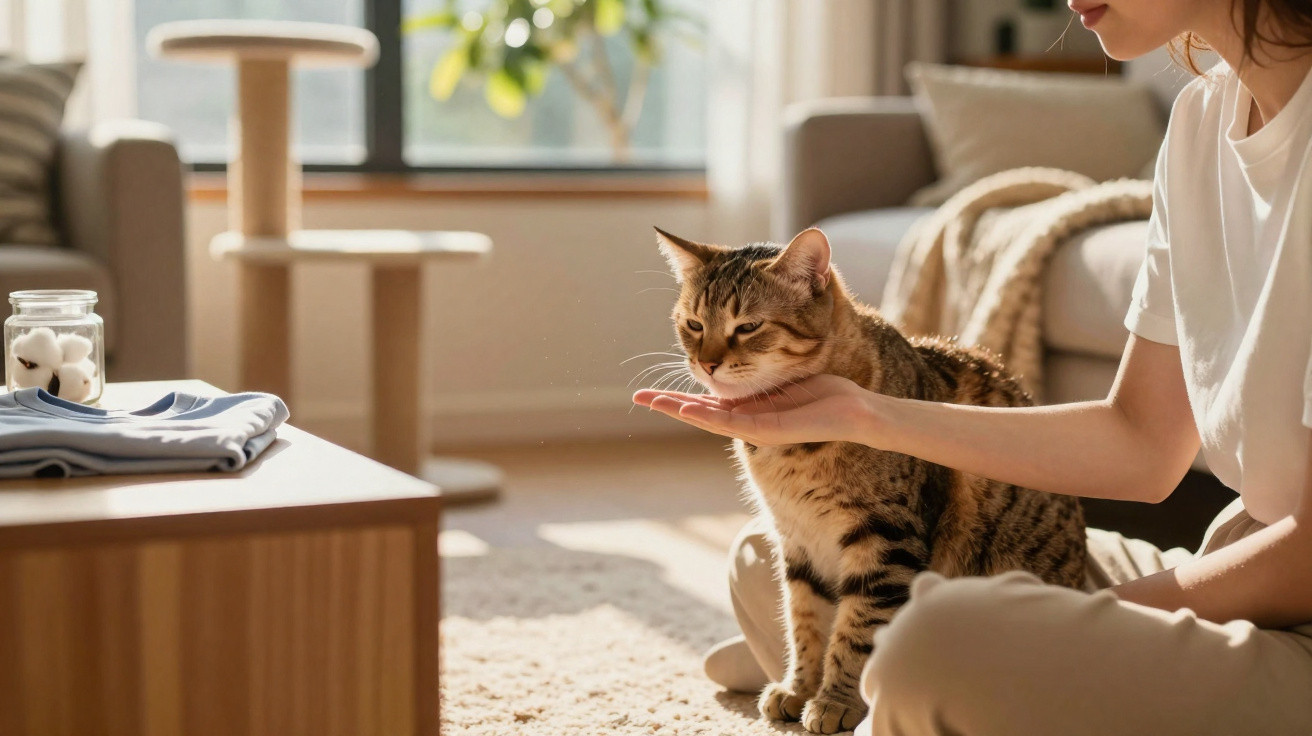
- Use physical contact: many animals relax more quickly when lying with people or other cats.
- Watch for warning signs: shivering, a hunched posture, and cold ears and paws can indicate hypothermia.
Clothing for animals remains a sensitive subject. Not every cat will tolerate coats or jumpers, and many find them uncomfortable. Soft, well-fitting fabrics without hard seams are essential, along with regular breaks during which the animal can move around “naked” again. If in doubt, speak to a vet first.
Why stories like this can change animal shelters
A case such as Sammie’s demonstrates the commitment found in many animal shelters – and how powerfully social media can amplify their work. An anonymous emergency case becomes a recognisable face with a story. This makes issues such as neutering, vaccination, medical care and willingness to donate more tangible.
At the same time, Sammie is a reminder that every cute photo represents a great deal of work: overnight feeding, administering medication and worries about the next veterinary report. Anyone choosing an animal from a rescue organisation should carefully consider its needs – and, like Sammie’s rescuers, not be immediately discouraged by setbacks.



Comments
No comments yet. Be the first to comment!
Leave a Comment