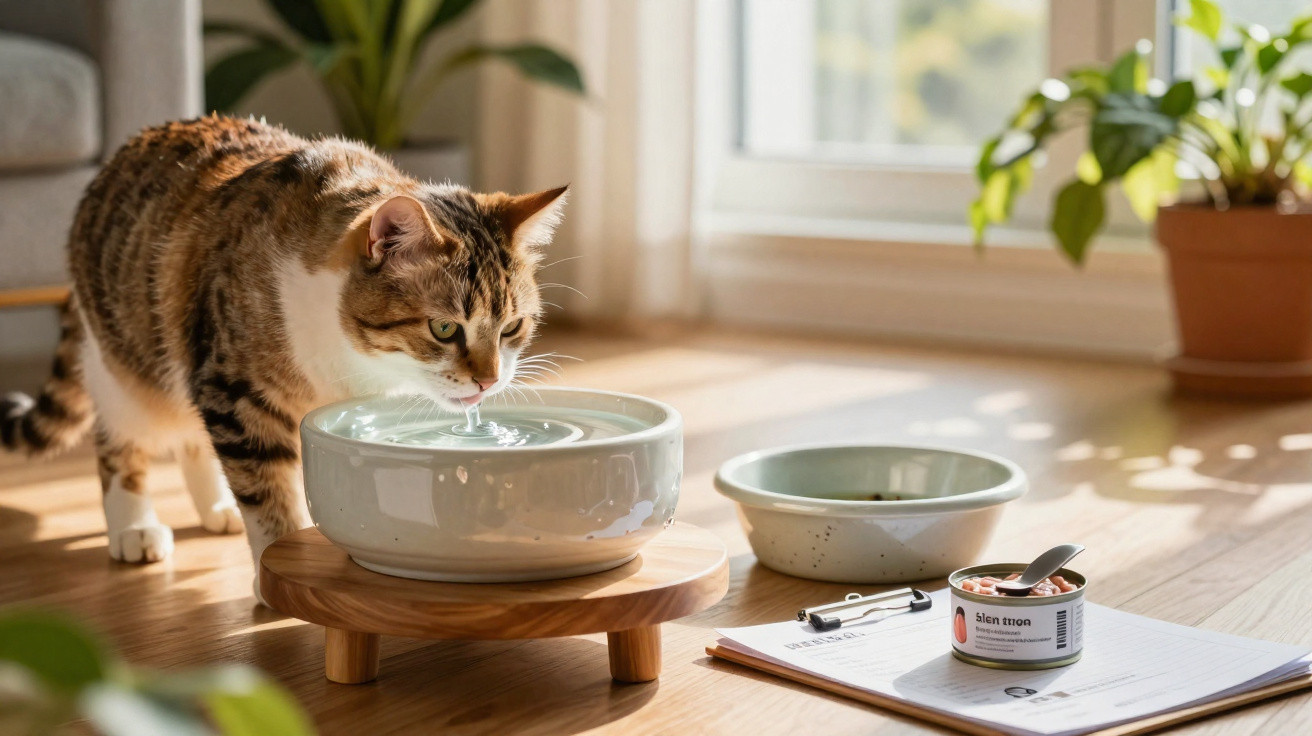
The truth is that a quiet risk to the kidneys may be behind it.
The bowl is full to the brim and the water is clean, yet your cat walks past it and would rather drink from a dripping tap. What may look like a quirk is actually driven by a clear, ancient instinct. Ignoring that instinct can, over time, lead to serious problems with the animal’s kidneys and urinary tract – without being noticed, because cats are poor at showing thirst.
Why cats avoid their water bowl
Domestic cats descend from the African wildcat type, which had to cope with very little water in dry regions. These animals met much of their fluid requirement through the prey they ate. That inheritance remains deeply ingrained, even in cats that spend their lives on the sofa.
In the wild, cats clearly separate eating from drinking. Feeding on prey and drinking right beside it would be risky, as blood and bacteria could contaminate the water. The same programme continues to operate in your cat’s mind when the water and food bowls are placed directly next to each other.
When food, water and the litter tray are too close together, a cat’s instinct warns: “Something here is not clean – it is better not to drink.”
For many cats, a minor detail is enough to make them feel uncomfortable. Common sources of disruption include:
- a water bowl positioned immediately beside the dry-food dish
- a bowl placed in a corner with no escape route
- nearby noise from a washing machine, tumble dryer or loud children
- stale or warm water, or water that tastes of cleaning products
- deep plastic bowls that brush against the whiskers
Plastic bowls can also absorb smells that people barely notice but cats certainly can. Many cats are much more comfortable with shallow, wide glass or ceramic bowls, as their whiskers remain clear and the water has a neutral smell.
How little can cats really drink?
Cats are highly skilled at conserving water. They display thirst far later than dogs or people do. Veterinary professionals broadly recommend 40 to 70 millilitres of water per kilogram of body weight each day.
| Cat’s weight | Recommended daily water intake |
|---|---|
| 3 kg | 120–210 ml |
| 4 kg | 160–280 ml |
| 5 kg | 200–350 ml |
If a cat is fed mainly dry food, reaching this amount is difficult. Dry food contains around 8 to 10 per cent water, whereas wet food provides roughly 70 to 80 per cent. Giving almost exclusively dry food while also offering an unappealing drinking spot effectively removes fluid from the equation twice over.
The hidden threat to kidneys and the urinary tract
When a cat consistently drinks too little, its body makes the urine more concentrated. Crystals and urinary stones can form more easily in this concentrated fluid. This may result in:
- urinary stones and grit
- painful bladder infections
- blockages of the urethra, which can be life-threatening in male cats
- long-term kidney damage
The difficult part is that the signs are often subtle and easily missed.
Warning signs owners should take seriously
A visit to the vet is advisable if you notice one or more of the following symptoms:
- your cat spends noticeably longer in the litter tray than before
- frequent visits to the litter, but only a few drops of urine
- distressed sounds while crouching
- constant licking around the genital area
- toileting outside the tray
- a dull-looking coat, less interest in play and greater withdrawal
Many owners only notice their cat’s poor drinking habits when the bladder and kidneys are already under considerable strain.
The situation becomes particularly sensitive during the heating season or on the first warm days of the year. Dry heated air draws out additional moisture, and cats rarely compensate by drinking more.
How to create a cat-friendly drinking area
The good news is that a few straightforward adjustments can greatly improve the situation for most cats.
Distance builds trust
Place the water bowl at least two metres away from food. Different corners of the room, or a dedicated drinking area of its own, are even better. If the litter tray is currently near the water, it should also be moved elsewhere.
Many owners find that their cats drink more once several bowls are distributed around the home – for example, in the living room, hallway and a quiet room. Studies show that water intake rises considerably when multiple water stations are available.
The right bowl makes all the difference
Wide, weighty bowls made from glass or ceramic can feel like a small wellness treat for a cat. They do not slide about, leave the whiskers unrestricted and do not transfer unfamiliar smells to the water.
What cats particularly dislike:
- narrow, tall bowls
- strongly scented plastic bowls
- water containing fallen food crumbs
- old, lukewarm water
Replace the water at least twice a day. Give the bowl a quick rinse with clean water, without using fragranced cleaners. Residue from heavily perfumed washing-up liquid puts many cats off.
Drinking fountains, wet food and more: increasing fluid intake
If your cat most enjoys drinking from a running tap, it is worth considering a pet drinking fountain. The gentle splashing sound, movement on the surface and sense of freshness encourage many house cats to drink more often.
However, a drinking fountain does not remove the need for regular cleaning. Filters must be replaced according to the manufacturer’s instructions, and the container needs frequent rinsing and refilling. Otherwise, the water quality will deteriorate here too.
It also helps to offer more water directly through food. Possible options include:
- introducing wet food into the feeding plan or increasing its proportion
- adding a small splash of lukewarm water to dry food
- using specialist liquid foods or broths without salt or seasoning, after consulting the vet
Small everyday changes – from the bowl and its location to the food – can noticeably increase fluid intake.
How to understand your cat’s preferences better
Every cat has its own drinking style. Some enjoy splashing the water with a paw, while others only lap at the very edge of the surface. For a few days, pay close attention to when and where your cat voluntarily drinks: from the edge of the sink, in the garden or from a watering can?
These observations can show you how to recreate the ideal drinking spot. If your cat enjoys drinking from shallow puddles, very wide, low bowls are a good option. If it is more attracted by the sound of a dripping tap, a fountain with a gentle waterfall may be worth trying.
Why kidneys are particularly sensitive
The kidneys filter waste products from the blood and keep water and mineral levels in balance. In cats, they already work close to their limit – their metabolism is strongly geared towards protein, which leaves behind many breakdown products. If the kidneys are offered too little fluid over many years, they may eventually be unable to dilute the urine sufficiently.
Chronic kidney disease is among the most common health issues in older cats. The earlier owners focus on adequate fluid intake, the better they can limit or delay later damage. Providing sensible drinking areas and enough wet food from a young age helps lay the foundations for a long life that is kinder to the kidneys.
Many terms heard at the vet may initially sound abstract, such as “urinary stones”, “crystals” or “concentrated urine”. Ultimately, they all come down to the same basic question: does the cat get enough fluid to flush these substances out? Looking at the water bowl and observing behaviour around it often reveals more than you might think.










Comments
No comments yet. Be the first to comment!
Leave a Comment